Heat treatment generally does not change the shape or the overall chemical composition of the workpiece, but rather gives or improves the performance of the workpiece by changing the microstructure inside the workpiece, or by changing the chemical composition of the workpiece surface. It is characterized by improving the intrinsic quality of the workpiece, which is generally not visible to the naked eye.
Processes
Heat treatment process generally includes heating, holding, cooling three processes, sometimes only heating and cooling two processes. These processes are interlocked and cannot be interrupted.
When the metal is heated, the workpiece is exposed to air, often oxidation, decarburization (i.e., the surface carbon content of steel parts is reduced), which has a very negative impact on the surface properties of the parts after heat treatment. Therefore, the metal should usually be in a controlled atmosphere or protective atmosphere, molten salt and vacuum heating, but also available in paint or packaging methods for protective heating.
Heating temperature is one of the important process parameters of the heat treatment process, the selection and control of heating temperature, is the main issue to ensure the quality of heat treatment. The heating temperature varies with the metal material to be treated and the purpose of heat treatment, but it is generally heated above the phase transition temperature to obtain high temperature tissue. In addition, the transformation requires a certain amount of time, so when the surface of the metal workpiece reaches the required heating temperature, it must also be maintained at this temperature for a certain period of time, so that the internal and external temperatures are consistent, so that the microstructure transformation is complete, this time is called holding time.
The use of high-energy density heating and surface heat treatment, heating speed is very fast, there is generally no holding time, while the chemical heat treatment of holding time is often longer.
Cooling is also an indispensable step in the heat treatment process, the cooling method varies from process to process, mainly to control the cooling rate.
Steel quenching is to heat the steel to the critical temperature Ac3 (sub-eutectoid steel) or Ac1 (over-eutectoid steel) above the temperature, hold for a period of time, so that all or part of the austenite, and then faster cooling to greater than the critical cooling rate below Ms (or Ms near isothermal) for martensite (or bainite) transformation of the heat treatment process.
The essence of quenching: is supercooled austenite for martensite or bainite transformation, to get martensite or bainite organization.
The purpose of quenching:
(1) Significantly improve the rigidity, hardness, wear resistance, fatigue strength and toughness of the steel, so as to meet the different requirements for the use of various mechanical parts and tools.
(2) Through quenching to meet some special steel ferromagnetism, corrosion resistance and other special physical and chemical properties.
->Single-liquid Quenching
Is the austenitic chemical parts immersed in a quenching medium species, has been cooled to room temperature quenching operation method. Single-liquid quenching media are water, brine, alkaline water, oil and specially formulated quenching agents.
-
Advantages: simple operation, conducive to mechanization and automation.
-
Disadvantages: the cooling rate is limited by the cooling characteristics of the medium and affect the quenching quality.
-
Application: single-liquid quenching for carbon steel, only for the simpler shape of the workpiece.
->Two-liquid Quenching
Is the austenitic chemical parts first immersed in a strong cooling capacity of the medium, the steel has not yet reached the quenching medium between the temperature that is removed, immediately immersed in another cooling capacity of a weak medium cooling, such as first water after oil, first water after air, etc.. Two-liquid quenching to reduce deformation and cracking tendency, the operation is not good to master, there are certain limitations in the application.
->Martensitic Graded Quenching
Is the austenitic chemical parts first immersed in a liquid medium (salt bath or alkali bath) at a slightly higher or lower temperature than the martensite point of the steel, maintained for an appropriate period of time, to be removed after the inner and outer layers of the steel parts have reached the medium temperature air-cooled to obtain the martensitic organization of the quenching process, also known as graded quenching.
-
Advantages: graded quenching because of the graded temperature stay to the workpiece inside and outside the same temperature after air cooling, so it can effectively reduce the phase change stress and thermal stress, reduce quenching deformation and cracking tendency.
-
Application: Suitable for alloy steel and high-alloy steel workpieces with high deformation requirements, but also for carbon steel workpieces with small cross-sectional dimensions and complex shapes.
->Compound Quenching
The workpiece is sharply cooled below Ms to obtain 10% to 20% martensite, and then isothermally in the lower bainite temperature zone. This cooling method allows larger cross-sectional workpieces to obtain M+B tissue. The martensite formed during pre-quenching can promote bainite transformation, and at isothermal tempering of martensite. Compound quenching is used for alloy tool steel workpieces to avoid Type I tempering brittleness and reduce the amount of residual austenite, i.e., the tendency for deformation cracking.
Tempering is a heat treatment process in which the quenched workpiece is reheated to an appropriate temperature below the lower critical temperature, held for a period of time and then cooled to room temperature in air or water, oil and other media.
Tempering purposes:
-
(1) Eliminate residual stresses generated during quenching of the workpiece to prevent deformation and cracking.
-
(2) Adjust the hardness, strength, plasticity and toughness of the workpiece, to achieve the use of performance requirements.
-
(3) Stabilize the organization and size to ensure accuracy.
-
(4) Improve and enhance the processing performance.
Tempering classification
->Low Temperature Tempering
Refers to the tempering of the workpiece at 150~250℃.
Purpose: Maintain the high hardness and wear resistance of the quenched workpiece, reduce the residual stress and brittleness of quenching.
Tempered martensite is obtained after tempering, referring to the organization obtained during low-temperature tempering of quenched martensite.
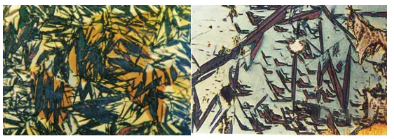
(Acicular Martensite)
->Medium Temperature Tempering
Refers to the tempering of the workpiece between 350 and 500°C.
Purpose: To obtain a higher elasticity and yield point, appropriate toughness. After tempering to obtain tempered quartzite, refers to the complex phase organization of extremely fine spherical carbides (or carburite) distributed within the ferrite matrix formed during tempering of martensite.
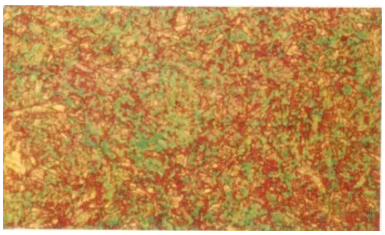
(Troostite)
->High Temperature Tempering
Refers to the tempering of the workpiece at 500°C or higher.
Purpose: To obtain comprehensive mechanical properties with good strength, plasticity and toughness.
Tempering to get tempered sothite, refers to the martensite tempered ferrite matrix formed when the distribution of small spherical carbides (including carburite) of the complex phase organization.

(Sorbite)
Normalizing
Normalizing is a metal heat treatment process in which steel parts are heated to a critical temperature (the temperature of complete austenitization) above 30~50°C, held for an appropriate amount of time, and then removed from the furnace and cooled in air or by spraying water, spray or blowing air.
Purposes:
-
(1) Make grain refinement and carbide distribution uniformity.
-
(2) Remove the internal stress of the material.
-
(3) Increase the hardness of the material.
Advantages:
-
(1) Normalizing cooling speed is slightly faster than annealing cooling speed, thus the obtained pearlite layer spacing is smaller, and the normalizing organization is a little finer than annealing organization, thus its hardness and strength are also higher.
-
(2) Normalizing outside the furnace cooling does not occupy the equipment, and the productivity is higher.
Only for carbon steel and low and medium alloy steel, but not for high alloy steel. Because the austenite of high-alloy steel is very stable, cooling in air will also get martensite organization.
Specific uses:
-
(1) For low carbon steel and low alloy steel, normalizing can increase its hardness to improve machinability.
-
(2) For medium-carbon steel, normalizing can replace quenching treatment for high-frequency quenching tissue preparation, and can reduce the deformation of steel parts and reduce processing costs.
-
(3) For high-carbon steel, normalizing can eliminate the mesh carburizing organization, to facilitate spheroidal annealing.
-
(4) For large steel forgings or steel castings with sharp changes in cross-section, can be normalized instead of quenched to reduce the tendency to deformation and cracking, or quenching to prepare for the organization.
-
(5) For steel quenched and reworked parts, can be normalized to eliminate the effects of overheating so that they can be re-quenched.
-
(6) For cast iron parts to increase the amount of pearlite in the matrix and improve the strength and wear resistance of castings.
Annealing
The heat treatment process of heating the metal or alloy to the appropriate temperature, holding for a certain time, and then slowly cooling (generally with the furnace cooling), is called annealing.
The essence of annealing is to heat the steel to austenite after pearlite transformation, the annealed organization is close to the organization after equilibrium.
The purpose of annealing:
(1) reduce the hardness of the steel, improve plasticity, to facilitate machining and cold deformation processing.
(2) uniform steel chemical composition and organization, refine the grain, improve the performance of steel or quenching for organizational preparation.
(3) eliminate internal stress and work hardening to prevent deformation and cracking.
Annealing Method
->Complete Annealing
Process: the steel is heated to above Ac3 20 ~ 30 ℃, holding for a period of time and then slowly cooled (with the furnace) to obtain close to the equilibrium organization of the heat treatment process (complete austenitization), the actual production, in order to improve productivity, annealing cooling to about 500 ℃ that is out of the furnace air cooling.
Purpose: Refine the grain, uniform organization, eliminate internal stress, reduce hardness and improve the machinability of steel. Sub-eutectoid steel after complete annealing of the organization of F + P.
Application: complete annealing is mainly used for sub-eutectoid steel (wc = 0.3 ~ 0.6%), generally medium carbon steel and low and medium carbon alloy steel castings, forgings and hot-rolled sections, and sometimes for their welded parts.
->Incomplete Annealing
Process: The steel is heated to Ac1~Ac3 (sub-eutectic steel) or Ac1~Accm (over-eutectic steel) by holding and then slowly cooling to obtain a near-equilibrium tissue heat treatment process.
->Isothermal Annealing
Process: Heat the steel to a temperature higher than Ac3 (or Ac1), hold it for a suitable time, then cool it to a certain temperature in the pearlite zone relatively quickly and hold it isothermally so that the austenite transforms into pearlite, and then air-cool it to the room temperature heat treatment process.
->Spheroidal Annealing
Process: A heat treatment process to spheroidize carbide in steel and obtain granular pearlite. Heating to 20 ~ 30 ℃ above Ac1 temperature, holding time should not be too long, generally 2 ~ 4h is appropriate, cooling mode is usually used furnace cooling, or in Ar1 below about 20 ℃ for a longer period of time isothermal.
Purpose: to reduce hardness, uniform organization, improve machinability for quenching for tissue preparation.
->Diffusion Annealing (Homogenization Annealing)
Process: Heat treatment process in which ingots, castings or forging billets are heated to a temperature slightly below the solid-phase line for a long period of time and then cooled slowly to eliminate chemical composition inhomogeneities.
Purpose: To eliminate dendritic segregation and regional segregation produced in the solidification process of the ingot, so that the composition and organization of homogenization.
->Stress Relief Annealing
The stress relief annealing temperature is lower than A1, so stress relief annealing does not cause tissue changes.
Purpose: To eliminate residual internal stress.
Application: Mainly used to eliminate residual stresses in castings, forgings, weldments, hot rolled parts, cold drawn parts, etc. If these stresses are not removed, they will cause deformation or cracks in the steel parts after a certain period of time or during the subsequent cutting process.