The main types of corrosion in hydrocracking units are: hydrogen damage (including high-temperature hydrogen corrosion, hydrogen embrittlement, hydrogen-induced peeling), high-temperature H2+H2S corrosion, polythionate corrosion, temper embrittlement of Cr-Mo steel, high-temperature S corrosion, H2S+H2O corrosion and H2S+NH3+H2O corrosion at low temperature parts.
1. Hydrogen Damage
【Definition】The destruction of the properties of metal materials due to the diffusion of hydrogen atoms into the metal body or the reaction with the metal is called hydrogen damage.
【Location】The main parts of hydrogen damage are: reaction system equipment and pipelines under high temperature and high pressure hydrogen environment.
【Classification】Hydrogen damage can be mainly divided into: hydrogen embrittlement, high temperature hydrogen corrosion and hydrogen induced peeling.
1.1 Hydrogen embrittlement
【Definition】When steel is used in the presence of hydrogen, hydrogen diffuses into the lattice in an atomic state, and accumulates in the grain boundary or around non-metallic slag inclusions in a molecular state.
【Characteristics】The physical process, which is reversible, is called a primary embrittlement phenomenon. The tensile strength or hardness of the material does not change significantly, but the notch strength or toughness of the material decreases under normal temperature conditions, and cracks sometimes occur. The ductility and toughness of the hydrogen embrittled material can be recovered after dehydrogenation treatment without cracks.
1.2 High temperature hydrogen corrosion
【Definition】Hydrogen chemically reacts with inclusions (carbohydrate F3C or solid solution carbon C) or alloy additives (such as Si) in the alloy under high temperature (T>220℃) and high pressure to generate high-pressure gas. This leads to decarburization and grain boundary cracks in the steel. The tensile strength, ductility, and toughness of materials subjected to high-temperature hydrogen corrosion are significantly reduced.
【Features】High-temperature hydrogen corrosion is completely different from hydrogen embrittlement. It is a chemical reaction process and is irreversible, which is called permanent embrittlement. There are two main forms of high temperature hydrogen corrosion: one is surface decarburization. The other is internal decarburization.
Surface decarburization occurs when the steel comes into contact with hydrogen. Surface decarburization does not produce cracks, but the strength and hardness of the material decrease slightly, while the elongation increases. The main reactions that occur are: Fe3C+2H2→CH4+3Fe. This reaction generally starts from the surface of the steel and gradually advances to the inside. The generated methane gas is not easy to escape. They gather around the grain boundaries or impurities, and the local pressure formed can be as high as several thousand atmospheres. Therefore, not only the surface and the inner layer was decarburized and embrittled, and it also developed into severe bubbling cracking. The dissolved carbon in the steel will also react with the dissolved hydrogen in the steel: C+4H→CH4 , Si+4H→SiH4 .
High temperature hydrogen corrosion is characterized by an incubation period, which can be as short as a few hours or as long as several years depending on the material and environmental conditions. After the steel is corroded by high-temperature hydrogen, the dimensional change of the surface is small, which mainly reduces the yield strength and impact toughness of the material, thereby causing the material to crack. There is a combination of temperature and pressure for hydrogen corrosion of steel, and a latent value. If this limit value is exceeded, hydrogen corrosion will occur.
【Main factors affecting high temperature hydrogen corrosion】
■ Effects of temperature, pressure and exposure time. The higher the temperature or the higher the pressure, the earlier the onset of high temperature corrosion will be.
■Influence of alloying elements and impurity elements.
■The effect of heat treatment. The resistance to hydrogen corrosion of steel is also closely related to the microstructure of steel.
■The effect of stress. The higher the stress value, the stronger the corrosion.
1.3 Hydrogen-induced stripping
【Definition】Hydrogen diffuses into the steel under high temperature and high pressure. When the temperature drops below 150°C during equipment maintenance or cooling, since the hydrogen cannot be released in time, part of the hydrogen is absorbed in the steel. Under certain conditions, it will The cracking phenomenon between the surfacing layer and the base metal occurs.
1.4 Protective measures against hydrogen damage
■Strictly control the rate of cooling and depressurization, and cannot be too large. Cooling rate: 20~25℃/h, depressurizing rate: 1.0~1.5MPa/h. (It can well prevent hydrogen embrittlement and hydrogen-induced cracking).
■Control the content of impurity elements in the material, post-weld heat treatment.
■Hydrogen corrosion resistant materials are selected according to the latest version of the Nelson curve. Overheating and overpressure of the equipment are strictly prohibited.
2. High Temperature H2+H2S Corrosion
【Definition】 High temperature H2+H2S corrosion refers to the corrosion and damage of metals in high temperature (204℃, also said 300~420℃), H2 and H2S environment.
【Corrosion part】 The corrosion part of high temperature H2+H2S mainly occurs on the reaction system equipment after hydrogen mixing, such as: hydrogenation reactor, high pressure heat exchanger of reaction effluent, reactor tube, heat high score and corresponding process pipeline. The corrosion form is the chemical corrosion of steel by H2S, which is manifested as uniform corrosion, hydrogen embrittlement and hydrogen corrosion.
【Corrosion factor】 In the hydrogenation process, hydrogen is also a factor that causes equipment corrosion. It can not only directly corrode metals, but also play a role in promoting high temperature H2S. The influencing factors are:
■Concentration: When the concentration of H2S is below 1% (volume), the corrosion rate increases sharply with the increase of the concentration. When the concentration exceeds 1% (volume), the corrosion rate is basically unchanged.
■Temperature: When the temperature is 315-480℃, the corrosion rate increases correspondingly with the increase of temperature, and the corrosion rate increases by about 2 times for every 50℃ increase in temperature.
■Time: The corrosion rate decreases with the increase of time. Generally, the corrosion rate is the highest within 5000h of the start-up of the device. The corrosion rate is reduced by a factor of 2-10 in later times.
■Pressure: In the high temperature H2S+H2 corrosion, the pressure has no effect on the corrosion rate, but in the pure high temperature hydrogen, the pressure has a great influence on the corrosion.
【Protection measures】 High temperature H2S+H2 causes uniform corrosion. The corrosion rate of the material should be estimated strictly according to the Couper curve, and the material should be reasonably designed and selected. Generally, when the temperature is below 250 °C, carbon steel can be selected. When the temperature exceeds 250 °C, use chromium-molybdenum steel (only H2 exists) or austenitic stainless steel (anti-H2+H2S corrosion).
3. Even More Sulfuric Acid Corrosion
【Corrosion part】 Austenitic stainless steel equipment (such as reactor surfacing layer, furnace tube, austenitic stainless steel air cooling, heat exchanger, etc.).
【Protection measures】 Use ultra-low carbon or stable austenitic stainless steel; try to eliminate or reduce residual stress caused by cold working and welding in manufacturing, and pay attention to processing so that no stress concentration or a structure with as small stress concentration as possible is formed. Nitrogen protection, keep the equipment temperature at about 150 ℃, neutralize and clean.
4. Temper Brittleness of Cr-Mo steel
【Definition】When kept in the temperature range of 325~575℃ for a long time or slowly cooled from this temperature range, the fracture toughness of the material will deteriorate. This is due to the segregation of trace impurity elements and alloy elements in the steel to the prior austenite grain boundaries, which reduces the cohesion of the grain boundaries. Once the material undergoes temper embrittlement, its transition temperature shifts to the high temperature side.
【Corrosion part】 The parts using Cr-Mo steel mainly occur on 2.25Cr-1Mo and 3Cr-1Mo material equipment (such as reactors, high-pressure heat exchangers, thermal high-grade, etc.).
5. High temperature sulfur corrosion
【Definition】High-temperature S corrosion in hydrocracking units is a phenomenon in which sulfides (mainly H2S and elemental S) contained in raw materials react with metals at temperatures above 240 to 260 °C, resulting in damage to the properties of metals.
【Corrosion part】 It is caused by uniform corrosion, which mainly occurs in the high temperature parts of the raw oil system and fractionation system before hydrogen mixing (the bottom of the tower, the elbows, tees, and large and small heads of the inlet and outlet pipelines of the reboiler). In the design, the corrosion rate of the material can be estimated according to the McConomy curve.
6. H2S+H2O corrosion at low temperature
【Definition】 H2S+H2O corrosion environment, also known as wet hydrogen sulfide corrosion, generally refers to the corrosion caused by hydrogen sulfide when liquid phase water and hydrogen sulfide coexist (or the water stream is below the dew point). The corrosion form of wet hydrogen sulfide is mainly manifested as uniform thinning of equipment and stress corrosion.
【Corrosion part】The corrosion of low temperature wet hydrogen sulfide mainly exists in the circulating hydrogen desulfurization tower, the rear path of high demarcation level, the main stripper, the butanizer, the liquid hydrocarbon reflux tank, the cooler and other parts and corresponding pipelines.
7. H2S+NH3+H2O Corrosion
【Definition】H2S+NH3+H2O corrosion refers to the corrosion phenomenon caused by the combined action of H2S, NH3 and H2O. The corrosion is mainly manifested as under-scale corrosion and under-scale corrosion of NH4HS. Mainly occurs in high-pressure air coolers and downstream dehydration lines.
【Corrosion mechanism】In the H2S environment, H2S reacts with the metal to form a FeS protective film. However, if the flow rate of the process medium is too high, the protective film will be damaged due to scouring. The reaction formula is: Fe+H2S→FeS+H2. In a wet environment with high concentrations of H2S and NH3, that is, a high concentration of NH4HS, the reaction is carried out according to the following reaction formula, FeS and NH4HS form a complex, causing damage to the protective film and aggravating corrosion. The reaction formula is: FeS+6NH4HS→[Fe(NH3)6]2+. Through these reactions, severe wall thinning occurs at local high velocity and turbulent locations.
Material selection points
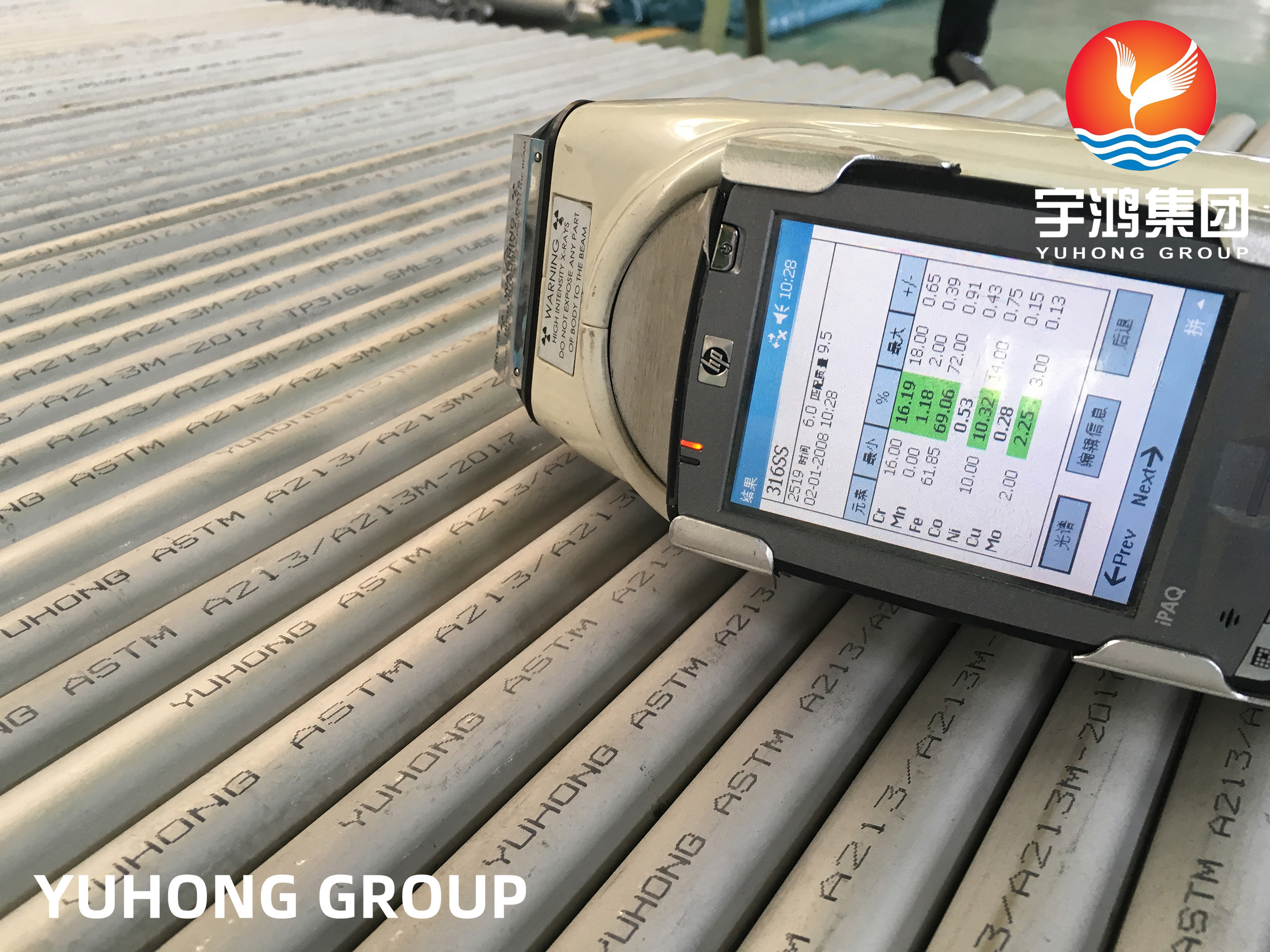
1. High-sulfur and low-acid value crude oil is mainly corroded by high-temperature sulfur at high temperature, and the equipment materials are mainly selected to contain an appropriate amount of Cr; Mo=2%~3%(wt) TP316 stainless steel is the most effective.
2. According to the corrosion rate of the preselected material, determine the main material according to the following principles:
(1) The corrosion rate of the selected material does not exceed 0.25mm/a;
(2) When chrome molybdenum steel is selected, its possible temper brittleness problem should be considered;
(3) When austenitic stainless steel is selected, stable austenitic stainless steel should be selected.
3. Material selection under high temperature sulfur and high temperature sulfide corrosion environment
(1) For pipelines with medium temperature greater than or equal to 240℃ and containing active sulfide corrosion medium, the influence of high temperature sulfide corrosion on material selection should be considered.
(2) When the flow velocity of the medium is greater than or equal to 30m/s, the materials that are resistant to erosion and corrosion should be considered.
4. Material selection in the presence of warm hydrogen and hydrogen sulfide in a corrosive environment
(1) For pipelines containing hydrogen and hydrogen sulfide whose mass temperature is greater than or equal to 200°C, the influence of high temperature hydrogen damage on material selection should be considered. In general, the medium temperature plus a certain margin and hydrogen partial pressure should be used as parameters. Pre-select materials according to Nelson curve.
(2) On the basis of the above, for the coexistence of hydrogen and hydrogen sulfide medium pipes with medium temperature greater than or equal to 200℃, the influence of high temperature hydrogen sulfide and hydrogen co-corrosion on the selection of materials should also be considered. The content of hydrogen sulfide and the temperature of the medium are used as parameters, and the corrosion rate of the preselected material is estimated by checking the Couper curve in combination with the light and heavy categories of hydrocarbon materials.