1. About Grade 310
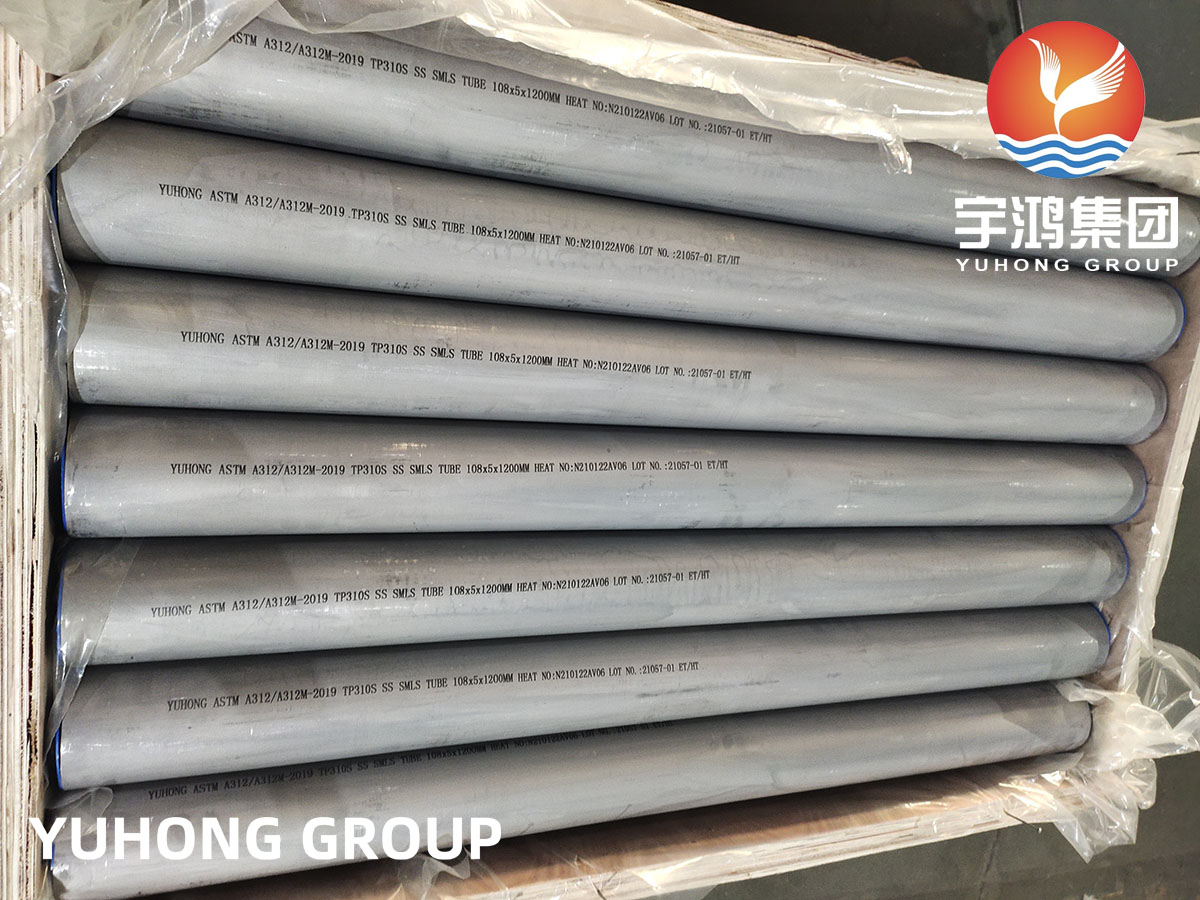
At room temperature, the matrix structure of austenitic stainless steel 310 is pure γ. Because the nominal content of chromium and nickel is 25% and 20% respectively, 310 is also called "2520". Grade 310 is often used as a high temperature resistant material because of its good high temperature strength and low temperature oxidation. Experimental studies have shown that the oxidation rate of 310 is relatively slow when it is less than 1000 °C. Continue to heat up to 1200 °C, the degree of oxidation is accelerated very seriously. In addition, it is also used in the transportation and storage of strong acids such as nitric acid with a concentration of 65% to 85%.
2. Why Can Grade 310 Withstand High Temperature?In a high temperature environment, 310 heat-resistant stainless steel can well maintain the stability of its performance in all aspects, and is not easily affected by some external corrosion, oxidation and other media. This is mainly due to the high Cr content in 310 stainless steel itself. Because of the oxidizing medium, Cr in the metal on the surface of 310 can combine with oxygen to form Cr2O3. This oxide film can prevent oxidation and corrosion.
As long as the Cr content in the stainless steel is sufficient, the Cr2O3 oxide film can continuously cover the surface of the 310 steel. contact, thereby preventing further oxidation, which is the main reason why 310 steel can have good oxidation prevention at high temperature.
3. The Role of Cr and Ni Elements
Chromium (Cr):
For heat-resistant stainless steel, only Cr can maintain its own stability at high temperature, and it will not fall off due to oxidation. However, the content of Cr should not be too high. If it is too high, the toughness of the stainless steel itself will also decrease, because Cr is a component that can promote the appearance of α and inhibit γ. Too much α can easily lead to the generation of some brittle phases of the material. Therefore, in austenitic stainless steel, we hope that the Cr content is kept moderate, which can not only ensure the performance of the material in all aspects, but also prevent the appearance of some brittle phases.
Nickel (Ni):
Ni is a very important element in heat-resistant austenitic stainless steels and has a very positive role in promoting the formation of γ. In the phase diagram, the increase of Ni content can make the transformation temperature of γ to α very low, which can enhance the stability of the matrix austenite. In addition, proper adjustment of Ni content in stainless steel can significantly improve the comprehensive mechanical properties of stainless steel and ensure its good welding performance.