|
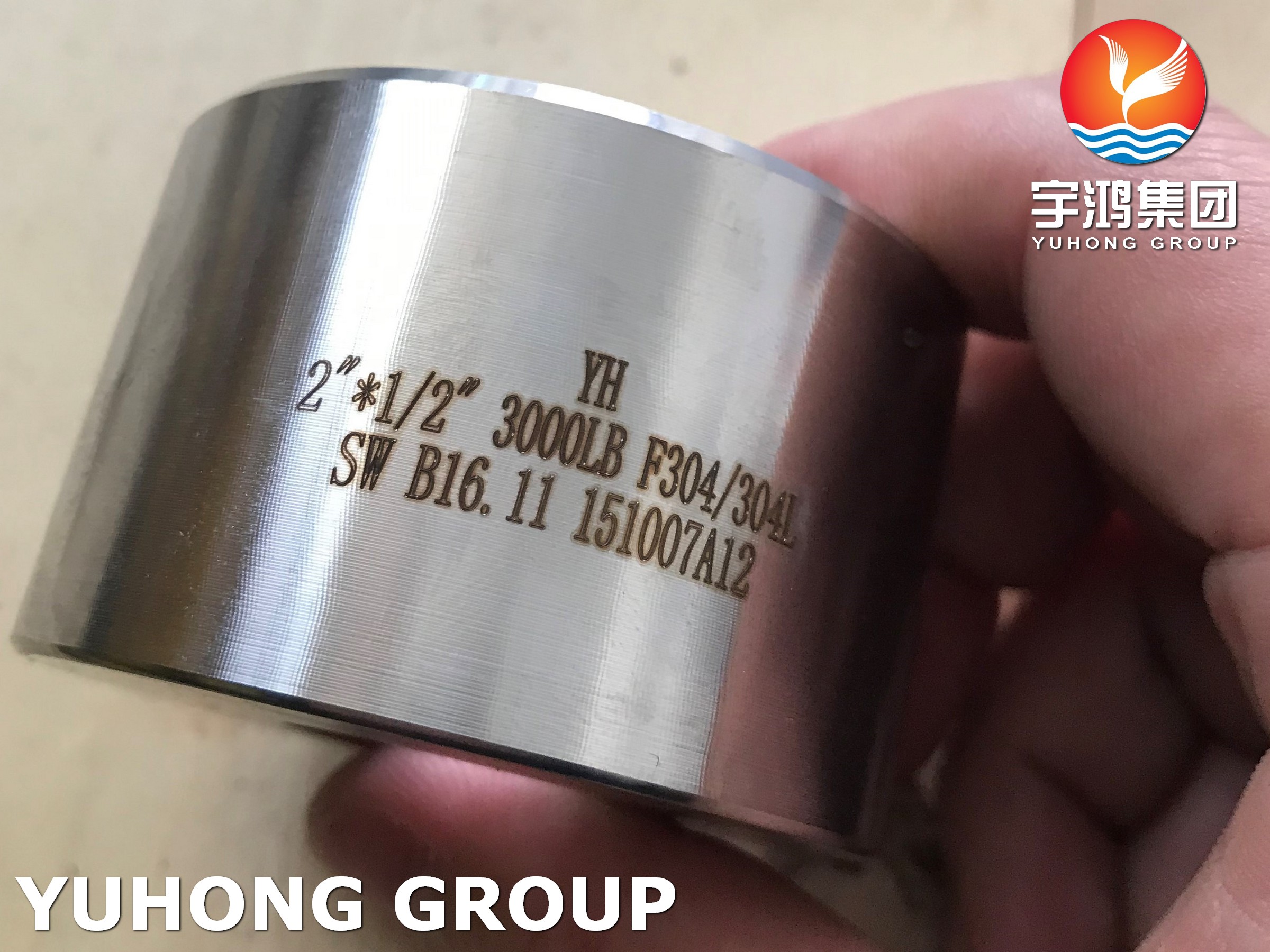
A forging is an object to which a metal is subjected to pressure to shape the desired shape or suitable compressive force through plastic deformation. This force is typically achieved through the use of a hammer or pressure. The forging process builds a refined grain structure and improves the physical properties of the metal. In real-world use of the component, a proper design enables particle flow in the direction of the main pressure. Forgings need to be consistent from piece to piece, without any porosity, excess space, inclusions or other imperfections. |
The significance of waste heat utilization
The forging industry is a major energy consumer, and the heat treatment of forgings is a major energy consumer in the production of forgings, accounting for about 30% to 35% of the total energy consumption of the entire forging production. The energy consumption of forgings accounts for about 8% to 10% of the cost of forgings. Reducing energy consumption can not only reduce the production cost of forgings and improve the economic benefits of enterprises, but also the energy problem is an important issue related to the sustainable development of a country. to a major global issue of human survival. Therefore, making full use of forging waste heat for heat treatment has obvious advantages in energy saving, consumption reduction, and efficiency improvement, which not only saves energy, shortens the process flow, but also protects the environment.
Hot die forging waste heat treatment
After forging, the heat treatment of the forging is carried out directly by using the heat of the forging itself, that is, the residual heat treatment of the forging omits the process of reheating the forging before the heat treatment after forging. Waste heat treatment generally has the following three methods.
After forging, the residual heat soaking heat treatment is carried out. After the forging is formed, it is directly sent to the heat treatment furnace, and it is still carried out according to the conventional heat treatment process. After the temperature equalization, the temperature of different parts of the forging is consistent, which can shorten the holding time. This method is called residual heat equalization heat treatment. For forgings with complex shapes, especially forgings with large cross-section changes, this process can ensure stable quality of forgings.
Direct heat treatment after forging. After the forging is formed, the forging waste heat is used for direct heat treatment, and the forging and heat treatment are closely combined, which saves a lot of energy waste caused by reheating of ordinary heat treatment.
After forging, part of the waste heat is used for heat treatment. After the forging is formed, the forging is cooled to about 600-650 °C, and then the forging is reheated to the required temperature for heat treatment. This method can be refined to the grain size, and saves the energy consumption of heating the forging from room temperature to 600-650 ° C, and is generally suitable for forgings with high grain size requirements.
Common process methods of waste heat treatment
1). Forging Waste Heat Quenching
Forging waste heat quenching is a process method for obtaining martensite or bainite structure by quenching into a suitable quenching medium when the temperature is higher than Ar3 or a certain temperature between Ar3 and Ar1 after the forging is formed.
After the forging is quenched and tempered by the residual heat of forging, it can not only obtain better comprehensive mechanical properties, but also save energy, simplify the process flow, shorten the production cycle, reduce personnel and save the investment cost of quenching heating furnace.
After the forging is quenched and tempered at high temperature, its strength and hardness are generally higher than those of ordinary quenching and tempering, while the plasticity and toughness are slightly lower than those of ordinary quenching and tempering (when both tempering temperatures are the same). If the forging waste heat is quenched and a higher tempering temperature is used (generally 40-80 °C higher than the tempering temperature of ordinary quenching and tempering), its plasticity and toughness are equivalent to or slightly higher than ordinary quenching. After the forging is quenched by the residual heat of forging, the strength and hardness are obviously improved on the premise of maintaining plasticity and toughness. In addition, because its grains are coarser than ordinary quenching, the cutting performance of the material can be improved.
2). Forging Waste Heat Normalizing (Annealing)
Forging waste heat normalizing (annealing) is that after the forging is formed, when the temperature is higher than Ar3 (for hypoeutectoid steel), it enters a normalizing furnace, cooling box or annealing furnace for normalizing or controlled cooling to obtain a normalized structure.
Due to the high forging heating temperature, the grains of the forgings treated by this method are relatively coarse, and are generally used for preparatory heat treatment, and are not suitable for forgings with high requirements for grain size. At the same time, the structure obtained after treatment is pearlite + ferrite equilibrium structure, there is no structure inheritance in the subsequent heat treatment of coarse grains, and the grains can be refined again.
3). Forging Waste Heat Isothermal Normalizing
Forging waste heat isothermal normalizing is that after the forging is formed, when the temperature is higher than Ar3 (for hypoeutectoid steel), it is rapidly cooled, cooled to the isothermal temperature, held for a period of time, and then air-cooled to room temperature.
After the forging is formed, the temperature is generally 900-1000 °C, the quenching speed is generally controlled at 30-42 °C/min, and the isothermal temperature is generally 550-680 °C (specifically determined according to different materials). Quenching is the key process of this process. By adjusting the cooling air volume, air speed, air temperature and air direction, the temperature of the forgings after cooling can be ensured uniform. The isothermal temperature is determined according to the material type and required hardness, and is generally selected at the nose of the pearlite transformation curve to shorten the isothermal holding time. Forging waste heat isothermal normalizing is mostly used for carburizing gear steel, such as SCM420H, SCM822H, SAE8620H and 20CrMnTiH.
Control points of waste heat treatment process
1). Waste Heat Quenching
⑴ Stable and controllable heating system. The heating system of the blank is medium frequency induction heating, infrared thermometer and three-channel temperature sorting system, which can easily control the heating temperature and sort the blanks with unqualified heating temperature.
⑵ Determine the appropriate quenching temperature, and can be effectively controlled. The suitable forging waste heat quenching temperature needs to be determined according to the test. In actual operation, it can be realized by controlling the forging heating temperature and the residence time after forging. The residence time after forging is recommended to be no more than 60s for carbon steel and between 20 and 60s for alloy steel.
Configure infrared thermometer and temperature sorting system to sort out the forgings below the quenching temperature. When the forging heating temperature is stable and the forging process is also stable, the process time measurement and alarm system can be configured to control the quenching temperature by controlling the process time.
⑶ Good quenching system. On the premise of ensuring the quenching effect, select a quenching agent with a slower cooling capacity to prevent serious quenching deformation and cracking. Because the quenching temperature of forging waste heat is higher than that of ordinary quenching, the hardenability of forgings is good, so oil or PAG quenching agent is generally used for carbon steel and alloy steel.
The quenching tank should have sufficient volume, and the cooling time should be controllable. In addition, the quenching medium circulation, cooling system and heating device should be configured, the temperature of the quenching medium should be automatically controlled, and an air extraction device should be configured. Strengthen the maintenance of the quenching medium, regularly check the cooling performance of the quenching medium, clean the impurities such as oxide scale in the liquid tank and the circulation system, and keep the quenching medium clean.
⑷ Arrangement of tempering and tempering furnace after quenching. After the forging is quenched, there is a large internal stress, which leads to large deformation or even cracking during the placement process. In order to prevent deformation and cracking of parts after quenching, forgings should be tempered in time after quenching. The time that forgings can be put aside after quenching is related to the material, shape and ambient temperature of the forgings, and should be determined according to tests. In order to save energy, improve the utilization rate of the tempering furnace, and reduce the energy consumption of heat preservation, the forgings quenched with waste heat are generally tempered in the heat treatment workshop.
2). Waste Heat Normalizing (Annealing)
⑴ Appropriately control the temperature of the forgings before entering the furnace. When the temperature of the parts is high, the forgings need to be cooled by blowing air to reduce the temperature of the parts to the required normalizing temperature. At the same time, the power of the heat treatment furnace needs to have a certain margin, and heating is performed before starting production and when the temperature of a small number of forgings is low.
⑵ Determine a reasonable heat preservation time. If the holding time is too long, the grains will be coarse, and if the holding time is too short, the microstructure transformation will be insufficient. It can be determined by testing according to the material, shape and size of the forging.
3). Isothermal Normalizing of Residual Heat
⑴ Forging temperature control after forging. The temperature of the forging after forming must be above Ar3 (for hypoeutectoid steel), and the direct quenching method can be used when the temperature of the forged part is stable; when the temperature of the forged part fluctuates greatly or the cross-section of the forging changes greatly, the temperature uniformity process must be increased. Before quenching, the temperature of the parts should be uniform, otherwise the temperature of the forgings or different sections after quenching will vary greatly, resulting in abnormal structure (bainite or martensite).
⑵ quench cooling speed control. The rapid cooling of the forgings is required in the quenching process, and the temperature of the same forging and the same batch of forgings after cooling is uniform (or similar). At the same time, it is necessary to control the quenching speed, and an excessively fast quenching speed will produce Widmandelsteiner structure in the forging structure. Generally, the quenching speed is controlled at 30-42°C/min.
⑶ Temperature control after quenching. After quenching, it must be ensured that the temperature of the forging is in the pearlite transformation zone, and cannot be lower than the bainite transformation start temperature (Bs), otherwise bainite (or granular bainite) structure will appear in the structure; if the temperature is too high after quenching, it will lead to the amount of proeutectoid ferrite increases, and the pearlite lamella spacing is large after the microstructure transformation, resulting in low hardness of the parts. The temperature of the forgings after quenching is generally controlled at 80-100°C above the Bs temperature of the material.
⑷ The choice of isothermal temperature. The level of isothermal temperature directly affects the hardness of the forgings after isothermal normalization. The higher the isothermal temperature, the lower the hardness, and the lower the isothermal temperature, the higher the hardness. The isothermal temperature is generally 50-80°C above the Bs temperature of the forging material, and the specific temperature should be determined by testing according to the material and shape of the forging.
⑸ Determination of isothermal holding time. Pearlite transformation occurs in the isothermal process, so there must be enough holding time. For example, if the isothermal time is too short, the supercooled austenite will not be completely transformed into pearlite, and will be transformed into bainite or martensite in the subsequent cooling process body, resulting in unqualified tissue and high hardness after isothermal treatment. The isothermal time can be preliminarily determined according to the isothermal transformation curve of the material, and adjusted according to the test situation.
FINAL
Production practice has proved that it is feasible to use forging waste heat for heat treatment. By reasonably controlling the cooling parameters after forging, the structure and properties of forgings can reach or exceed the level of ordinary heat treatment. At the same time, using the characteristics of coarse grains during forging waste heat treatment can improve the machining performance of forgings. Using the forging waste heat for heat treatment saves a lot of energy consumed in the heat treatment process, reduces production costs, has significant economic benefits, and has broad application prospects.