1、The concept of finned tube
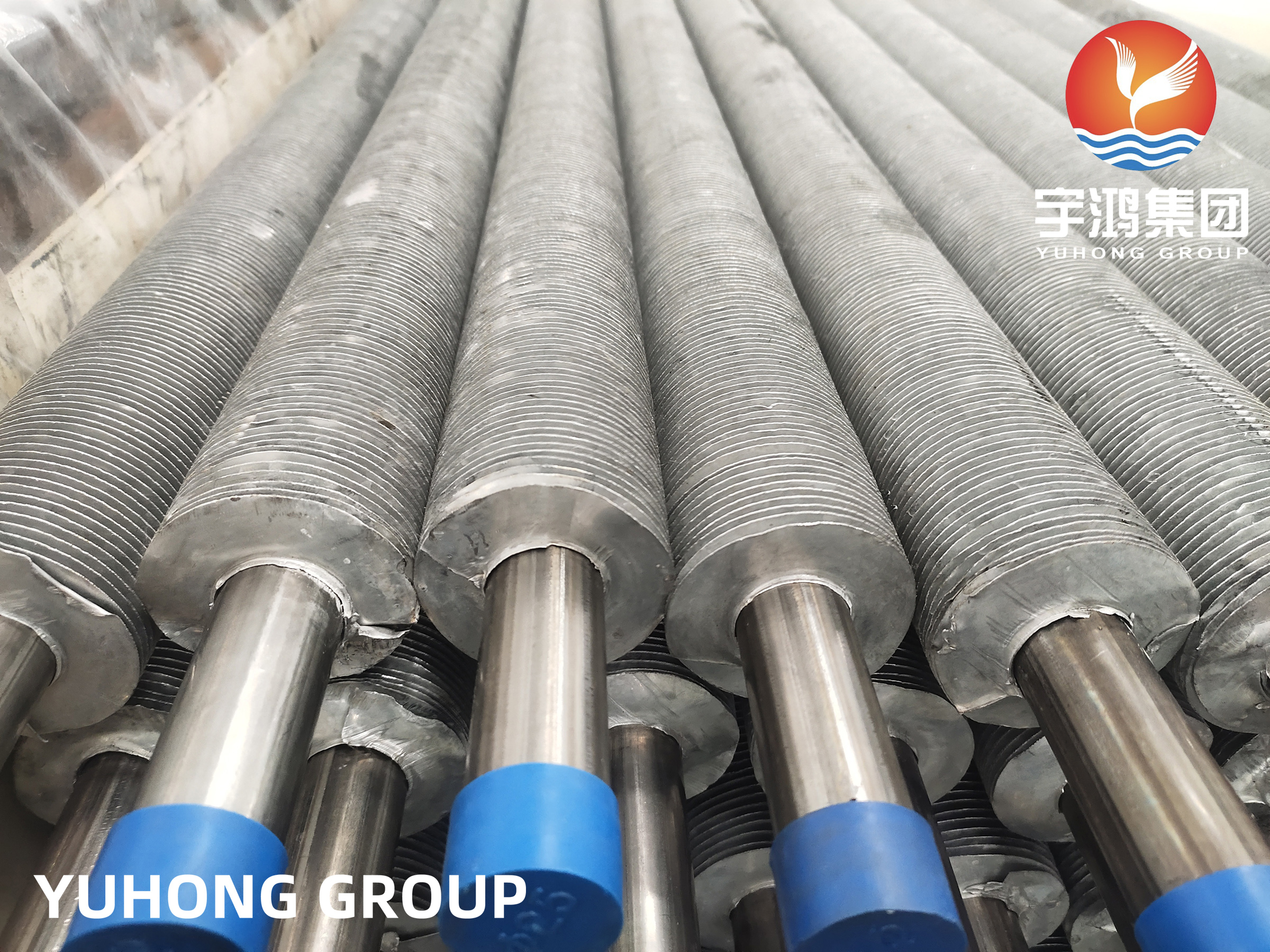
The Finned tube is a Heat Exchange element, mainly to improve the heat exchange efficiency, usually by adding fins on the surface of the heat exchange tube to increase the outer surface area (or inner surface area) of the heat exchange tube, so as to achieve the purpose of improving the heat exchange efficiency of the heat exchange tube.
2、What types of finned tubes can be classified according to their working principles?
At present, the most common and widely used Finned Tube is the partition wall type, and the design and calculation of other types of Heat Exchanger are often drawn from the partition wall type Heat Exchanger. As a general equipment, Heat Exchangers are classified according to their working principles and can be divided into partition type, hybrid type and regenerative type.
When the evaporator of the finned tube used in the low temperature refrigeration system works under the low temperature condition (below 0 ℃), the problem of frosting generally exists on the surface. The effect of frosting on the performance of the Heat Exchanger is reflected in the reduction of its heat transfer coefficient and the increase of air resistance. A reasonable Heat Exchanger structure should reduce the effects of these two aspects at the same time. When the frost begins to form, the surface roughness of the evaporator increases, causing the heat transfer area to increase, and the gas flow rate to increase at the same time, so the heat transfer coefficient K increases at the initial stage of frost formation. The thermal resistance to heat increases and the final heat transfer coefficient K decreases.
When the airflow passes through the evaporator, due to the continuous deposition of water vapor in the air on the surface of the finned tube, the relative humidity of the air decreases, and the amount of frost on the surface of the finned coil along the airflow direction gradually decreases, so the first few rows of fins in the evaporator The frosting of the sheet tubes was severe, and the frosting of the latter rows of tubes was relatively light.
If the structure of variable-spacing fins is adopted, the distance between the fins downstream of the wind direction becomes smaller and smaller, and its high heat transfer efficiency can be maintained under frost conditions, and its frost flushing time can be prolonged. After the evaporator adopts the variable-pitch finned tube structure, when the air sweeps the staggered finned tubes, the staggered distribution of the finned tubes makes the upstream finned tubes have a bypass effect on the downstream finned tubes, which strengthens the front half of the finned tubes. Part of the Heat Exchange capacity, and the distribution of the finned tubes at the back makes the flow channel narrower and the flow rate increases, so that the Heat Exchange in the second half of the finned tubes is also strengthened.
3、The structure and characteristics of the finned tube Heat Exchanger
The finned tube is integrally rolled from an aluminum tube, with no contact thermal resistance, high strength, thermal shock and mechanical vibration, good thermal expansion performance, and has a considerable extended heat exchange surface. The effect of the Heat Exchanger is ahead of that of the string-sheet or wound-sheet Heat Exchanger.
4、What are the advantages of hot-dip galvanized finned tube over ordinary finned tube ?
The hot-dip galvanized finned tube radiator is on a high-quality seamless steel pipe, through a special winding machine, the high-quality steel strip is tightly and evenly wound on the outer surface of the base pipe by mechanical force, and the two ends are spot welded to fix. The whole steel finned tube is hot-dip galvanized. The galvanized layer can form a special metallurgical structure that can withstand mechanical damage during transportation and use. Every part of the plated part can be plated with zinc, even in depressions, sharp corners and hidden places can be fully protected . Relatively speaking, it has stronger corrosion resistance and protection ability than ordinary finned radiators.
5、What are the advantages of stainless steel finned tube over carbon steel? Which is more affordable?
The two thermal conductivity are not much different, but the main differences are:
Stainless steel: beautiful in appearance, super corrosion resistance, and expensive, which is several times more expensive than carbon steel.
Carbon steel: cheap but easy to oxidize and corrode in the air.
As for the specific use of stainless steel or carbon steel when designing the Heat Exchanger, it needs to be selected according to the applicable place.