(1) What is the basic difference between 304, 304L, 316 and 316L materials?
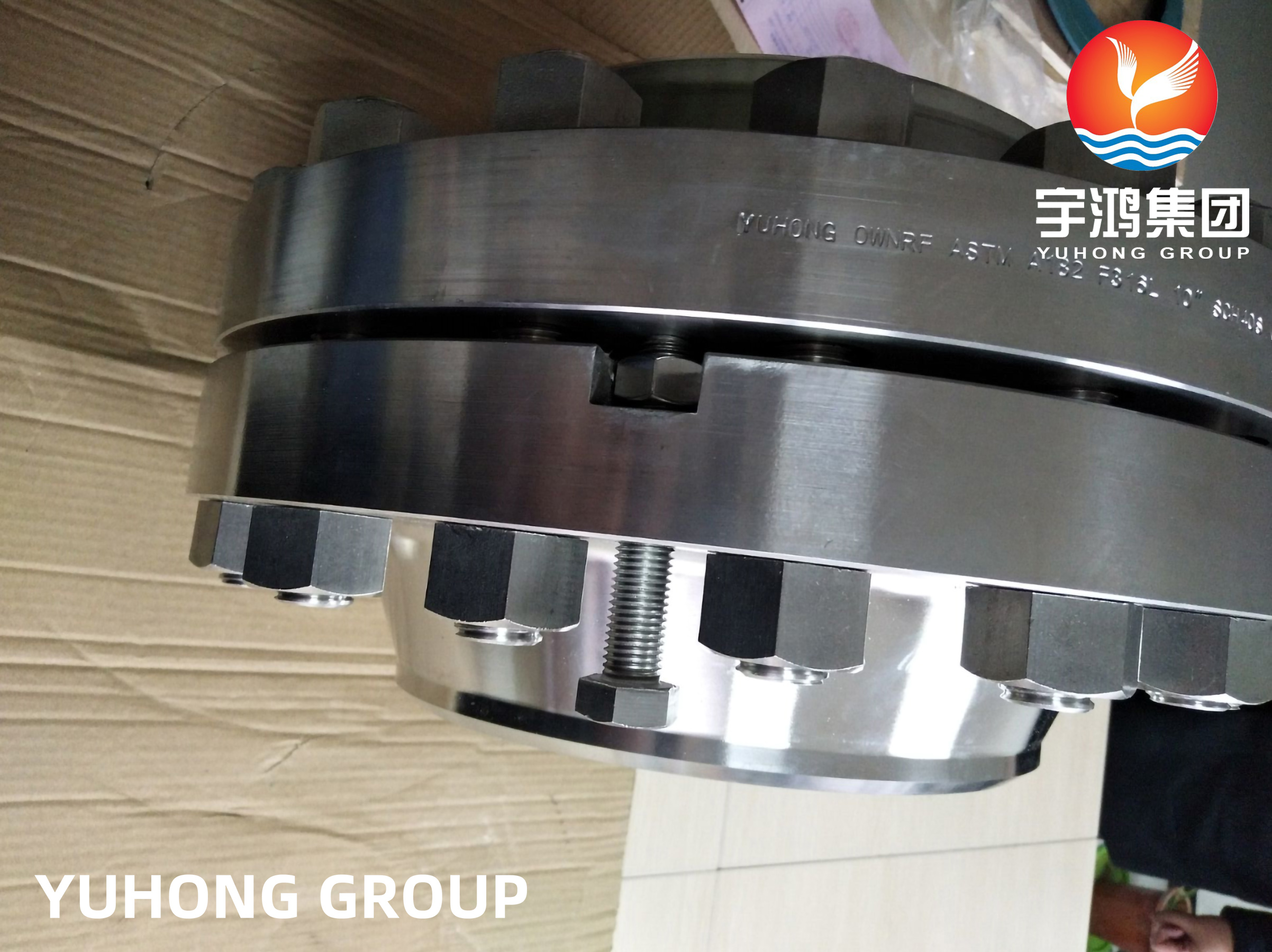
304, 304L, 316 and 316L are stainless steel grades commonly used in flanged joints including flanges, sealing elements and fasteners. 304, 304L, 316, and 316L are American Standard for Materials (ANSI or ASTM) grade designations for stainless steels that belong to the 300 series of austenitic stainless steels. This type of stainless steel is usually referred to as 18-8 stainless steel.
Due to the different alloying elements and the amount added, their physical, chemical and mechanical properties are also different. Compared with ordinary stainless steel, they have good corrosion resistance, heat resistance and processability. The corrosion resistance of 304L is similar to that of 304, but because the carbon content of 304L is lower than that of 304, its resistance to intergranular corrosion is stronger. 316 and 316L are molybdenum-containing stainless steels. Due to the addition of molybdenum, their corrosion resistance and heat resistance are better than those of 304 and 304L. Similarly, because the carbon content of 316L is lower than that of 316, its resistance to crystal corrosion is better. The mechanical strength of austenitic stainless steels of 304, 304L, 316 and 316L is low, the room temperature yield strength of 304 is 205MPa, 304L is 170MPa; the room temperature yield strength of 316 is 210MPa, and 316L is 200MPa. Therefore, the bolts made with them belong to the low-strength class of bolts.
(2) Why should flange joints not use bolts of a class of materials such as 304 and 316?
As mentioned in the previous lectures, the flange joint is due to the separation of the sealing surfaces of the two flanges due to the action of internal pressure, resulting in a corresponding reduction in gasket stress, and the second is due to the creep relaxation of the gasket or the creep of the bolt itself at high temperature. , which also reduces the gasket stress, so that the flange joint leaks and fails.
In actual operation, the loosening of the bolt force is inevitable, and the initially tightened bolt force will always drop over time. Especially for flange joints under high temperature and severe cycle conditions, after 10,000 hours of operation, the load loss of bolts often exceeds 50%, and it decreases with time and temperature.
When the flange and the bolt are made of different materials, especially when the flange is made of carbon steel and the bolt is made of stainless steel, the thermal expansion coefficient 2 of the bolt and flange material is different, such as the thermal expansion coefficient of stainless steel at 50°C (16.51×10⁻⁵/ °C) is larger than the thermal expansion coefficient of carbon steel (11.12×10⁻⁵/°C). After the device heats up, when the expansion of the flange is less than the expansion of the bolt, after the deformation is coordinated, the bolt elongation decreases, causing the bolt force to increase. Looseness can lead to leakage of flange joints. Therefore, in the case of high temperature equipment flange and pipe flange joints, especially the thermal expansion coefficients of flange and bolt materials are different, the thermal expansion coefficients of the two materials should be as close as possible.
It can be seen from (1) that the mechanical strength of austenitic stainless steels such as 304 and 316 is low, the room temperature yield strength of 304 is only 205MPa, and that of 316 is only 210MPa. Therefore, in order to improve the anti-relaxation and anti-fatigue ability of bolts, measures to increase the force of the mounting bolts are taken. For example, when the maximum mounting bolt force is used in the subsequent forum, the mounting bolt stress is required to reach 70% of the yield strength of the bolt material. , In this way, the strength grade of the bolt material must be improved, and the high-strength or medium-strength alloy steel bolt material must be used. Obviously, in addition to cast iron, non-metallic flanges or rubber gaskets, for flanges with higher pressure grades or semi-metallic and metal gaskets with large gasket stress, 304, 316 and other low-strength material bolts, due to the bolt force. Insufficient to meet the sealing requirements.
What needs special attention here is that there are two categories of 304 and 316 in the American stainless steel bolt material standard, namely B8 Cl.1 and B8 Cl.2 of 304 and B8M Cl.1 and B8M Cl.2 of 316. Cl.1 has undergone carbide solution treatment, while Cl.2 has undergone strain strengthening treatment in addition to solution treatment. Although there is no fundamental difference between B8 Cl.2 and B8 Cl.1 in chemical corrosion resistance, the mechanical strength of B8 Cl.2 is considerably improved relative to B8 Cl.1, such as B8 Cl.2 with a diameter of 3/4” The yield strength of the bolt material is 550MPa, while the yield strength of the B8 Cl.1 bolt material of all diameters is only 205MPa, which is more than twice the difference.
It is worth noting that when using low-strength bolt materials such as 304 and 316, even during the installation stage, because the torque is not controlled, the bolt may exceed the material yield strength or even break. Naturally, if there is leakage in the pressure test or when the operation starts, even if the bolts are continued to be tightened, the bolt force will not increase, and the leakage cannot be prevented. In addition, these bolts cannot be reused after dismantling. Because the bolts have been permanently deformed, the size of the cross-section of the bolts has become smaller, and it is easy to screw off after installation.