



Overview
Stainless Steel is often Referred to as Corrosion-Resistant Steel – it does not stain, Corrode or Rust as easily as Normal Carbon Steel. It would however be misleading to say it is Corrosion-Proof. It differs significantly from standard Carbon Steel due to the amount of Chromium present, which limits surface Corrosion unlike Carbon Steel which will Rust when exposed to air and any moisture in the Atmosphere. Due to its Anti-Oxidation Qualities, Stainless Steel is often a Popular Solution.
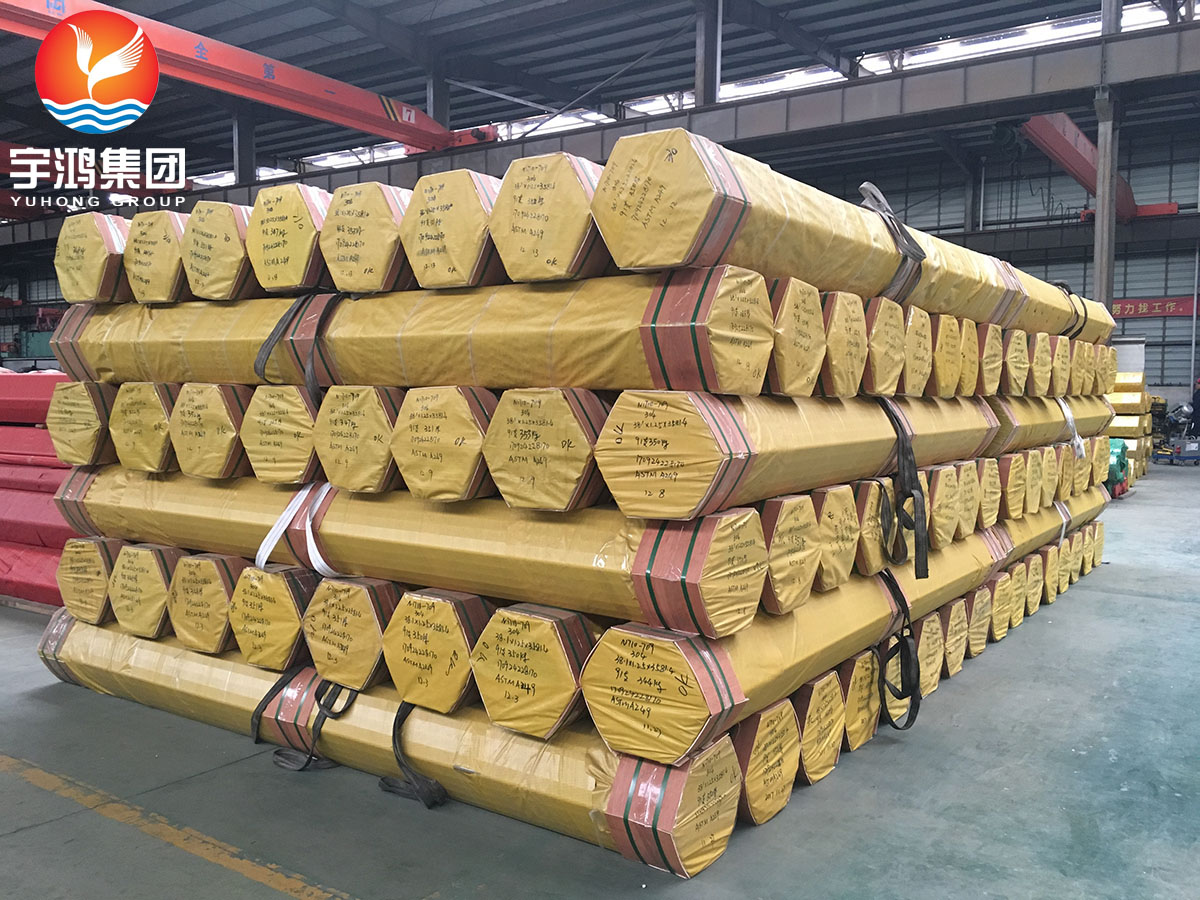
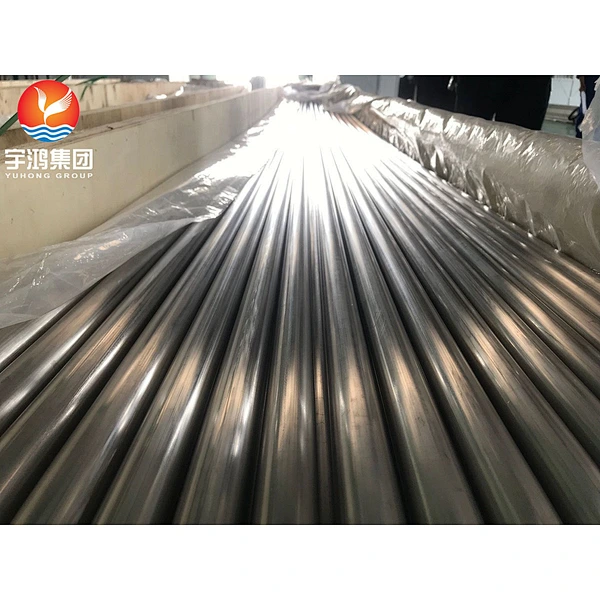
Stainless Steel Tube are often used in applications that require rigid materials for potable water conveyance. Manufacturers select Stainless Steel because certain manmade materials have unwanted or Unknown Exposure Effects while stainless steel has many desirable qualities for maintaining clean water. Steel Tube can also be used for structural support in Buildings and Vehicles. The terms"tube"and"pipe" are generally interchangeable, although technically,"tube" implies heightened Engineering Qualities. Tubes are generally manufactured based on standardized sizes.
Grades 321 and 347 are the basic austenitic 18/8 steel (Grade 304) stabilised by Titanium (321) or Niobium (347) additions. These grades are used because they are not sensitive to intergranular corrosion after heating within the carbide precipitation range of 425-850°C. Grade 321 is the grade of choice for applications in the temperature range of up to about 900°C, combining high strength, resistance to scaling and phase stability with resistance to subsequent aqueous corrosion.
A limitation with 321 is that titanium does not transfer well across a high temperature arc, so is not recommended as a welding consumable. In this case grade 347 is preferred - the niobium performs the same carbide stabilisation task but can be transferred across a welding arc. Grade 347 is therefore the standard consumable for welding 321. Grade 347 is only occasionally used as parent plate material.
Like other austenitic grades, 321 and 347 have excellent forming and welding characteristics, are readily brake or roll formed and have outstanding welding characteristics. Post-weld annealing is not required. They also have excellent toughness, even down to cryogenic temperatures.
Specification
ASTM A249/A249M-18a Standard Specification for Welded Austenitic Steel Boiler, Superheater, Heat-Exchanger, and Condenser Tubes.
| Dimensions | ASTM, ASME and API |
| Size | 1/8″NB TO 30″NB IN |
| Form | Seamless / Welded / ERW / EFW |
| Seamless 321 Pipes | 1/2"NB – 16"NB |
| Schedule | SCH20, SCH30, SCH40, STD, SCH80, XS, SCH60, SCH80, SCH120, SCH140, SCH160, XXS |
| Type | ASTM A249 TP321 Welded Tubes |
| Specialized in | Large Diameter Size |
| Length | Single Random, Double Random & Cut Length. |
| Form | Round, Square, Rectangular, Hydraulic Etc |
| End | Plain End, Beveled End, Treaded |
Chemical Composition
Cr | Ni | Mo | Cu | Ti | C | Mn | Si | P | S | N | Fe | |
|---|---|---|---|---|---|---|---|---|---|---|---|---|
MIN | 17.0 | 9.0 | - | - | 5x(C+N) | - | - | 0.25 | - | - | - | - |
MAX | 19.0 | 12.0 | 0.75 | 0.75 | 0.70 | 0.08 | 2.0 | 1.0 | 0.04 | 0.03 | 0.1 | Bal |
Mechanical Properties
Grade | Tensile Strength | Yield Strength | Elongation | Hardness | |
| Rockwell B (HR B) max | Brinell (HB) max | ||||
| 321 | 515 | 205 | 40 | 95 | 217 |
Applications
- 1. Aircraft piston engine manifolds and exhaust stacks
- 2. Expansion joints
- 3. Thermal oxidizers
- 4. Refinery equipment
- 5. High temperature chemical process equipment