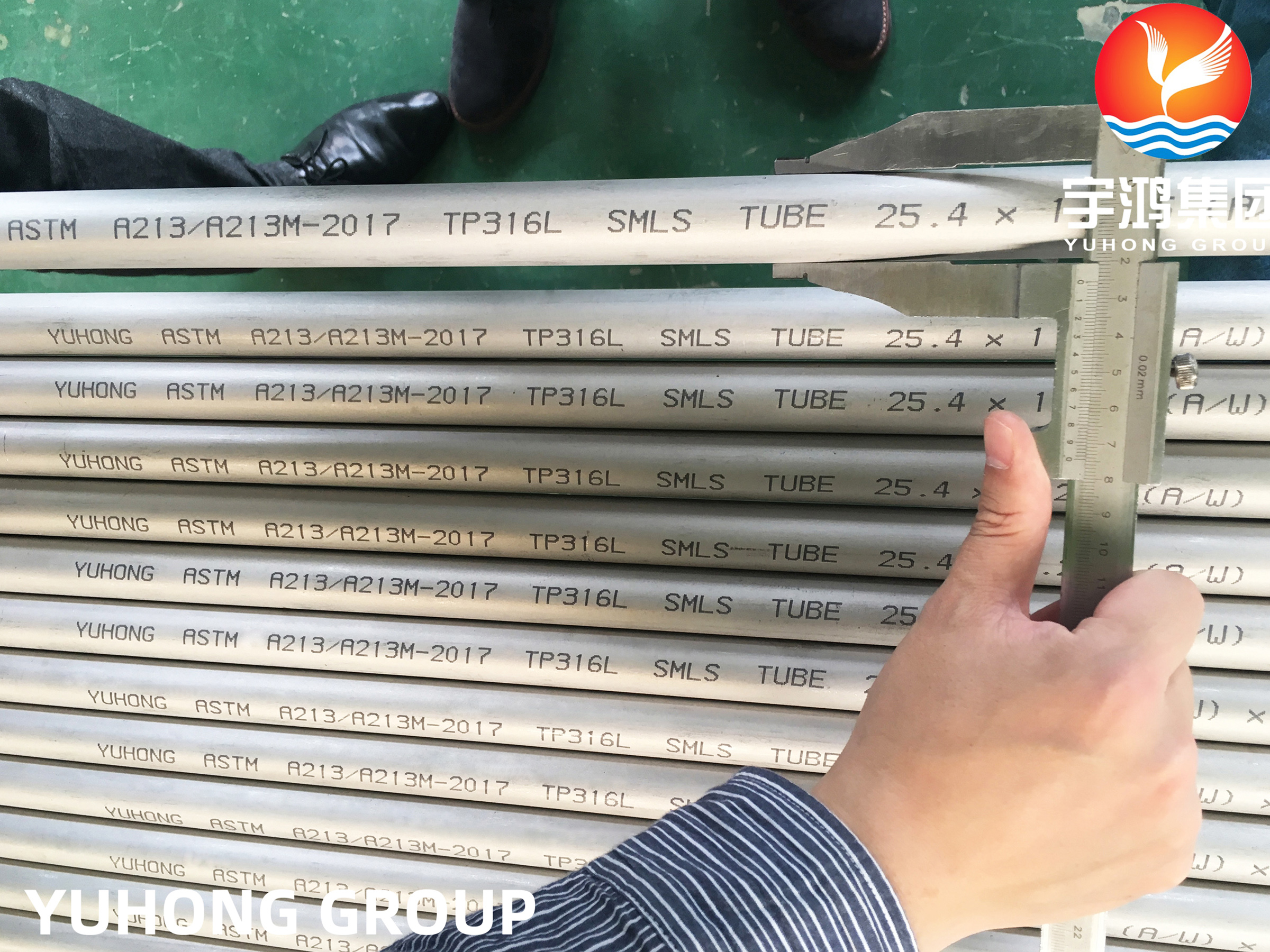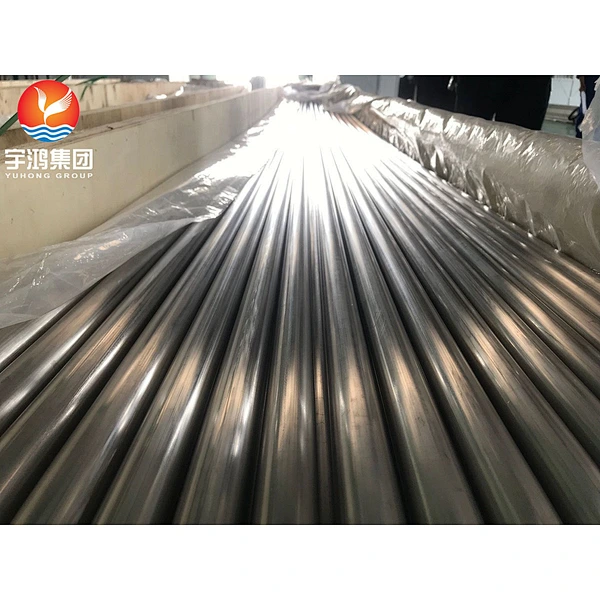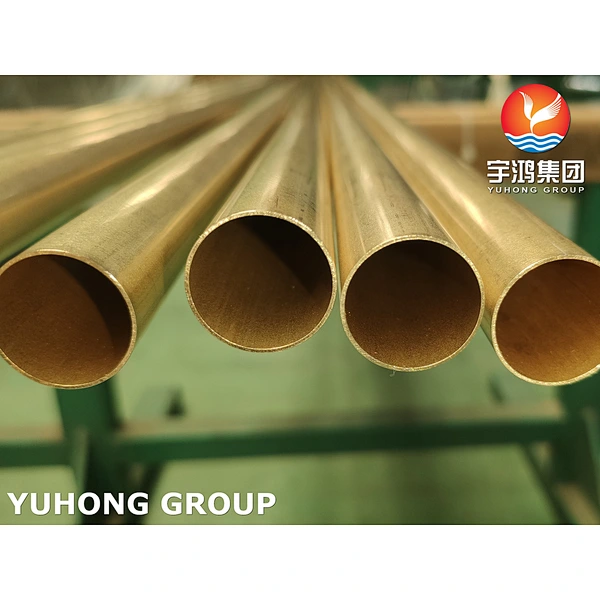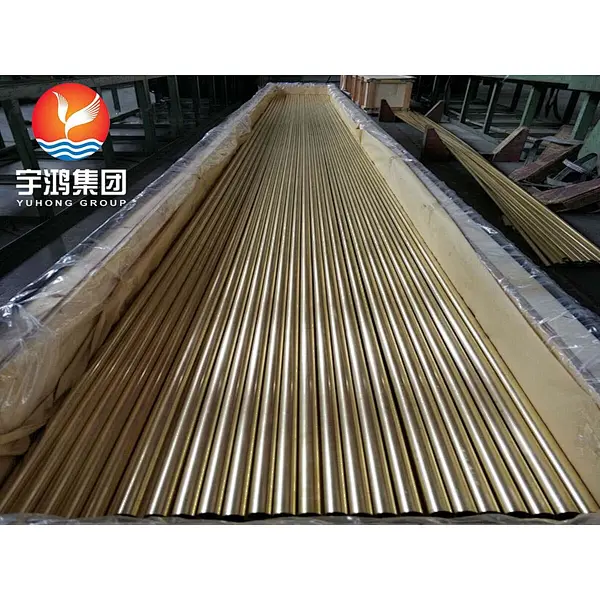
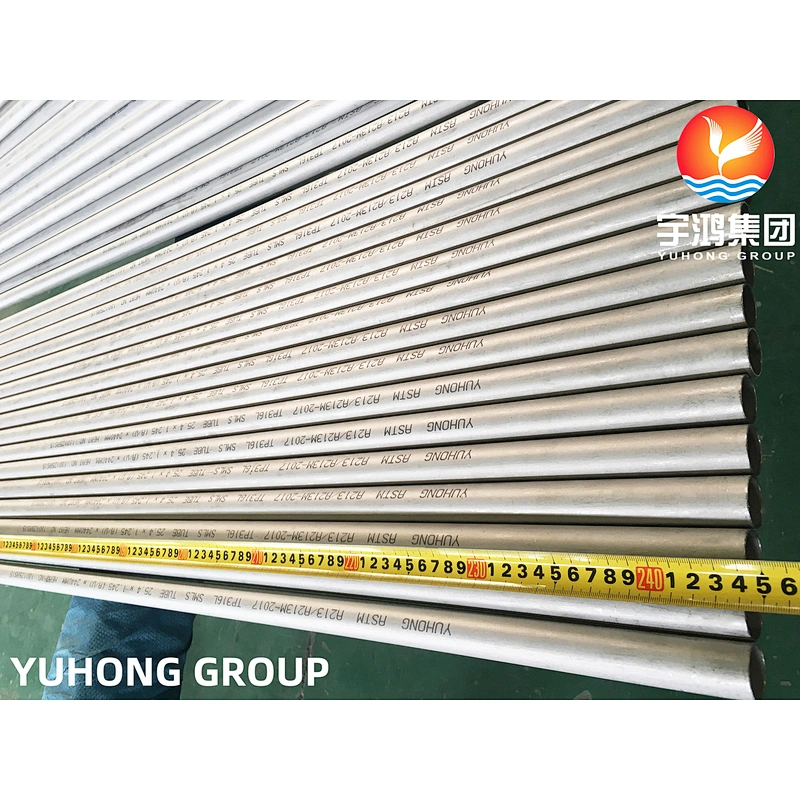

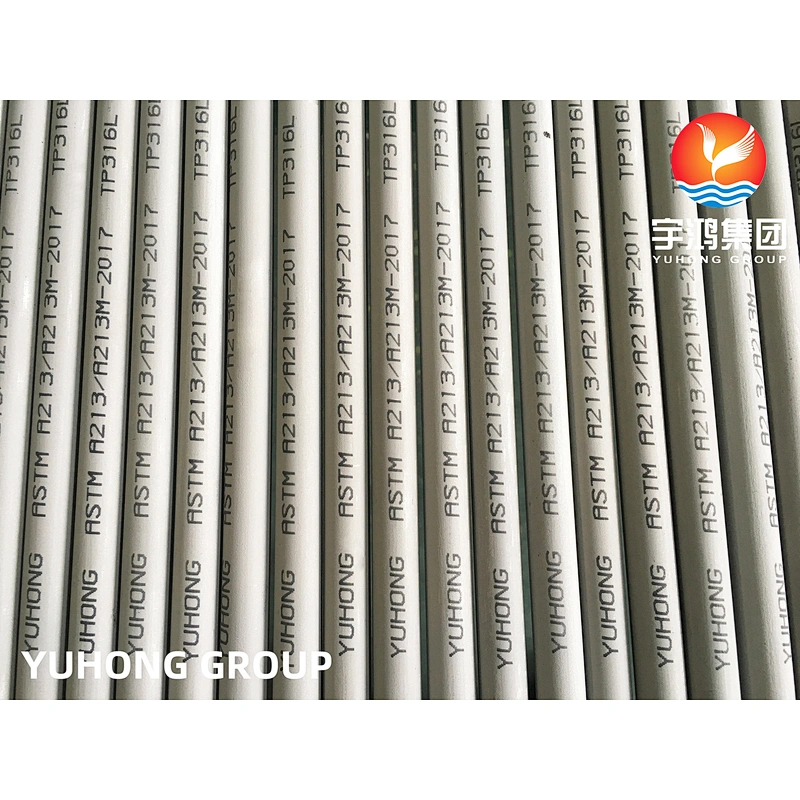
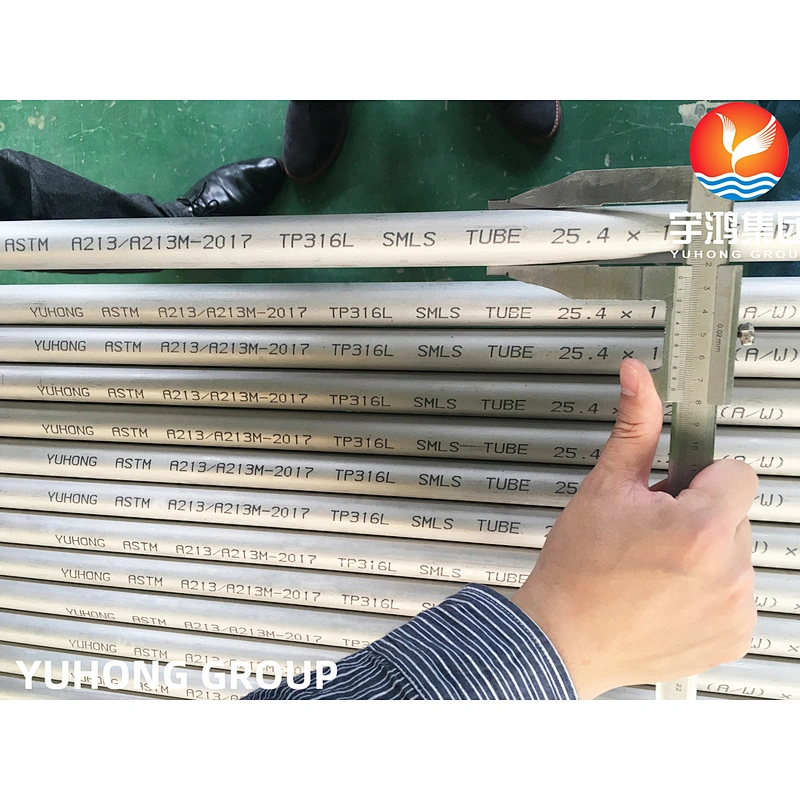
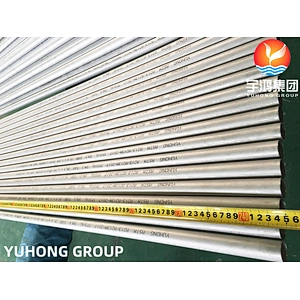

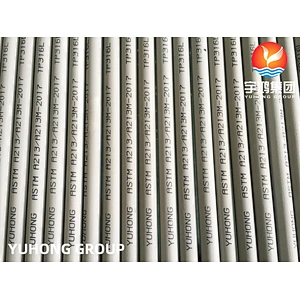

Overview
Grade 316 is the standard molybdenum-bearing grade, second in importance to 304 amongst the austenitic stainless steels. The molybdenum gives 316 better overall corrosion resistant properties than Grade 304, particularly higher resistance to pitting and crevice corrosion in chloride environments. It has excellent forming and welding characteristics. It is readily brake or roll formed into a variety of parts for applications in the industrial, architectural, and transportation fields. Grade 316 also has outstanding welding characteristics. Post-weld annealing is not required when welding thin sections.
Grade 316L, the low carbon version of 316 and is immune from sensitisation (grain boundary carbide precipitation). Thus it is extensively used in heavy gauge welded components (over about 6mm). Grade 316H, with its higher carbon content has application at elevated temperatures, as does stabilised grade 316Ti.
The austenitic structure also gives these grades excellent toughness, even down to cryogenic temperatures. It is the preferred steel for use in marine environments because of its greater resistance to pitting corrosion than other grades of steel. The fact that it is negligibly responsive to magnetic fields means that it can be used in applications where a non-magnetic metal is required. In addition to molybdenum, 316 also contains a number of other elements in varying concentrations. Like other grades of stainless steel, marine grade stainless steel is a relatively poor conductor of both heat and of electricity when compared to metals and other conductive materials.
While 316 is not completely rust-proof, the alloy is more corrosion-resistant than other common stainless steels. Surgical steel is made from subtypes of 316 stainless steel. It is common for 316 and 316L to be stocked in"Dual Certified"form - mainly in plate and pipe. These items have chemical and Mechanical Properties complying with both 316 and 316L specifications. Such dual certified product does not meet 316H specification and may be unacceptable for high temperature applications.
Specification
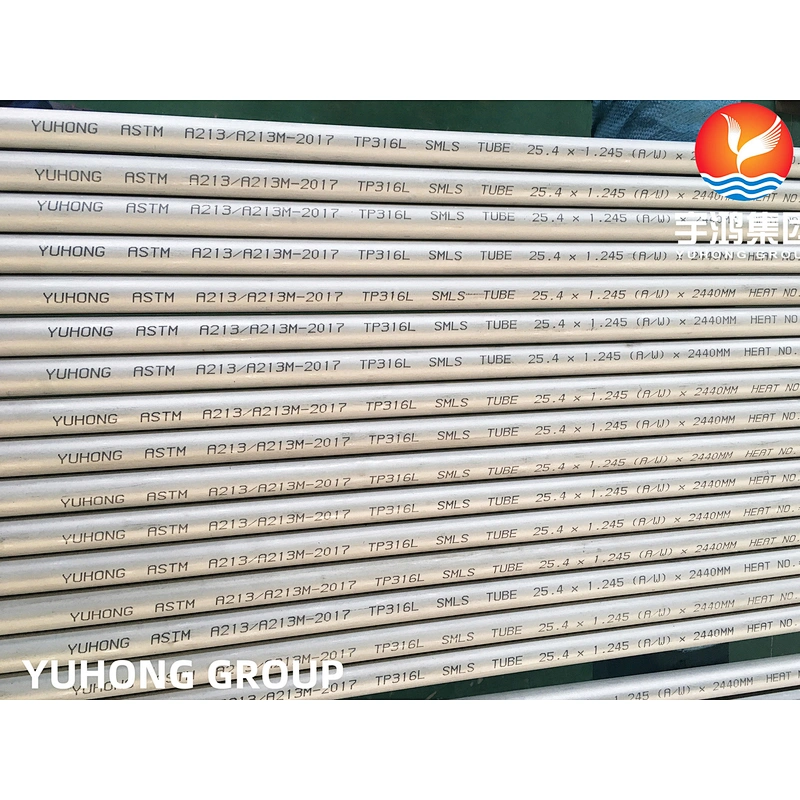
ASTM A213/A213M-21a Standard Specification for Seamless Ferritic and Austenitic Alloy-Steel Boiler, Superheater, and Heat-Exchanger Tubes.
ASTM A249 / A249M : Standard Specification for Welded Austenitic Steel Boiler, Superheater Heat-Exchanger, and Condenser Tubes.
Other Standard : DIN 17456 , DIN 17458, EN10216-5, GOST 9940-81, GOST 9941-81, JIS-G3463...
| Specifications | ASTM A213 / ASME SA213 |
| Dimensions | ASTM, ASME and API |
| Range | 1/2"OD - 12"OD |
| Outside Diameter | 3.00 mm - 219.10 mm, 6.35 mm O.D to 114.3 mm O.D |
| Length | Single Random, Double Random & Required Length |
| Thickness | 0.40 mm - 12.70 mm, 0.8 mm to12.7 mm |
| Schedule | SCH20, SCH30, SCH40, STD, SCH80, XS, SCH60, SCH120, SCH140, SCH160, XXS |
| Type | Seamless |
| Form | Round Tube, Square Tube, Rectangular Tube |
| End | Plain End, Beveled End, Treaded |
SS 316L Pipes & Tubes Equivalent Grades:
| Grade | UNS No | Old British | Euronorm | Swedish SS | Japanese JIS | ||
| BS | En | No | Name | ||||
| 316 | S31600 | 316S31 | 58H, 58J | 1.4401 | X5CrNiMo17-12-2 | 2347 | SUS 316 |
| 316L | S31603 | 316S11 | - | 1.4404 | X2CrNiMo17-12-2 | 2348 | SUS 316L |
| 316H | S31609 | 316S51 | - | - | - | - | - |
Chemical Composition
| Grade | C | Mn | Si | P | S | Cr | Mo | Ni | Fe |
| SS 316L | 0.035 max | 2.0 max | 1.0 max | 0.045 max | 0.030 max | 16.00 - 18.00 | 2.00 - 3.00 | 10.00 - 14.00 | 68.89 min |
Mechanical Properties
| Density | Melting Point | Tensile Strength | Yield Strength (0.2%Offset) | Elongation |
| 8.0 g/cm3 | 1399 °C (2550 °F) | Psi – 75000 , MPa – 515 | Psi – 30000 , MPa – 205 | 35 % |
Physical Properties
| Grade | Density (kg/m3) | Elastic Modulus (GPa) | Mean Co-eff of Thermal Expansion (µm/m/°C) | Thermal Conductivity (W/m.K) | Specific Heat 0-100°C (J/kg.K) | Elec Resistivity (nΩ.m) | |||
| 0-100°C | 0-315°C | 0-538°C | At 100°C | At 500°C | |||||
| 316/L/H | 8000 | 193 | 15.9 | 16.2 | 17.5 | 16.3 | 21.5 | 500 | 740 |
Applications
- 1. Food preparation equipment particularly in chloride environments.
- 2. Laboratory benches & equipment.
- 3. Coastal architectural panelling, railings & trim.
- 4. Boat fittings.
- 5. Chemical containers, including for transport.
- 6. Heat Exchangers.
- 7. Woven or welded screens for mining, quarrying & water filtration.
- 8. Threaded fasteners.
- 9. Springs.
Material Grade
| American Standard | Austenitic Steel: TP304,TP304L,TP304H, TP304N, TP310S,TP316,TP316L,TP316Ti,TP316H, TP317,TP317L, TP321, TP321H,TP347, TP347H,904L… Duplex Steel : S32101,S32205,S31803,S32304,S32750, S32760 Others:TP405,TP409, TP410, TP430, TP439,... |
| Europen Standard | 1.4301,1.4307,1.4948,1.4541,1.4878,1.4550,1.4401,1.4404,1.4571,1.4438, 1.4841,1.4845,1.4539,1.4162, 1.4462, 1.4362, 1.4410, 1.4501 |
| Russia Standard | 08Х17Т,08Х13,12Х13,12Х17,15Х25Т,04Х18Н10,08Х20Н14С2, 08Х18Н12Б,10Х17Н13М2Т,10Х23Н18,08Х18Н10,08Х18Н10Т, 08Х18Н12Т,08Х17Н15М3Т,12Х18Н10Т,12Х18Н12Т,12Х18Н9, 17Х18Н9, 08Х22Н6Т, 06ХН28МДТ |
Some of the quality tests carried out by us includes
| Corrosion Test | Conducted only when specially requested by the client |
| Chemical Analysis | Test done as per required quality standards |
| Destructive / Mechanical Testing | Tensile | Hardness | Flattening | Flare | Flange |
| Reverse-bend and Re. flat tests | Carried out in full compliance with relevant standards & ASTM A-450 and A-530 norms, which ensures trouble-free expansion, welding & use at customers end |
| Eddy Current Testing | Done to detect homogeneities in subsurface by using Digital Flaw-mark Testing System |
| Hydrostatic Testing | 100% Hydrostatic Testing carried out according to ASTM-A 450 norms for checking tube leakage, and biggest pressure we can support 20Mpa/7s . |
| Air Under Pressure Test | To check any evidence of air leakage |
| Visual Inspection | After passivation, every single length of tubes & pipes is subjected to thorough visual inspection by trained staff for detecting surface flaws & other imperfections |
Supplementary Testing
Apart from the above mentioned tests, we also carry out on the manufactured products supplementary testing. The tests conducted under this include:
|
|
|