





Product Overview
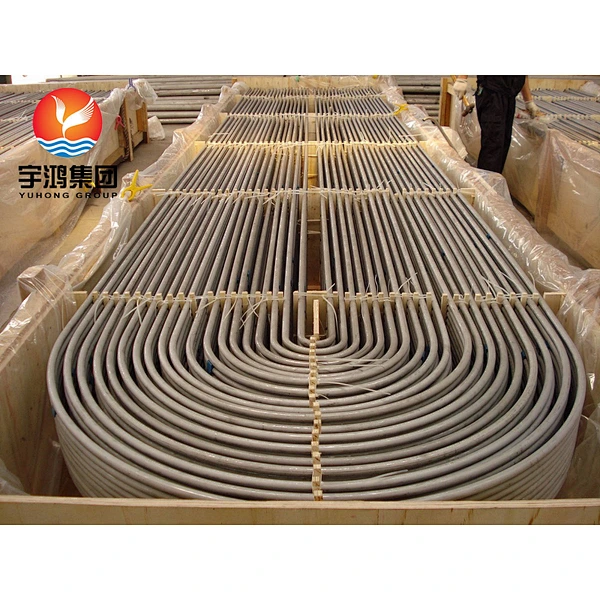
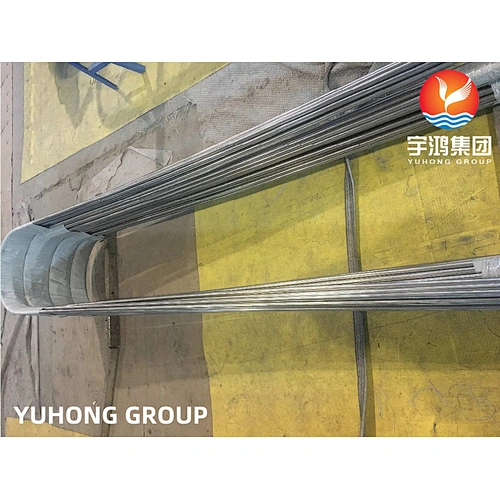
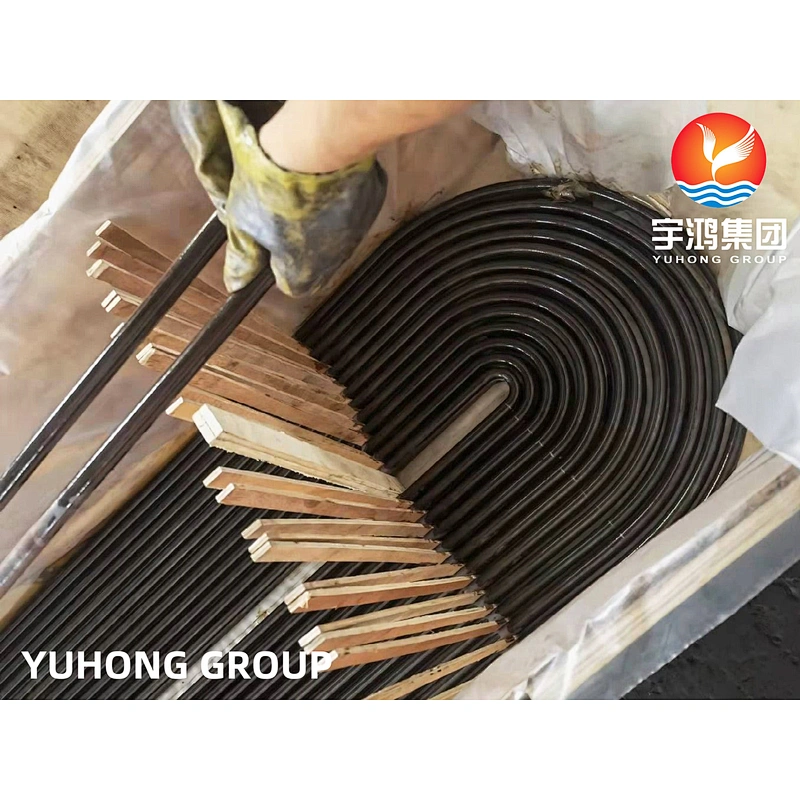
ASME SA179 / ASTM A179 seamless U-bend heat exchanger tubes are core components of shell-and-tube condensers, heat exchangers, and similar heat transfer equipment. Our A179 U-bend tubes are manufactured from premium low-carbon steel through cold-drawn forming and strict heat treatment processes. They feature high dimensional accuracy, excellent surface finish, superior plasticity, and easy expansion and bending, making them widely suitable for condensing and heat transfer systems in petrochemical, power generation, nuclear, and seawater desalination industries.
The A179 standard has a clearly defined positioning: seamless cold-drawn tubes with thin/small wall thickness specifically for heat transfer elements, rather than general fluid transport pipes. Its outer diameter range covers 3.2 mm to 76.2 mm, and the standard uses"minimum wall thickness"as the design basis, with strict requirements for dimensional tolerances, surface quality, and process performance. In condenser tube bundle applications, A179 has become the preferred solution for economic efficiency and reliability under low-to-medium pressure conditions, owing to its excellent cold-bending formability and expansion performance.
Core Material Characteristics
Chemical Composition Design
The low-carbon composition system of A179 is the foundation of its excellent processing performance:
| Element | Content (Heat Analysis) |
|---|---|
| Carbon (C) | 0.06% – 0.18% |
| Manganese (Mn) | 0.27% – 0.63% |
| Phosphorus (P) | ≤ 0.035% |
| Sulfur (S) | ≤ 0.035% |
The low carbon content (C ≤ 0.18%) ensures good plasticity and weldability, while low phosphorus and sulfur help control impurities and improve toughness. This composition design makes the tubes resistant to cracking during the bending and expansion processes of condenser tube bundles, resulting in a high forming pass rate.
Mechanical Properties
| Property | Requirement | Notes |
|---|---|---|
| Hardness | ≤ 72 HRB | Mandatory standard requirement |
| Tensile Strength | ≥ 325 MPa | Design reference value |
| Yield Strength | ≥ 180 MPa | Design reference value |
| Elongation | ≥ 35% | Design reference value |
The hardness上限 (72 HRB) is the only mandatory mechanical property requirement in the A179 standard. Its purpose is to ensure the tubes are easy to expand and bend, avoiding cracking during processing. For condenser tube bundles, expansion quality directly determines the sealing reliability at the tube-to-tubesheet connection, making hardness control critical to this process.
Manufacturing Process Requirements
A179 steel tubes must be produced using the seamless process and formed through cold drawing. After final cold drawing, they must be heat treated at ≥ 650°C to eliminate cold-working stresses and restore plasticity. The cold-drawing process gives the tubes high dimensional accuracy and excellent surface quality, which are key to achieving efficient heat transfer and reliable sealing in condenser heat exchanger tubes.
Comparison with Other Common Condenser Tube Materials
Comparison with ASTM A556
A556 is another seamless cold-drawn carbon steel tube standard in the American standard system, specifically for feedwater heaters, and also supports U-bend tube forming. The two standards are in direct competition in the heat exchanger tube bundle field, with core differences as follows:
| Comparison Dimension | ASTM A179 | ASTM A556 |
|---|---|---|
| Standard Positioning | General heat exchanger/condenser tubes | Feedwater heater专用 tubes |
| Size Range | OD 1/8"–3"(3.2–76.2 mm) | OD 5/8"–1¼"(15.9–31.8 mm) |
| Hardness Requirement | ≤ 72 HRB (mandatory) | No separate hardness上限 clause; tensile properties主导 |
| Non-Destructive Testing | Optional | Each tube must pass NDT after final heat treatment |
| U-Bend Clause | Not separately specified in standard text | Standard text explicitly covers U-bend forming |
Selection Principle: For conventional condensers and heat exchangers, A179 meets the requirements; for feedwater heater applications (especially high-pressure feedwater systems in power plants), A556 is recommended for its mandatory NDT and feedwater heater-specific design, which offer greater safety redundancy.
Comparison with ASTM A192
A192 is also an American standard seamless carbon steel tube, but positioned as high-pressure boiler and superheater tubes, complementing A179's general heat exchanger positioning.
| Comparison Dimension | ASTM A179 | ASTM A192 |
|---|---|---|
| Core Application | Heat exchangers, condensers, heat transfer equipment | High-pressure boilers, superheaters, steam piping |
| Strength Level | Tensile ≥325 MPa, Yield ≥180 MPa | Yield typically ≥220 MPa, Tensile ≥415 MPa range |
| Carbon Content | 0.06–0.18% (low-carbon design) | Slightly wider, strength-oriented |
| Processing Performance | Focus on expansion and bending formability | Focus on high-temperature pressure-bearing strength |
Selection Principle: For atmospheric to low-medium pressure condenser tube bundles, select A179; for high-pressure boiler tube bundles and superheater tubes, select A192. The two have clear divisions of labor in the American standard system, with no substitution relationship.
Application Boundaries of A179
The core advantage of A179 lies in its excellent cold-bending formability and expansion performance, and its mandatory 72 HRB hardness上限 clause is specifically designed to guarantee this advantage. In mildly corrosive condensing conditions such as clean steam, condensate, and low-concentration process media, A179 is the best balance of economy and processability. For acidic, sulfur-containing, or high-chloride media environments, upgrading to stainless steel or corrosion-resistant alloy materials should be evaluated.
Key Process Requirements for U-Bend Tubes
The core quality of U-bend tubes for condensers lies in the control of the bending process, which directly affects equipment service life and operational safety:
Bending Radius
Common bending radius ranges from 1.5 times the tube outer diameter to 1250 mm. For tubes with OD greater than 28 mm, the minimum bending radius must be confirmed through negotiation based on specific working conditions. We can customize U-bend tubes with different bending radii according to customer drawings.
Wall Thickness Thinning Control
The outer wall thickness of the bend is reduced due to bending deformation. By optimizing bending process parameters, we can control the outer wall thinning rate to within 7%, far superior to the industry-common 15% control standard. Slight thickening on the inner side is allowed, and the overall wall thickness distribution is uniform, ensuring pressure-bearing capacity.
Heat Treatment and Inspection
Stress Relief Annealing: After bending, stress relief annealing (e.g., around 300°C) is performed as needed to eliminate cold working hardening and stabilize dimensions.
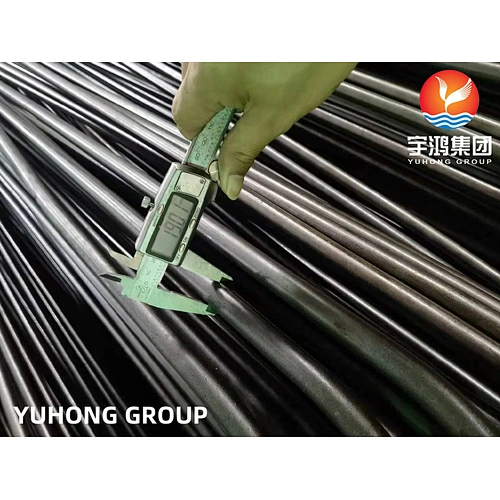
Hydrostatic Testing: Each U-bend tube undergoes hydrostatic testing to ensure sealing and pressure-bearing performance.
Non-Destructive Testing: Eddy current testing, ultrasonic testing, etc., can be performed upon customer request to ensure internal tube quality.
Surface Quality
Finished tubes have no oxide scale and are smooth and clean. For high-end condenser applications, electrolytic polishing can be provided, achieving surface roughness of Ra ≤ 0.2 μm, effectively reducing fouling adhesion and extending equipment cleaning cycles.
Typical Condenser Application Scenarios
Power Industry: Power plant condensers, feedwater heaters, low-pressure heat exchange equipment
Petrochemical: Shell-and-tube condensers, reboilers, coolers
Seawater Desalination: Multi-stage flash condensers, reverse osmosis pretreatment heat exchangers
Refrigeration and Air Separation: Evaporator and condenser tube bundles
In mildly corrosive condensing conditions (such as clean steam, condensate, and low-concentration process media), A179 is the preferred solution for condenser tube bundle materials due to its excellent processing performance and economic efficiency.
Common Specification Reference
| Parameter | Common Range |
|---|---|
| Outer Diameter | 19.05 mm, 25.4 mm, 38.1 mm, etc. |
| Wall Thickness | 1.65 mm, 2.11 mm, 2.77 mm, etc. |
| Length | Custom cut to customer requirements |
| Bending Radius | 1.5D–1250 mm (customizable) |
We can customize U-bend heat exchanger tubes of different specifications, materials, and bending forms according to customer drawings and technical agreements.
Quality Assurance and Services
Standard Compliance: Products are strictly manufactured to ASTM A179 / ASME SA179 standards, with Material Test Certificates (MTC) and third-party inspection reports available.
Full Process Control: Full-process quality traceability from raw material incoming inspection, cold drawing, heat treatment, bending forming, to finished product inspection.
Customization Services: Drawing-based customization supported, with personalized process solutions for bending radius, wall thickness thinning rate, surface treatment, etc.
Technical Support: Assistance with material selection and applicability confirmation based on customer condenser working conditions.
Contact Us
For product quotations, technical specifications, or samples, please contact our sales and technical team. We will provide professional selection recommendations and customized solutions based on your condenser working conditions.