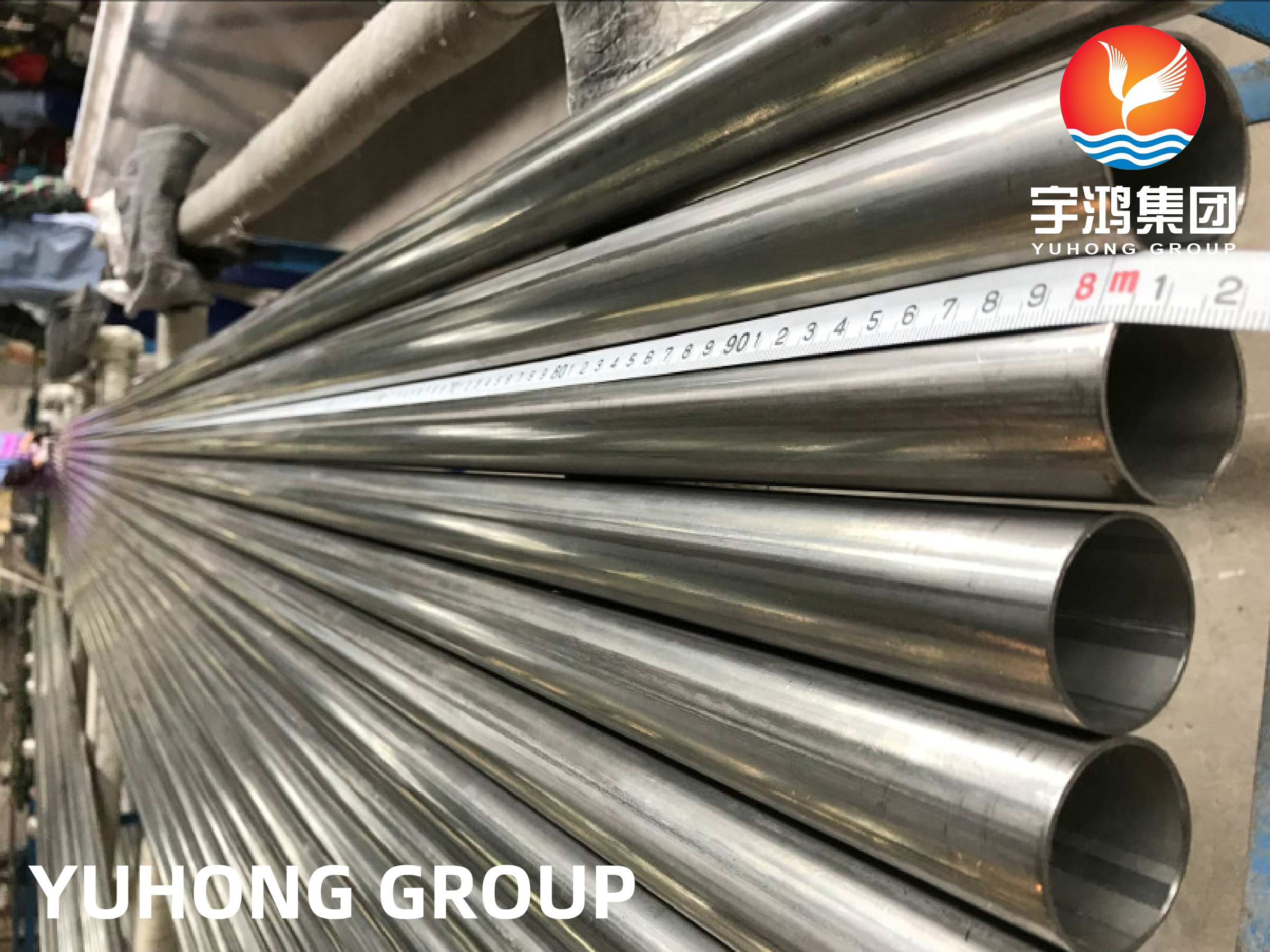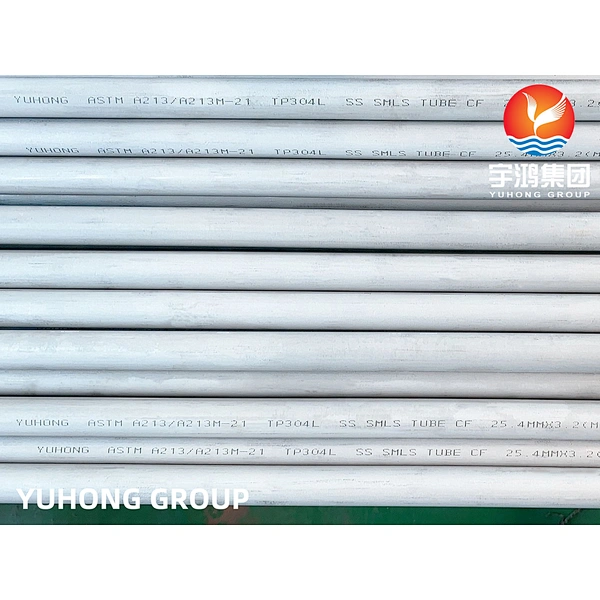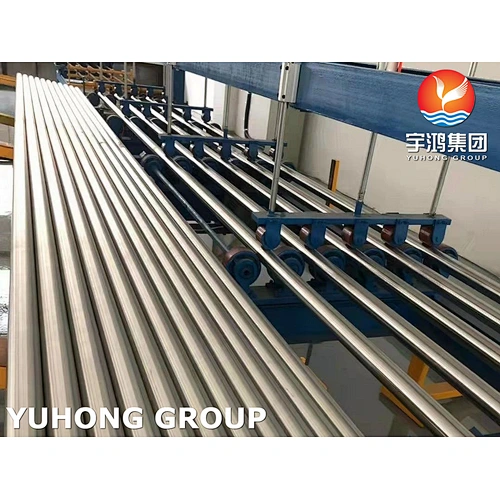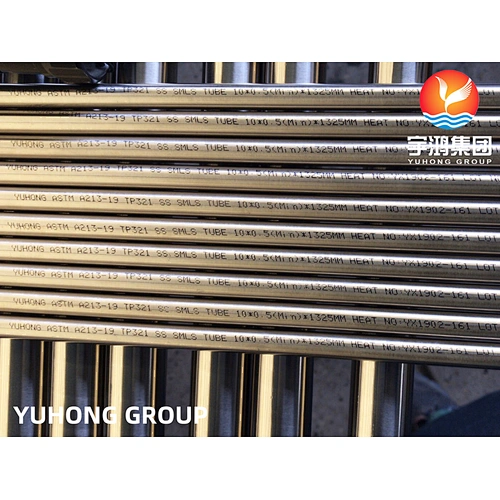

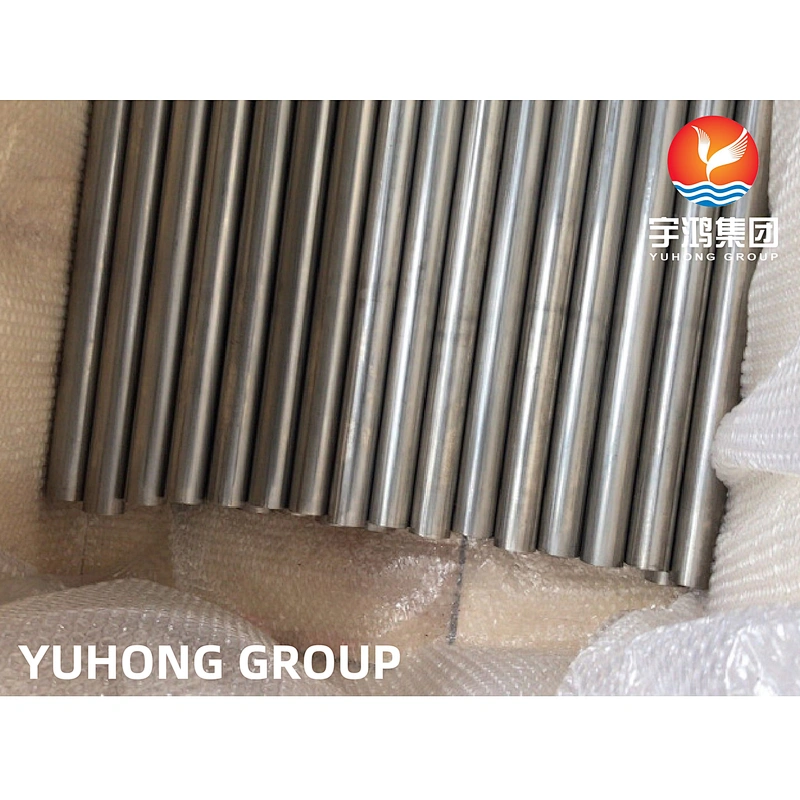


302(S30200), 304(S30400), 304L(S30403), and 305(S30500) stainless steels are variations of the 18 percent chromium – 8 percent nickel austenitic alloy, the most familiar and most frequently used alloy in the stainless steel family. These alloys may be considered for a wide variety of applications where one or more of the following properties are important:
1. Resistance to corrosion
2. Prevention of product contamination
3. Resistance to oxidation
4. Ease of fabrication
5. Excellent formability
6. Beauty of appearance
7. Ease of cleaning
8. High strength with low weight
9. Good strength and toughness at cryogenic temperatures
10. Ready availability of a wide range of product forms
Specification
ASTM A249/A249M-18a Standard Specification for Welded Austenitic Steel Boiler, Superheater, Heat-Exchanger, and Condenser Tubes.
| Product Form | Specification | |
| ASTM | ASME | |
| Plate, Sheet and Strip | A 240 | SA-240 |
| Seamless and/or Welded Tubing | A 249/A 249M (304, 304L, 305 only), A 269/ A269M (304, 304L only), A554 | SA-249/SA-249M (304, 304L only) |
| Seamless and/or Welded Pipe | A 312/A 312M, A 409/A 409M (304, 304L only) | SA-312/SA-312M,SA-409/SA- 409M (304, 304L only) |
| Bar, Wire | A 276, A 478, A 479/A 479M (302, 304, 304L only) | SA-479/SA-479M (302, 304, 304L only) |
| Billet, Forgings | A 314, A 473 | - |
| Flanges, Fittings | A 182/A 182M, A 403/A 403M (304, 304L only) | SA-182/SA-182M, SA-403/SA- 403M (304, 304L only) |
Grade | C | Mn | Si | P | S | Cr | Mo | Ni | N | |
304 | min. | - | - | - | - | - | 18.0 | - | 8.0 | - |
max. | 0.08 | 2.0 | 0.75 | 0.045 | 0.030 | 20.0 | 10.5 | 0.10 | ||
304L | min. | - | - | - | - | - | 18.0 | - | 8.0 | - |
max. | 0.030 | 2.0 | 0.75 | 0.045 | 0.030 | 20.0 | 12.0 | 0.10 | ||
304H | min. | 0.04 | - | - | - | - | 18.0 | - | 8.0 | - |
max. | 0.10 | 2.0 | 0.75 | 0.045 | 0.030 | 20.0 | 10.5 | |||
Grade | Tensile Strength | Yield Strength | Elongation | Hardness | |
Rockwell B | Brinell | ||||
304 | 515 | 205 | 40 | 92 | 201 |
304L | 485 | 170 | 40 | 92 | 201 |
304H | 515 | 205 | 40 | 92 | 201 |
302, 304, 304L and 305 austenitic stainless steels provide useful resistance to corrosion on a wide range of moderately oxidizing to moderately reducing environments. The alloys are used widely in equipment and utensils for processing and handling of food, beverages and dairy products. Heat exchangers, piping, tanks and other process equipment in contact with fresh water also utilize these alloys. Building facades and other architectural and structural applications exposed to non-marine atmospheres also heavily utilize the 18-8 alloys. In addition, a large variety of applications involve household and industrial chemicals.
Intergranular Corrosion
Exposure of the 18-8 austenitic stainless steels to temperatures in the 800°F to 1500°F (427°C to 816°C) range may cause precipitation of chromium carbides in grain boundaries. Such steels are “sensitized” and subject to intergranular corrosion when exposed to aggressive environments. The carbon content of 302, 304, and 305 alloys may allow sensitization to occur from thermal conditions experienced by autogenous welds and heat-affected zones of welds. For this reason, the low carbon 304L alloy is preferred for applications in which the material is put into service in the as-welded condition. Low carbon content extends the time necessary to precipitate a harmful level of chromium carbides, but does not eliminate the precipitation reaction for material held for long times in the precipitation temperature range.
Stress Corrosion CrackingThe 302, 304, 304L and 305 alloys are the most susceptible of the austenitic stainless steels to stress corrosion cracking (SCC) in halides because of their relatively low nickel content. Conditions which cause SCC are: (1) presence of halide ions (generally chloride), (2) residual tensile stresses, and (3) temperatures in excess of about 120°F (49°C). Stresses may result from cold deformation of the alloy during forming, or by roller expanding tubes into tubesheets, or by welding operations which produce stresses from the thermal cycles used. Stress levels may be reduced by annealing or stress relieving heat treatments following cold deformation, thereby reducing sensitivity to halide SCC. The low carbon 304L material is the better choice for service in the stress relieved condition in environments which might cause intergranular corrosion.
Pitting/Crevice Corrosion
The 18-8 alloys have been used very successfully in fresh waters containing low levels of chloride ion. Although 304 tubing has been used in power plant surface condenser cooling water with as much as 1000 ppm chloride, this performance can only result from careful cleaning of the tubes during use and care to avoid stagnant waters from remaining in contact with the tube. Generally, 100 ppm chloride is considered to be the limit for the 18-8 alloys, particularly if crevices are present. Higher levels of chloride might cause crevice corrosion and pitting. For the more severe conditions of higher chloride levels, lower pH and/or higher temperatures, alloys with higher molybdenum content such as 316 or AL-6XN alloy should be considered. Interestingly, 304 and 304L stainless steels pass the 100 hour, 5 percent neutral salt spray test (ASTM B117) with no rusting or staining of samples. However, 304 stainless building exteriors exposed to salt mists from the ocean are prone to pitting and crevice corrosion accompanied by severe discoloration. The 18-8 alloys are not recommended for exposure to marine environments.