Product Overview
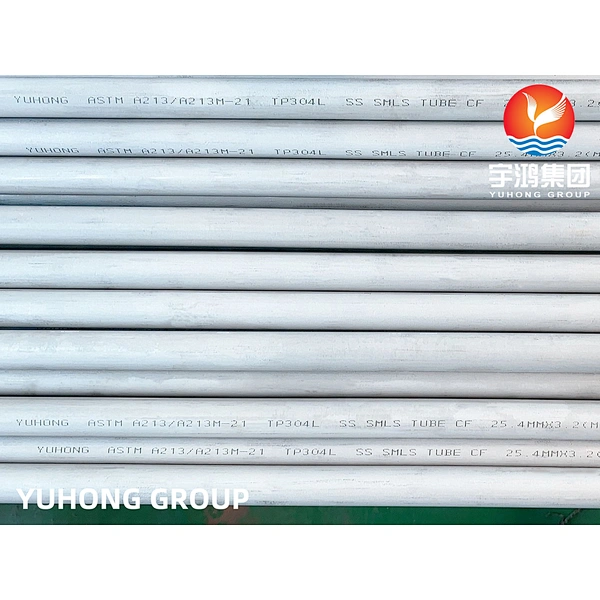
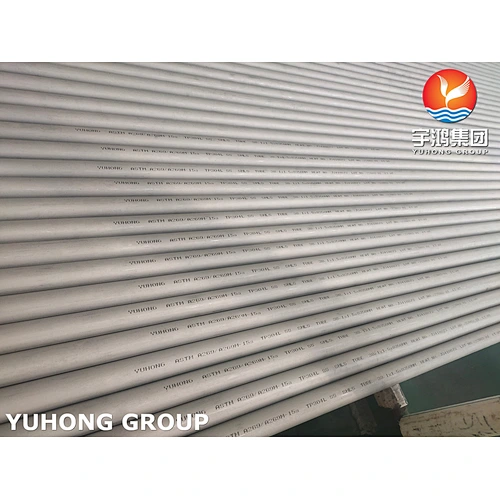
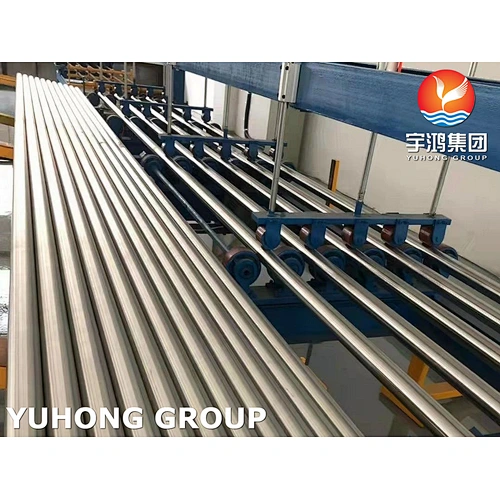
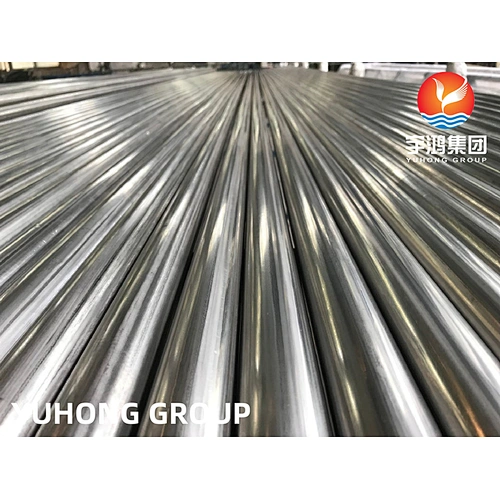
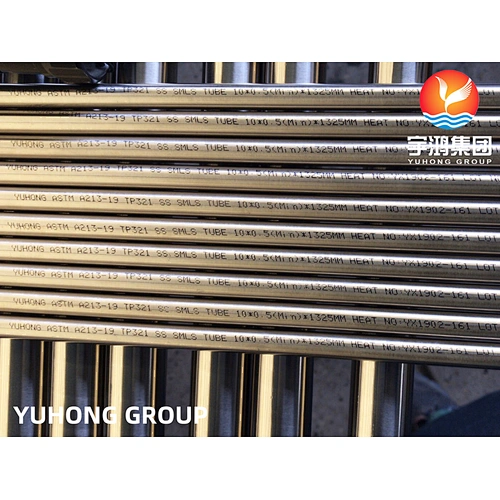
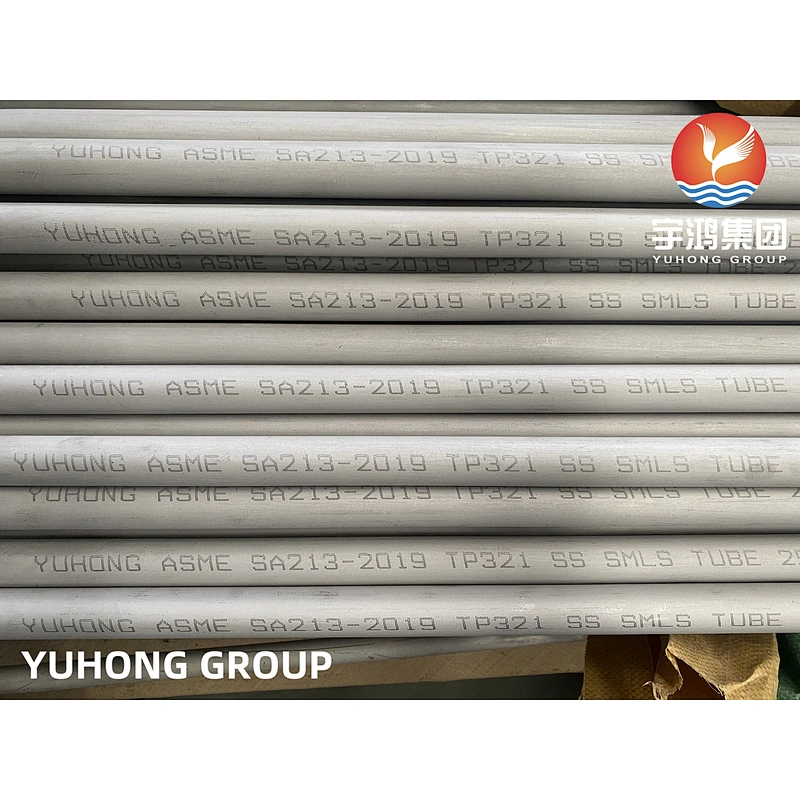
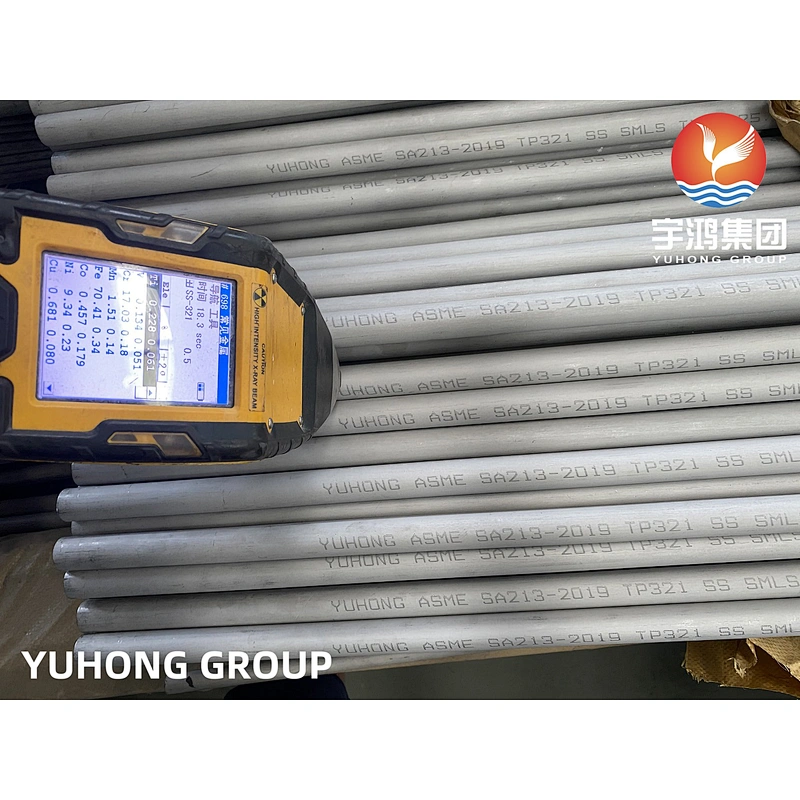
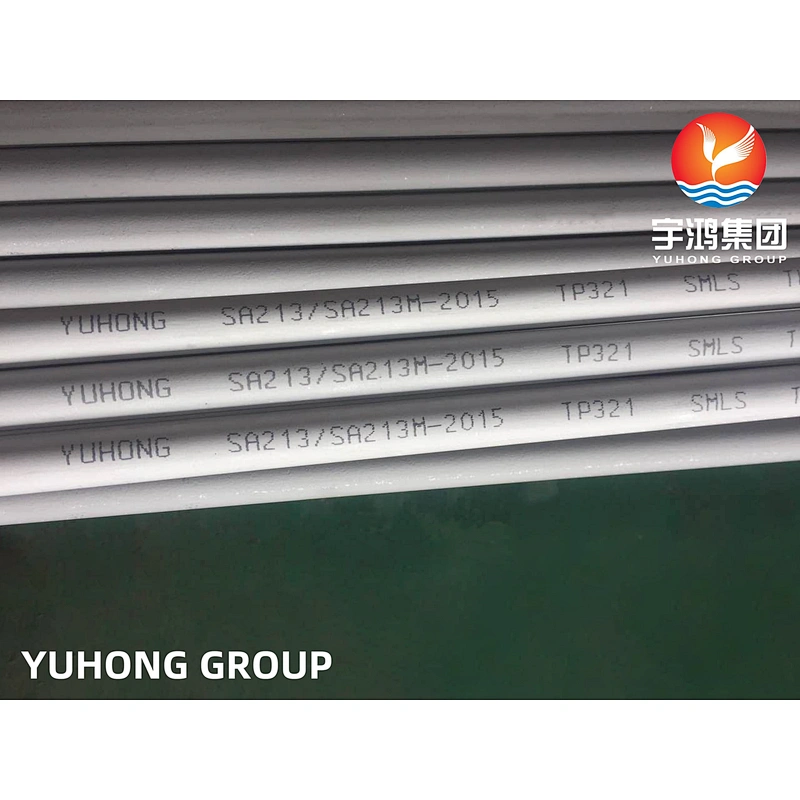
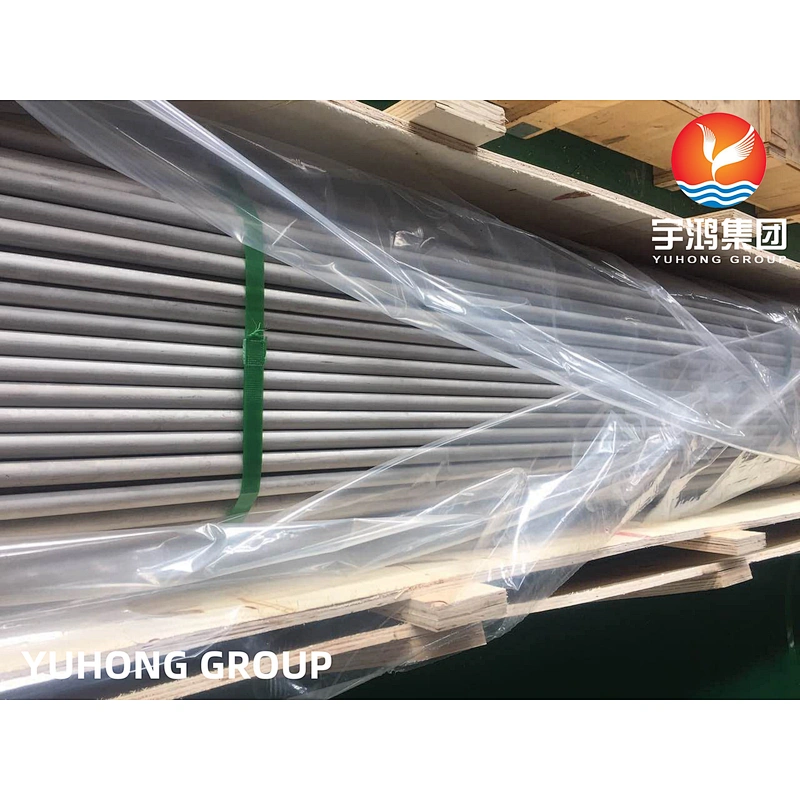
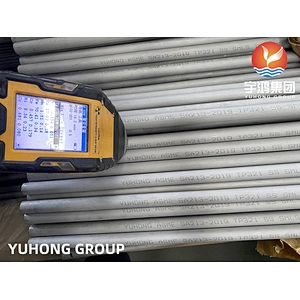
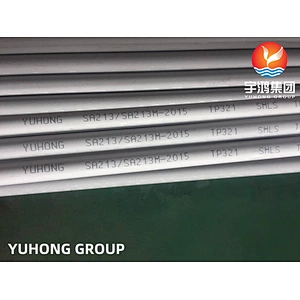
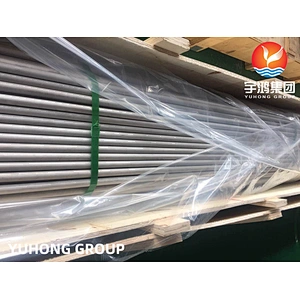
ASME SA213 TP321 seamless stainless steel tubes are austenitic stainless steel heat exchanger tubes designed specifically for high-temperature and corrosive service conditions. By adding titanium (Ti) as a stabilizing element to the 18Cr-8Ni base, TP321 effectively inhibits the precipitation of chromium carbides at grain boundaries, thereby significantly improving intergranular corrosion resistance. It is particularly suitable for the 450°C to 800°C sensitization temperature range. Our TP321 seamless tubes are strictly manufactured to ASTM A213 / ASME SA213 standards, cold-drawn and delivered in the solution heat-treated condition, suitable for boilers, superheaters, heat exchangers, and condensers in pressure-bearing equipment.
Core Material Characteristics
Chemical Composition Design
The titanium stabilization design of TP321 is the core of its high-temperature corrosion resistance:
| Element | Content Requirement |
|---|---|
| Carbon (C) | ≤ 0.08% |
| Chromium (Cr) | 17.0% – 19.0% |
| Nickel (Ni) | 9.0% – 12.0% |
| Titanium (Ti) | ≥ 5×(C+N) |
| Manganese (Mn) | ≤ 2.00% |
| Silicon (Si) | ≤ 1.00% |
| Phosphorus (P) | ≤ 0.045% |
| Sulfur (S) | ≤ 0.030% |
The titanium content must be at least 5 times the combined carbon and nitrogen content to ensure sufficient stabilization, preventing intergranular corrosion susceptibility caused by chromium carbide precipitation during welding or high-temperature service.
Mechanical Properties
| Property | Requirement |
|---|---|
| Tensile Strength | ≥ 515 MPa |
| Yield Strength | ≥ 205 MPa |
| Elongation | ≥ 35% |
| Hardness | ≤ 90 HRB |
TP321's strength level is significantly superior to ordinary carbon steel heat exchanger tubes while maintaining excellent plasticity and toughness, meeting the expansion and bending requirements of heat exchanger tubes.
Manufacturing and Heat Treatment Requirements
ASTM A213 requires austenitic stainless steel tubes to be delivered in the solution heat-treated condition. The minimum solution treatment temperature for TP321 is 1900°F (1040°C), followed by water quenching or other rapid cooling methods. Solution treatment fully dissolves carbides and obtains a uniform austenitic structure, which is the key process for ensuring intergranular corrosion resistance.
Comparison with Other Common High-Temperature Tube Materials
Comparison with TP304/304H
TP321 and TP304 both belong to the 18Cr-8Ni austenitic stainless steel system, but the addition of titanium stabilization creates significant differences in high-temperature performance:
| Comparison Dimension | ASTM A213 TP321 | ASTM A213 TP304 |
|---|---|---|
| Stabilizing Element | Contains Ti (≥5×C) | None |
| Intergranular Corrosion Resistance | Excellent (450–800°C sensitization range) | Moderate; susceptible after sensitization |
| High-Temperature Strength | Slightly superior | Baseline level |
| Post-Weld Performance | No re-solution treatment needed after welding | Heat treatment required after welding to restore corrosion resistance |
In hot corrosion environments of industrial boilers and heating furnaces, TP347 (Nb-stabilized) exhibits better resistance to alkali metal sulfate corrosion than TP321. TP321 tubes were replaced after approximately 3 years of service due to severe fireside corrosion, while TP347 tubes maintained good corrosion resistance in five-year field tests. Therefore, in boiler superheater/reheater applications burning high-sulfur fuels, TP347 is often the more reliable choice.
Comparison with TP347/347H
TP347 uses niobium (Nb) as the stabilizing element, complementing TP321's titanium stabilization:
| Comparison Dimension | TP321 | TP347 |
|---|---|---|
| Stabilizing Element | Ti | Nb |
| Hot Corrosion Resistance | Moderate | Superior (Nb more effective than Ti) |
| Creep Strength | Sensitive to grain size | Relatively stable |
| Applicable Scenarios | General high-temperature corrosive environments | Severe hot corrosion environments (high-sulfur fuel boilers) |
TP321's creep rupture strength is relatively sensitive to grain size. The ASTM A213 standard explicitly specifies grain size requirements for TP321H (ASTM Grain Size 7 or coarser) to ensure adequate creep strength. When cold-worked TP321 recrystallizes during service, the creep strength of fine-grain regions decreases, potentially leading to steam leaks.
Typical Application Scenarios
Petrochemical: Hydrocracking unit heat exchangers, high-temperature process piping
Power Generation: Boiler superheaters, reheaters, steam piping
Aerospace: Engine exhaust pipes, fuel system components
Other High-Temperature Equipment: Industrial furnaces, heat exchangers, expansion joints
Important Service Warning: Polythionic Acid Stress Corrosion Cracking
TP321 heat exchanger tubes require special attention to polythionic acid stress corrosion cracking risk during shutdown in H₂S-containing refinery service. Cases have shown that hydrocracking unit heat exchanger tubes (TP321 material) cracked at the bend section approximately 48 hours after restart following a shutdown. The cause was sulfur-containing scale formed on the inner surface during operation reacting with condensed water during shutdown to form polythionic acid, initiating cracking under residual stress. Countermeasures: Adequate stress relief annealing after bending, and alkali washing neutralization or dry nitrogen protection during shutdown.
Common Specification Reference
| Parameter | Common Range |
|---|---|
| Outer Diameter | 6.35 mm – 127 mm |
| Wall Thickness | 0.4 mm – 12.7 mm |
| Length | Custom cut to customer requirements |
| Delivery Condition | Solution heat treated + pickled |
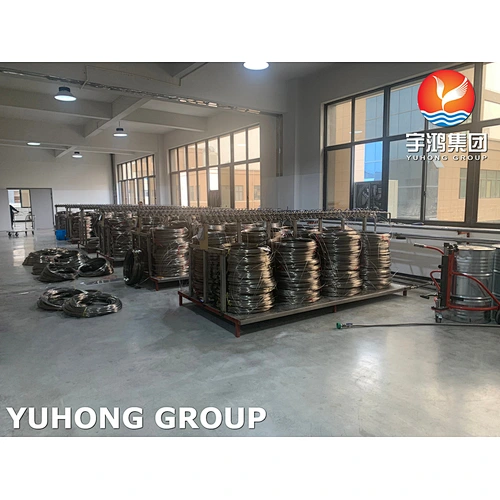
We can customize U-bend tubes, coiled tubes, and straight tubes according to customer drawings, and provide hydrostatic testing, eddy current testing, and intergranular corrosion testing (ASTM A262 Practice E).
Quality Assurance and Services
Standard Compliance: Strictly manufactured to ASTM A213 / ASME SA213, with Material Test Certificates and third-party inspection reports available.
Heat Treatment Control: Solution treatment temperature ≥1040°C, rapid cooling, ensuring intergranular corrosion resistance.
Customization Services: Drawing-based customization of bending radius, surface treatment, and special testing requirements.
Technical Support: Assistance with evaluating TP321 applicability under specific temperature and media conditions based on customer working conditions.
FAQ
Q1: What is the difference between ASTM A213 TP321 and ASME SA213 TP321?
The technical content of both is identical. ASTM A213 is the material standard body published by the American Society for Testing and Materials, while ASME SA213 is the designation assigned by the American Society of Mechanical Engineers after incorporating it into the Boiler and Pressure Vessel Code (BPVC) for pressure-bearing equipment design, manufacturing, and inspection systems. Either designation refers to the same material technical requirements when procuring.
Q2: What is the maximum service temperature of TP321?
The recommended continuous service temperature range for TP321 is -196°C to 800°C. In the sensitization temperature range of 450°C to 800°C, its titanium stabilization design effectively inhibits intergranular corrosion. For long-term service above 800°C, upgrading to TP347H or higher-grade heat-resistant alloys should be evaluated.
Q3: What is the core difference between TP321 and TP304?
The core difference is that TP321 contains titanium (Ti) as a stabilizing element (Ti ≥ 5×(C+N)), while TP304 contains no stabilizing element. This difference gives TP321 superior intergranular corrosion resistance in the 450°C–800°C sensitization temperature range, and it maintains corrosion resistance after welding without requiring re-solution treatment.
Q4: What is the delivery condition of TP321 tubes?
Per ASTM A213 requirements, TP321 seamless tubes are delivered in the solution heat-treated condition, with a minimum solution treatment temperature of 1900°F (1040°C), followed by rapid cooling (water quenching or other methods). We can additionally provide pickling, polishing, and other surface treatments.
Q5: What should be noted when using TP321 in sulfur-containing service?
In H₂S-containing refinery service (such as hydrocracking units), TP321 requires special attention to polythionic acid stress corrosion cracking risk during shutdown. Recommended measures include: adequate stress relief annealing after bending, and alkali washing neutralization or dry nitrogen protection during shutdown. If hot corrosion is severe, upgrading to TP347/347H should be evaluated.
Q6: Are custom U-bend tubes and special specifications supported?
Yes. We can customize U-bend tubes, coiled tubes, and straight tubes according to customer drawings, with bending radius, wall thickness thinning rate, and surface treatment customizable as needed. Hydrostatic testing, eddy current testing, and intergranular corrosion testing (ASTM A262 Practice E) are also available.
Q7: What are the delivery lead time and minimum order quantity?
Delivery lead time and minimum order quantity are determined by specifications, quantity, and testing requirements. Common specifications are available from stock; custom specifications typically require 15–30 working days. Please consult our sales team for details.