



Overview: The Mid-Tier Answer to FGD Chloride Condensate Attack
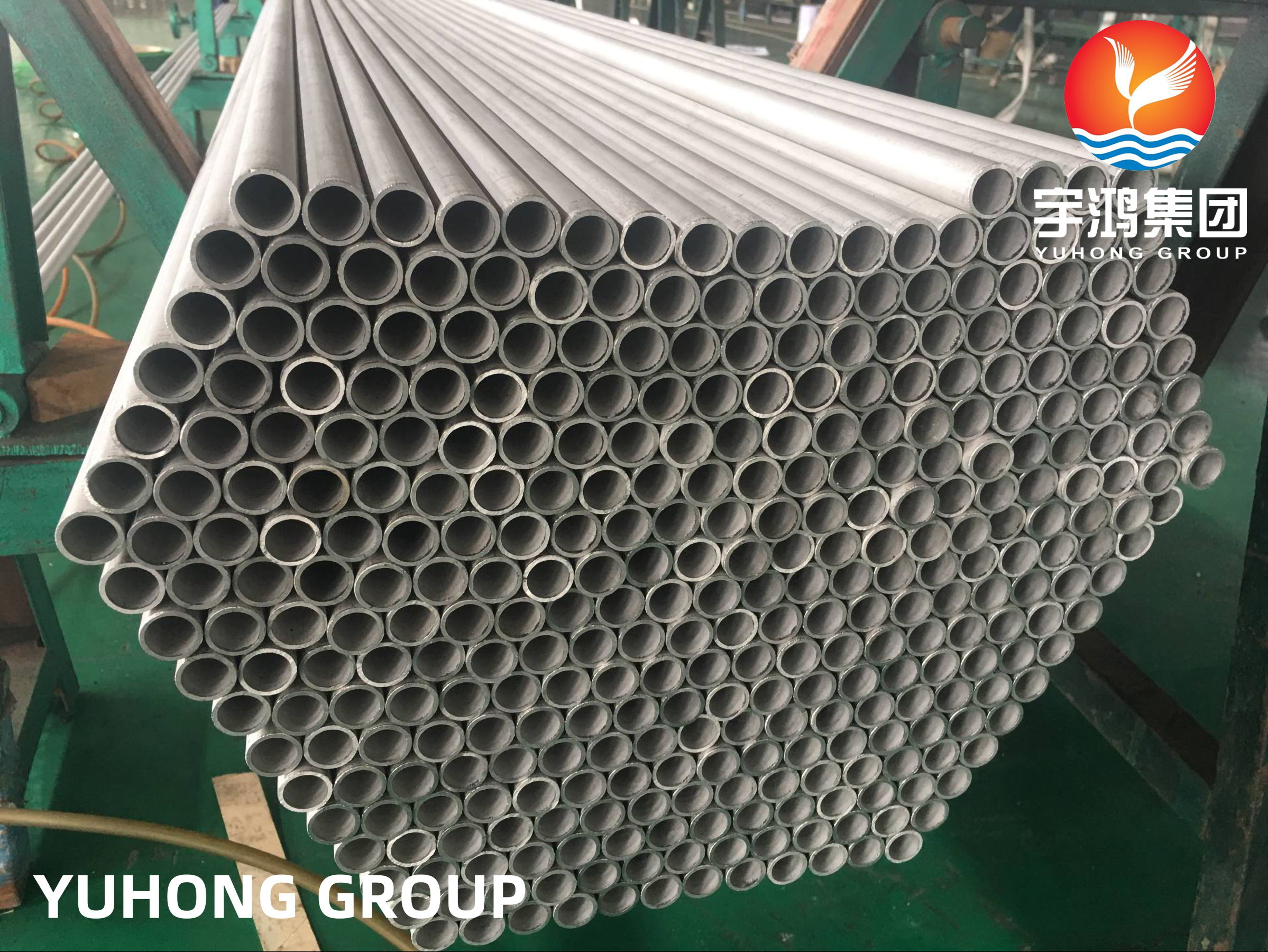
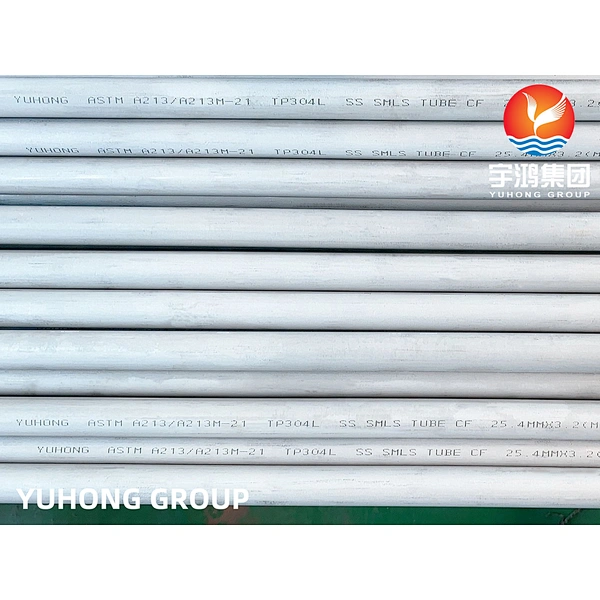
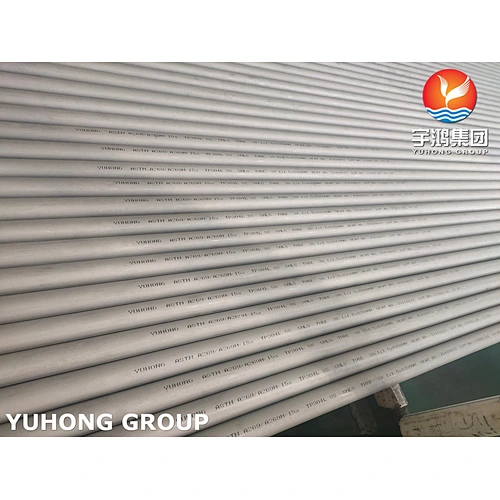
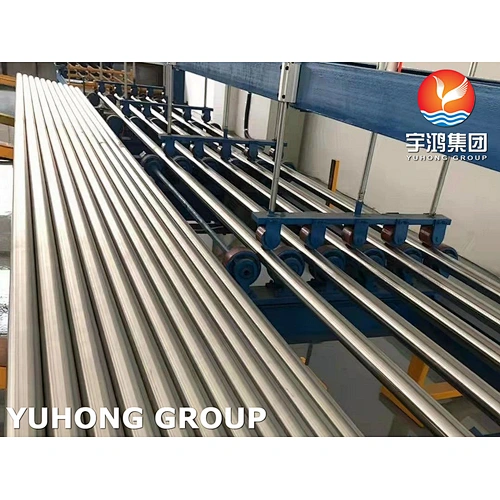
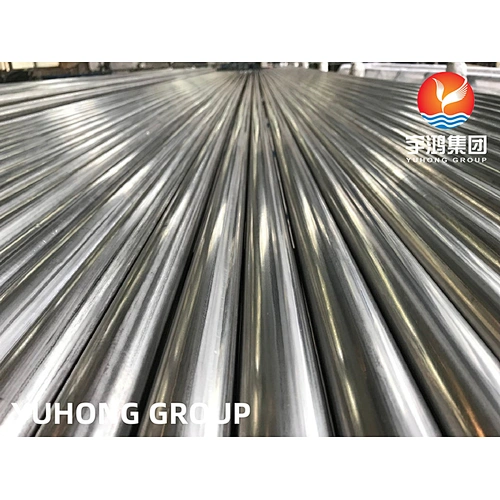
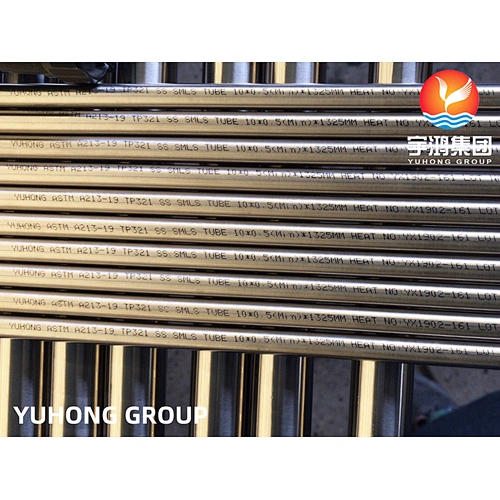
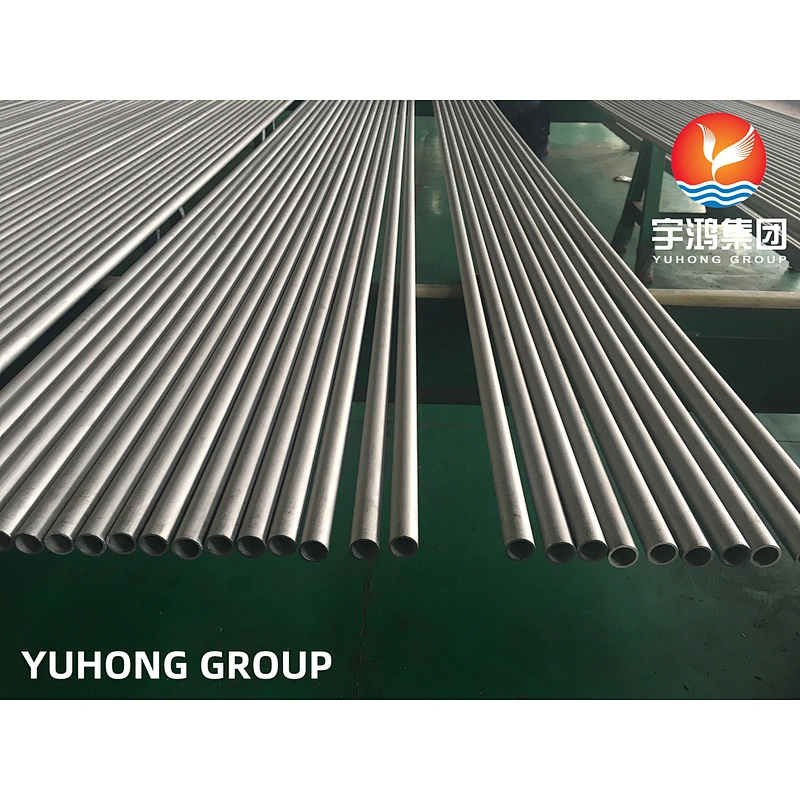
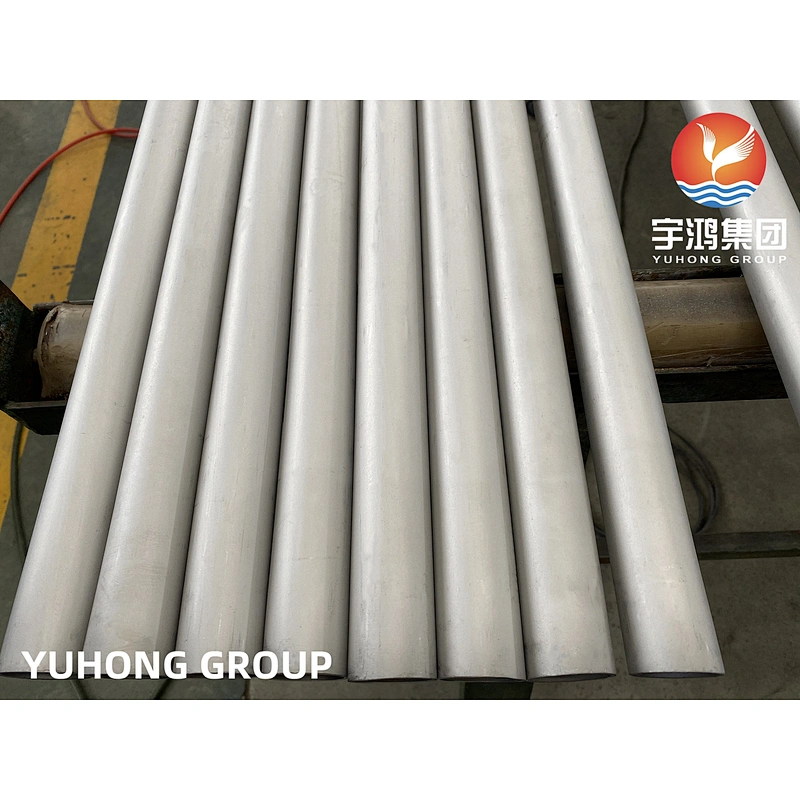
ASTM A213 TP317 / TP317L Stainless Steel Seamless Tube is a high-molybdenum austenitic alloy specified for the most chloride-aggressive segments of wet flue gas desulfurization (FGD) systems. Manufactured to ASTM A213 / ASME SA213 for heat exchanger and reheater service, these grades are positioned between standard 316L and super-austenitic alloys like 904L in both corrosion performance and cost.
The critical failure mode in FGD systems is not general wall loss—it is localized pitting and crevice corrosion driven by condensed chlorides and acidic species in the flue gas path. TP316L, with 2.0-3.0% molybdenum, often falls short in FGD reheaters and gas-gas coolers where chloride concentrations concentrate at dew points. TP317L raises molybdenum to 3.0-4.0%, lifting the Pitting Resistance Equivalent Number (PREN) to approximately 28-30 versus 316L’s 24-25 . This translates to meaningfully extended service life in chloride-bearing condensates before the tube bundle requires replacement.
The “L” designation (carbon ≤ 0.03%) is not optional in FGD service. Tube-to-tubesheet joints in reheaters are welded in the field or shop, and sensitization of the heat-affected zone in standard-carbon TP317 would create a chromium-depleted band vulnerable to intergranular attack. TP317L eliminates this risk without requiring post-weld heat treatment, making it the practical specification for welded FGD tube bundles .
Application & Compliance: Where It Is Used and What Problems It Solves
1. FGD Reheaters and Gas-Gas Coolers (GGH)
Working Scenario: The tube bundle sits at the cold end of the flue gas path, where acid dew point condensation occurs. The condensate is a complex mixture of sulfuric acid, chlorides, and trace fluorides—highly aggressive to standard austenitic stainless steels.
What it solves: TP317L’s elevated molybdenum content provides the pitting and crevice corrosion resistance required to survive at condensation points. Industry literature specifically identifies FGD reheaters and coolers as a primary application for 317L tube, where condensed chlorides would attack 316L prematurely . The material serves as a cost-effective midpoint before stepping up to 904L or duplex grades.
2. FGD Scrubber Internal Components and Piping
Working Scenario: Slurry lines, spray headers, and absorber internals exposed to limestone-gypsum slurry with high chloride loading from makeup water and flue gas impurities.
What it solves: The alloy’s resistance to sulfuric acid solutions (up to 5% concentration at moderate temperatures) and chloride-induced localized attack makes it suitable for these wetted surfaces . However, for the most severe slurry environments with high abrasive solids, designers may still evaluate higher-grade alloys or rubber-lined carbon steel.
3. Why Not TP316L or TP317?
vs. TP316L: The 1.0-1.5% additional molybdenum in TP317L is the difference between a tube bundle lasting a few years versus a full campaign in high-chloride FGD condensate zones. When the flue gas chloride loading is elevated (high-chlorine coal, waste incineration co-firing), 316L is often not a life-cycle cost-effective choice.
vs. TP317 (standard carbon): FGD tube bundles require extensive welding at tubesheets. The 0.08% max carbon in TP317 creates a sensitization risk in the HAZ that is unacceptable without post-weld solution annealing—a process impractical for large tube bundles. TP317L is the correct specification .
Technical Specifications & Material Data
1. Dimensional & Mechanical Properties (ASTM A213 TP317L)
| Parameter | Specification |
|---|---|
| Grade | TP317L (UNS S31703) |
| Outer Diameter (OD) | 9.5 mm – 76.2 mm (standard heat exchanger sizes) |
| Wall Thickness | 0.9 mm – 7.0 mm |
| Length | Up to 20,000 mm / U-bend available |
| Tensile Strength | ≥ 515 MPa |
| Yield Strength | ≥ 205 MPa |
| Elongation | ≥ 35% |
| Delivery Condition | Bright Annealed / Solution Annealed |
| Surface Finish | Pickled / Bright Annealed |
2. Chemical Composition (TP317L, %)
| Element | C (max) | Cr | Ni | Mo | Mn (max) | Si (max) |
|---|---|---|---|---|---|---|
| TP317L | 0.03 | 18.0-20.0 | 11.0-15.0 | 3.0-4.0 | 2.0 | 1.0 |
3. Material Selection Matrix for FGD Tube Applications
| Grade | Mo Content | PREN (approx.) | FGD Suitability | Relative Cost |
|---|---|---|---|---|
| TP316L | 2.0-3.0% | 24-25 | Marginal in high-chloride condensate | Baseline |
| TP317L | 3.0-4.0% | 28-30 | Recommended mid-tier | Moderate |
| 904L | 4.0-5.0% | 34-36 | Severe chloride/acid service | High |
| Duplex 2205 | 3.0% | 34-36 | Alternative for higher strength needs | Moderate-High |
QA/QC & Certifications: Proof for FGD Project Approval
FGD projects are subject to stringent environmental and safety audits. Documentation must be complete and traceable.
100% Eddy Current Testing: Per ASTM A450/A530, performed on essentially every tube length to screen for surface and near-surface defects that could compromise pressure boundary integrity .
Hydrostatic Testing: Each tube tested to standard requirements; certificates provided.
Material Test Certificates: EN 10204 3.1 MTC standard. 3.2 certification (witnessed by third-party inspector) available for EPC project compliance.
Intergranular Corrosion Test: Available upon request (ASTM A262 Practice E) to verify HAZ corrosion resistance of the low-carbon grade.
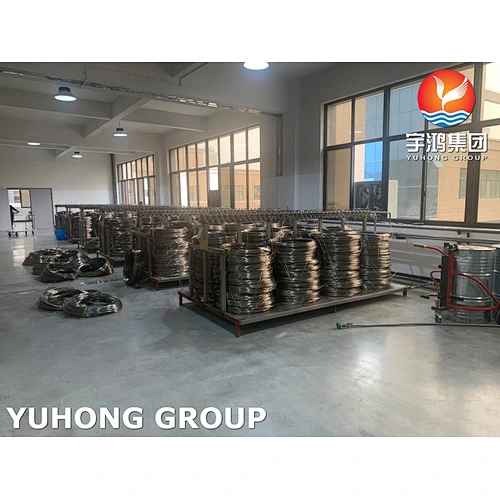
U-Bending Service: In-house U-bending available for single-pass bundle designs, reducing tubesheet penetrations and leak paths .
Installation & Maintenance Guide (For FGD EPC Contractors)
Welding: Use ER317L filler metal. Purge the tube bore with argon during root pass to prevent heat tint on the interior surface. Heat tint is a primary pitting initiation site in FGD condensate service.
Tube-to-Tubesheet Joints: The low-carbon chemistry of TP317L eliminates the need for post-weld heat treatment in most FGD reheater applications. However, weld procedure qualification should include corrosion testing if the condensate chemistry is unusually aggressive.
Avoid Stagnation During Commissioning: FGD systems may sit idle for extended periods during plant commissioning. Flush tube bundles with clean water and drain thoroughly to prevent concentration of chlorides under deposits.
Cleaning: Use low-pressure hydro-blasting or soft brushes. Do not use carbon steel wire brushes—embedded iron particles will initiate pitting in the chloride-rich FGD environment.
B2B Purchasing Terms & Commercial Conditions
MOQ (Minimum Order Quantity): 500 kg per size. For FGD retubing projects, cut-to-length quantities can be negotiated from mill stock .
FOB Lead Time:
Standard sizes in stock: 15–20 days.
Custom U-bend or heavy-wall production: 25–35 days after deposit .
Payment Terms: 30% T/T advance, 70% against copy B/L. L/C at sight acceptable for EPC contracts.
Packaging: Plastic end-caps, VCI anti-rust wrapping, seaworthy wooden cases. U-bend bundles are supported to prevent deformation during ocean transit.
Documentation: MTC (3.1 or 3.2), NDT reports, hydrostatic certificates, and U-bend dimensional inspection reports included.
FAQ
Q1: Can we use TP316L instead of TP317L to save cost in FGD reheaters?
A: In low-chloride FGD systems with well-controlled flue gas chemistry, 316L may provide acceptable service. However, if the flue gas chloride loading is elevated (high-chlorine coal, co-firing, or seawater scrubbing), the additional molybdenum in TP317L is the difference between a bundle lasting a full campaign versus premature replacement. Life-cycle cost analysis usually favors TP317L in the reheater/cooler position .
Q2: Why specify TP317L instead of TP317 for FGD tube bundles?
A: TP317L’s carbon content is capped at 0.03%, preventing chromium carbide precipitation in the weld heat-affected zone. TP317 (0.08% C max) would require post-weld solution annealing to restore corrosion resistance—impractical for large FGD tube bundles. TP317L is the correct specification for welded service .
Q3: What is the typical lead time for an FGD retubing order?
A: For standard OD/WT in TP317L, 15-20 days for mill stock. Custom U-bends or non-standard sizes: 25-35 days after deposit. We prioritize outage schedules and can expedite where mill capacity allows.
Q4: Do you provide U-bent tubes for FGD reheaters?
A: Yes. In-house U-bending is available, with dimensional inspection reports for leg length, bend radius, and ovality. U-bend bundles reduce tubesheet penetrations and simplify installation in FGD reheater housings .