



Overview
What is duplex stainless steel pipe?
Duplex stainless steel pipe has good welding properties, compared with ferritic stainless steel and austenitic stainless steel, it is neither like the welded heat-affected zone of ferritic stainless steel, due to severe coarsening of the grain and a significant reduction in plastic toughness, nor is it like austenitic stainless steel, which is more sensitive to welding heat cracking. Due to its special advantages, duplex stainless steel is widely used in petrochemical equipment, seawater and wastewater treatment equipment, oil and gas pipelines, paper making machinery and other industrial fields, and in recent years has also been studied for bridge load-bearing structure field, with good prospects for development. Duplex stainless steel is in its solid hardening organization in the ferrite phase and austenite phase each half, the general minimum phase content of perhaps 30%.
Duplex stainless steel pipe continuous use temperature range of -50 ~ 250 ℃, the lower limit depends on the steel brittle transition temperature, the upper limit by 475 ℃ brittle limit, the upper temperature can not exceed 300 ℃. Duplex stainless steel tubes require fast cooling after solid solution treatment, slow cooling can cause the precipitation of brittle phases, which leads to a decrease in the toughness of the steel, especially the resistance to local corrosion.
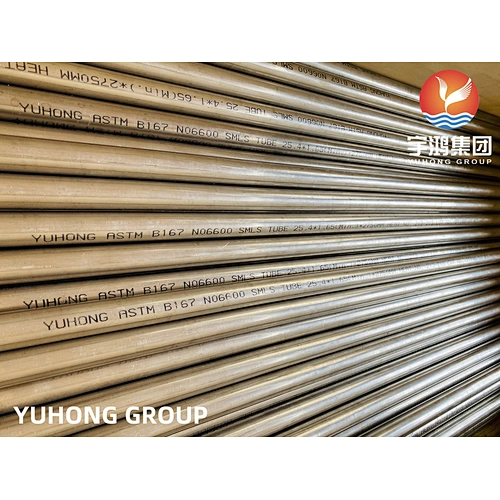
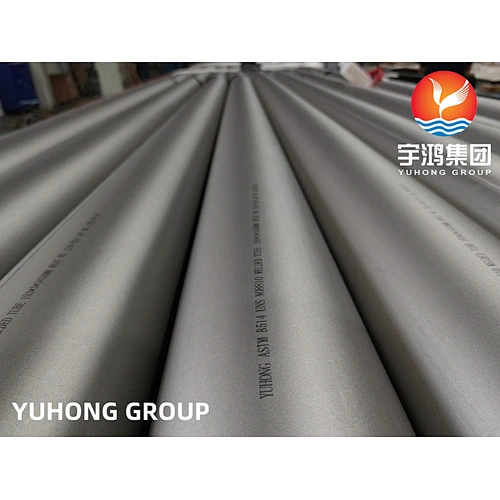
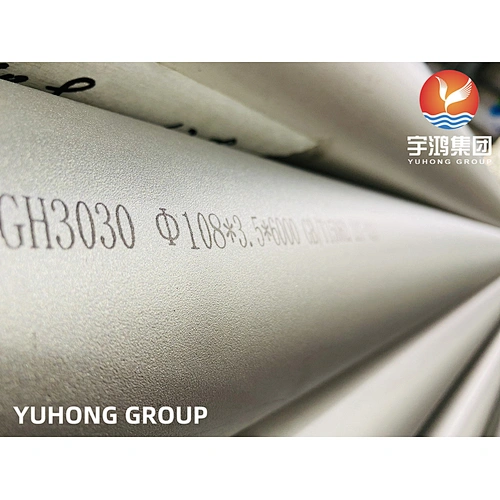
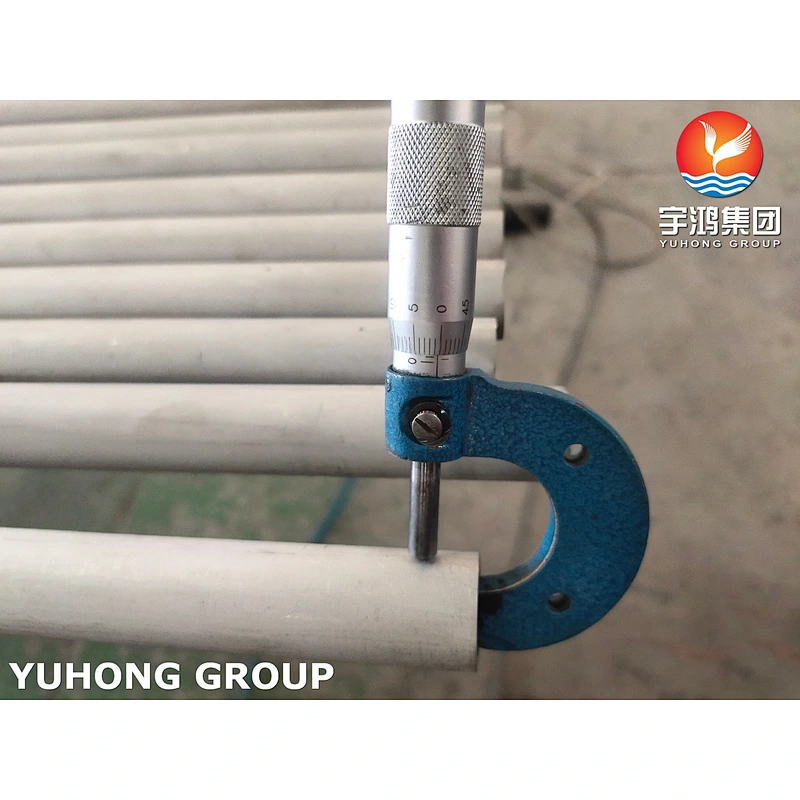
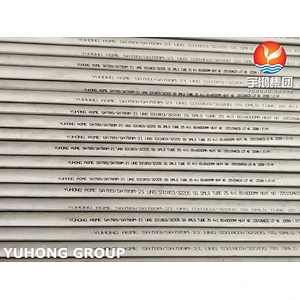
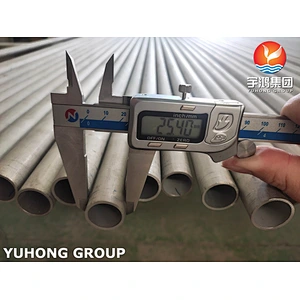
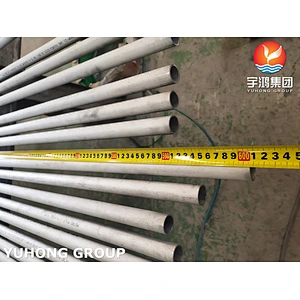
Our SA789 duplex tubes are produced by cold-drawing or cold-rolling and delivered in the solution annealed + pickled condition, with dimensions covering OD 6 mm to 219 mm. They are specifically designed for heat exchangers, condensers, seawater desalination, offshore platforms, and chemical processing applications.
Specification
ASTM A789/A789M-22 Standard Specification for Seamless and Welded Ferritic/Austenitic Stainless Steel Tubing for General Service
This specification covers standard requirements for grades of nominal wall thickness, stainless steel tubing for services requiring general corrosion resistance, with particular emphasis on resistance to stress corrosion cracking. These steels are susceptible to embrittlement if used for prolonged periods at elevated temperatures. Heat and product analyses shall be performed wherein the steel shall conform to the required chemical composition for carbon, manganese, phosphorus, sulfur, silicon, nickel, chromium, molybdenum, nitrogen, copper, and others. All tubes shall be furnished in the heat-treated condition in accordance with the specified temperature and quench conditions. When the final heat treatment is in a continuous furnace, or when heat treated condition is obtained directly by quenching after hot forming, the number of tubes of the same size and from the same heat in a lot shall be determined from the prescribed sizes of the tubes. The material shall conform to the prescribed tensile and hardness properties. Mechanical tests such as tension test, flaring test (for seamless tubes), flange test (for welded tubes), hardness test, and reverse flattening test shall be performed on the steel tubing. Each tube shall also be subjected to the nondestructive electric test or the hydrostatic test.
Standard | ASTM A789 | ASTM A790 | EN 10216-5 |
Grade | S31803 S32205 S32750 | S31803 S32205 S32750 | 1.4301 1.4307 1.4948 1.4315 |
Yield Strength | ≥450;≥485;≥550 | ≥450;≥450;≥550 | — |
Tensile Strength | ≥620;≥655;≥800 | ≥620;≥655;≥800 | — |
Elongation | ≥25;≥25;≥15 | ≥25;≥25;≥15 | — |
Hydrostatic Test | The Hydrostatic Test shall be in accordance with ASTM A1016.Could be replaced by ECT. | The Hydrostatic Test shall be in accordance with ASTM A999.Could be replaced by ECT. | The hydrostatic test shall be carried out at a test pressure of 7MPa or |
Intergranular Corrosion | Usually use Pitting Corrosion Test. | Usually use Pitting Corrosion Test. | EN ISO 3651-2 (Optional) |
Eddy Current Test | Could be replaced by HT. | Could be replaced by HT. | EN 10246-3 |
Chemical Composition
UNS | Composition, % | |||||||||
C | Mn | P | S | Si | Ni | Cr | Mo | N | Cu | |
S31803 | 0.03 | 2 | 0.03 | 0.02 | 1 | 4.5-6.5 | 21.0-23.0 | 2.5-3.5 | 0.08-0.20 | . . . |
S32205 | 0.03 | 2 | 0.03 | 0.02 | 1 | 4.5-6.5 | 22-23 | 3.0-3.5 | 0.14-0.20 | . . . |
S31500 | 0.03 | 1.20-2.00 | 0.03 | 0.03 | 1.40-2.0 | 4.3-5.2 | 18-19 | 2.5-3.0 | 0.05-0.10 | . . . |
S32550 | 0.04 | 1.5 | 0.04 | 0.03 | 1 | 4.5-6.5 | 24-27 | 2.9-3.9 | 0.10-0.25 | 1.50-2.50 |
S31200 | 0.03 | 2 | 0.045 | 0.03 | 1 | 5.5-6.5 | 24-26 | 1.-2.0 | 0.14-0.20 | . . . |
S31260 | 0.03 | 1 | 0.03 | 0.03 | 0.75 | 5.5-7.5 | 24-26 | 2.5-3.5 | 0.10-0.30 | 0.20-0.80 |
S32001 | 0.03 | 4.0-6.0 | 0.04 | 0.03 | 1 | 1.0-3.0 | 19.5-21.5 | 0.6 | 0.05-0.17 | 1.00 |
S32304 | 0.03 | 2.5 | 0.04 | 0.04 | 1 | 3.0-5.5 | 21.5-24.5 | 0.05-0.60 | 0.05-0.20 | 0.05-0.60 |
S32750 | 0.03 | 1.2 | 0.035 | 0.02 | 0.8 | 6.0-8.0 | 24-26 | 3.0-5.0 | 0.24-0.32 | 0.50 |
S32760 | 0.05 | 1 | 0.03 | 0.01 | 1 | 6.0-8.0 | 24-26 | 3.0-4.0 | 0.20-0.30 | 0.50-1.00 |
S32950 | 0.03 | 2 | 0.035 | 0.01 | 0.6 | 3.5-5.2 | 26-29 | 1.0-2.5 | 0.15-0.35 | . . . |
S32520 | 0.03 | 1.5 | 0.035 | 0.02 | 0.8 | 5.5-8.0 | 23-25 | 3.0-5.0 | 0.20-0.35 | 0.8 |
Mechanical Properties
Tensile Requirements
Grade | Tensile strength, min, ksi [MPa] | Yield strength, min ksi [MPa] | Elongation in 2 in., or 50mm, min,% | Hardness, Max |
S31803 | 90 [620] | 65 [450] | 25 | 290 |
S32205 | 95 [655] | 70 [485] | 25 | 290 |
S31500 | 92 [630] | 64 [440] | 30 | 290 |
S32550 | 110 [760] | 80 [550] | 15 | 297 |
S31200 | 100 [690] | 65 [450] | 25 | 280 |
S31260 | 100 [690] | 65 [450] | 25 | 290 |
S32001 | 90 [620] | 65 [450] | 25 | 290 |
S32304 | 100 [690] | 65 [450] | 25 | 290 |
S32750 | 116 [800] | 80 [550] | 15 | 310 |
S32760 | 109 [750] | 80 [550] | 25 | 300 |
S32950 | 100 [690] | 70 [480] | 20 | 290 |
S32520 | 112 [770] | 80 [550] | 25 | 310 |
Applications
a) Petroleum
b) Chemical industry
c) Instrument
d) Industrial transportation
e) Mechanical structure industry
f) Need high corrision ability pipe's industry, such as offshore industry etc
FAQ
Q1: What is the difference between S32205 and S31803?
S32205 is a tightened-chemistry version of S31803. Both are 2205 duplex stainless steels, but S32205 controls chromium, molybdenum, and nitrogen to the upper end of the S31803 range, giving slightly improved and more consistent pitting corrosion resistance . S32205 can be dual-certified as S31803 because it fully meets the older specification, but not vice versa .
Q2: What is the maximum service temperature of 2205 duplex?
2205 duplex is generally suitable for continuous service up to 300°C. Above this temperature, the material may embrittle due to sigma phase precipitation. The standard notes that these steels are susceptible to embrittlement if used for prolonged periods at elevated temperatures .
Q3: Can 2205 duplex tubes be U-bent?
Yes. 2205 duplex tubes are commonly supplied in U-bend form for heat exchanger applications. Bending radius ranges from 1.5×OD to 1500 mm, with stress relief annealing on the bent area as standard practice .
Q4: What is the PREN of 2205 duplex?
The typical PREN (Pitting Resistance Equivalent Number) of 2205 duplex is 34–36, significantly higher than 316L (~24) and 317L . This gives 2205 superior resistance to pitting and crevice corrosion in chloride environments.
Q5: What tests are performed on SA789 duplex tubes?
Standard tests include eddy current test, ultrasonic test, hydrostatic test, pneumatic test, PMI test, dimension examination, hardness test, metallographic examination, tension test, flattening test, and flaring test (for seamless tubes) . Each tube must also pass non-destructive electric testing or hydrostatic testing per the standard .
Q6: Is 2205 duplex suitable for sour gas service?
Yes, with appropriate qualification. 2205 duplex with PREN ≥34 generally meets NACE MR0175 / ISO 15156 requirements for sour gas service, subject to specific hardness and temperature limits. For more severe sour service, super duplex 2507 may be required.
Q7: What are the delivery lead time and minimum order quantity?
Delivery lead time and minimum order quantity are determined by specifications, quantity, and testing requirements. Common specifications typically require 15–30 working days. Please consult our sales team for details.