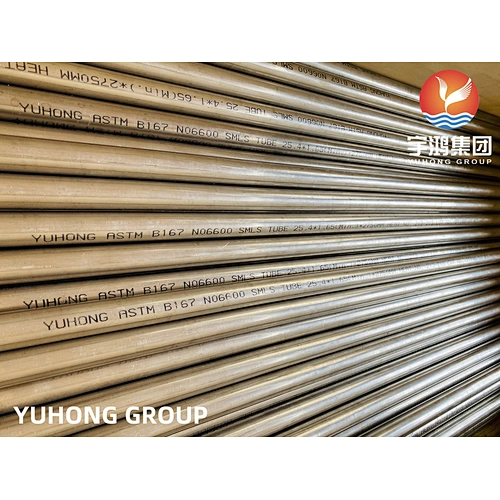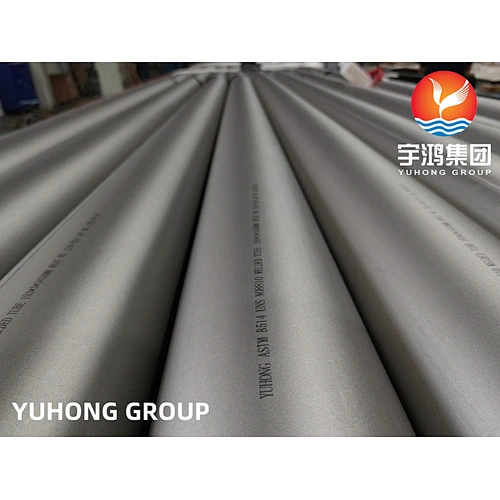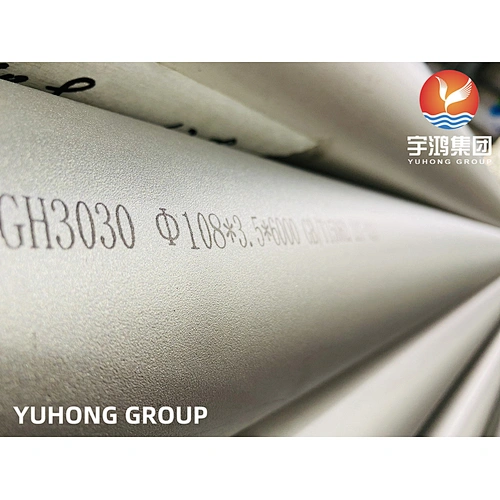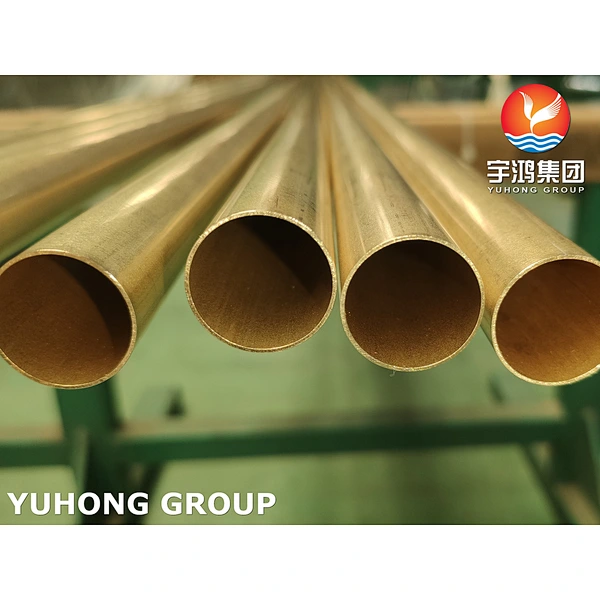



Overview
NO8330 - Alloy 330 stainless steel is a superaustenitic (highly alloyed) stainless steel formulated for primary forming into wrought products. Cited properties are appropriate for the annealed condition. NO8330 is the UNS number for this material. Alloy 330 is the common industry name. This material is well established, it has a moderately low ductility among wrought superaustenitic stainless steels. In addition, it has a fairly low tensile strength and a moderately low embodied energy.
Alloy 330 is an austenitic, nickel-chromium-iron-silicon alloy that has outstanding resistance to oxidation and carburization up to 2200°F with high strength. The excellent resistance to oxidation and carburization is provided by the high nickel and chromium content of the alloy, further enhanced by its silicon content. Alloy 330’s ultra high nickel content of 34 to 37% also provides high resistance to chloride stress corrosion cracking and embrittlement from the precipitation of sigma phase in most furnace atmospheres. Alloy 330 also has a low coefficient of expansion, excellent ductility, and high strength.
Alloy 330 is extensively used in high temperature environments where resistance to the combined effects of thermal cycling and carburization is necessary. Applications include: Chemical and Petrochemical Processing, Thermal Processing, Ore Processing, Power Generation.
Specification
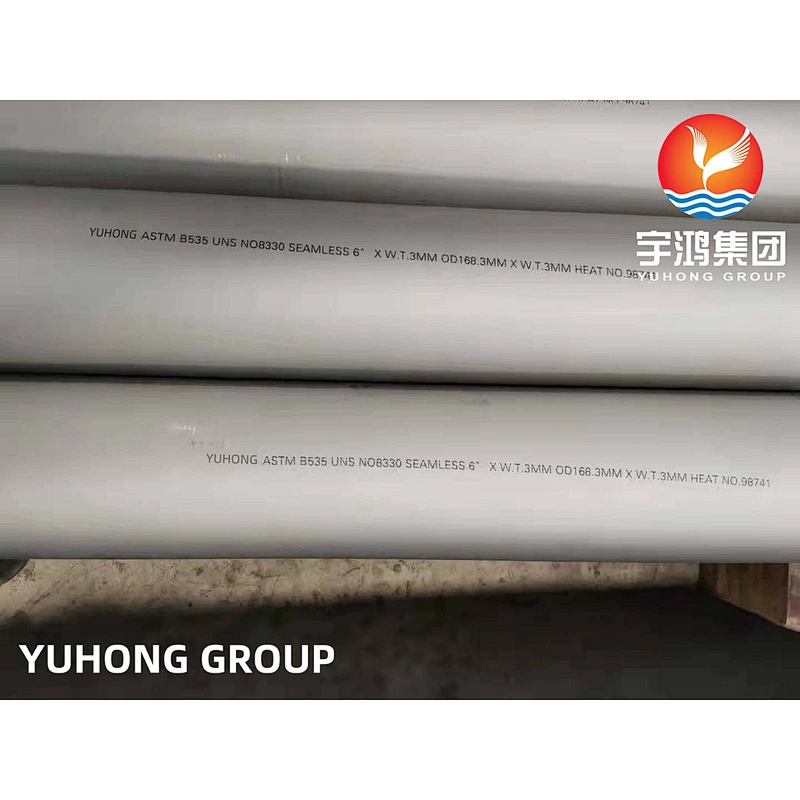
ASTM B535-06(2017) Standard Specification for Nickel-Iron-Chromium-Silicon Alloys (UNS NO8330 and NO8332) Seamless Pipe and Tube.
This specification covers alloys UNS NO8330 and NO8332 in the form of hot-finished and cold-finished seamless pipe and tube intended for heat resisting applications and general corrosive service. The material shall be furnished in the annealed condition. The alloys shall conform to the composition limits of the material of this specification. Tensile strength, yield strength, elongation, and hardness of the material shall conform to the mechanical property requirements. Annealed alloy UNS NO8332 shall conform to an average grain size set by this specification, or coarser. One test per lot is required. Flattening test shall also be performed. Each pipe or tube shall be subjected to either the hydrostatic test or to a nondestructive electric test.
Chemical Composition
Element | Average Nominal % |
Chromium | 18.00 – 22.00 |
Nickel | 34.00 37.00 |
Carbon | 0.08 Max |
Silicon | 1.00 – 1.50 |
Manganese | 2.00 Max |
Phosphorus | 0.03 Max |
Sulfur | 0.03 Max |
Copper | 1.00 Max |
Iron | Balance |
Mechanical Properties
Alloy | Condition | Tensile Strength | Yield Strength | Elongation | HardnessA |
UNS NO8330 | annealed | 70000(483) | 30000(207) | 30 | 70 to 90 HRB |
UNS NO8332 | annealed | 67000(462) | 27000(186) | 30 | 60 to 88 HRB |
Physical Properties
Density | Specific Gravity | Specific Heat | Magnetic | Modulus of |
0.289 | 7.99 | 0.11 | 1.02 | 28.5 |
Corrosioin Resistance
1. Provides high level of corrosion resistance especially with regards to oxidation, carburization, and nitridation
2. Has great oxidation resistance and resists scale formation up to about 2000°F due to its chromium and nickel content
3. Excellent resistance to carburization due to its 34 to 37% nickel and silicon content
4. Exhibits resistance to nitrogen containing atmospheres where the oxygen content is low
5. High nickel content also makes it highly resistant to chloride stress corrosion cracking and sigma phase embrittlement
Applications
1. Industrial heating furnaces
2. Petrochemical furnace parts
3. Perlite systems and equipment
4. Boiler fixtures
5. Gas turbine components
6. Heat-treat furnace containers
7. High temperature fans