
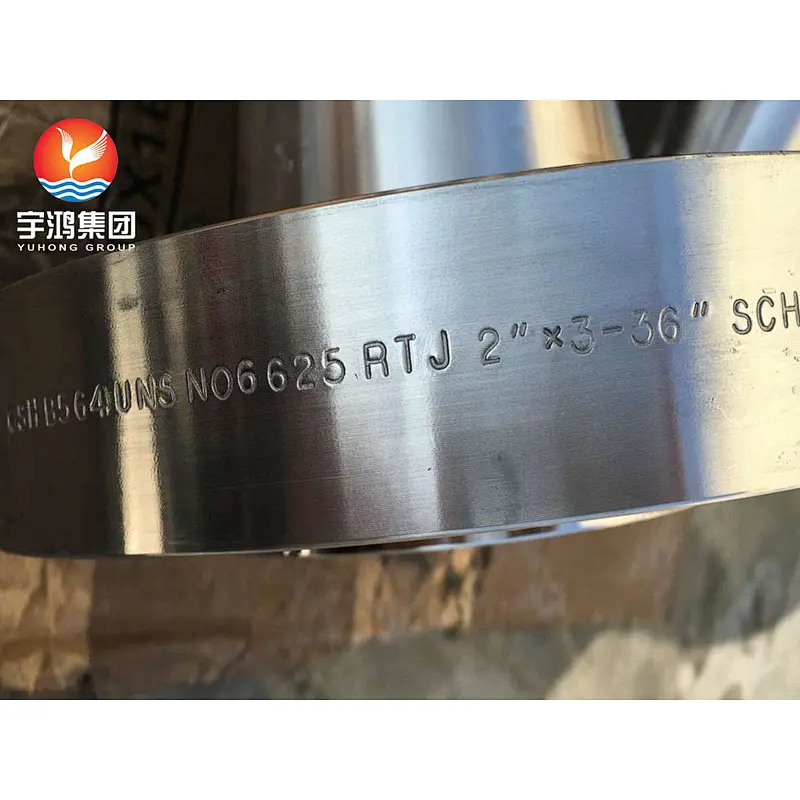


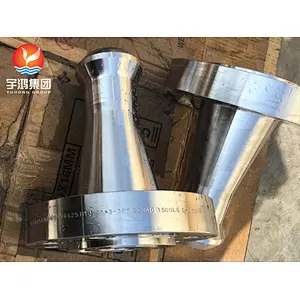
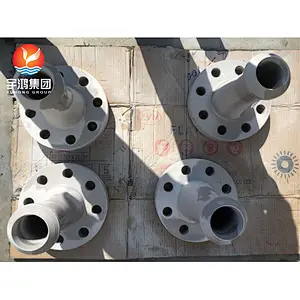
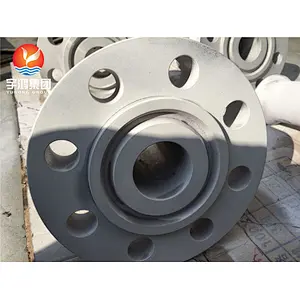
Product Overview
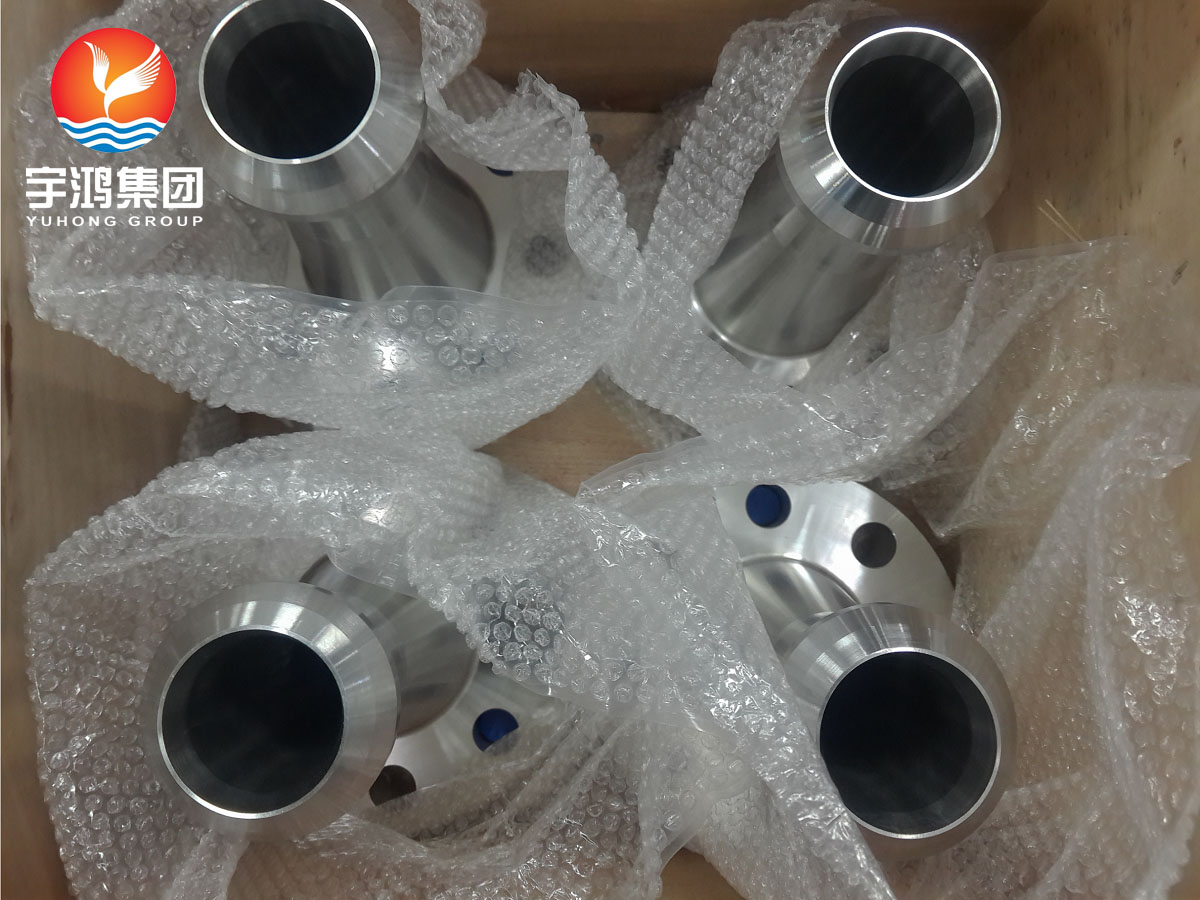
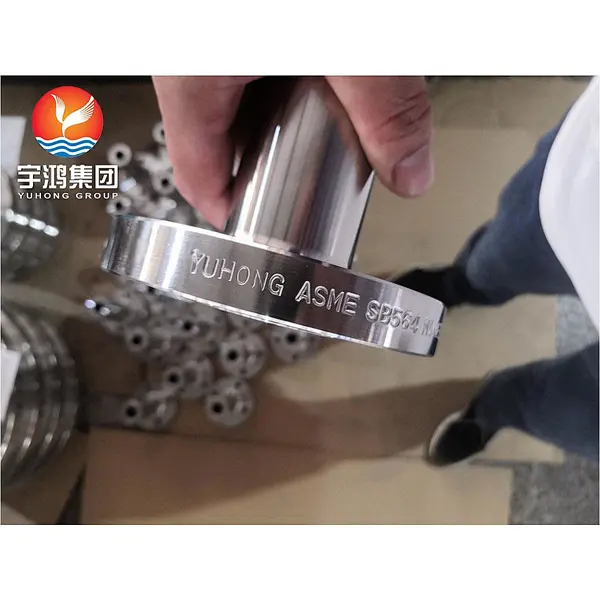
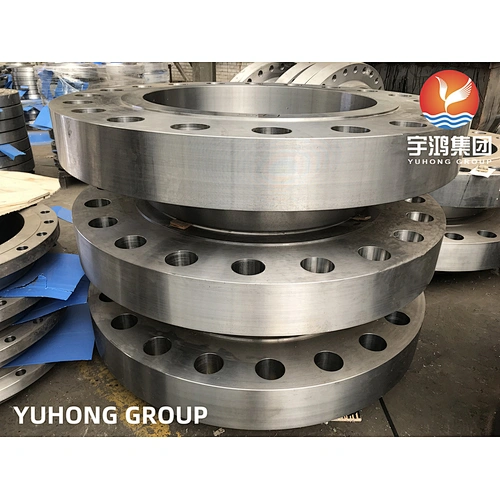
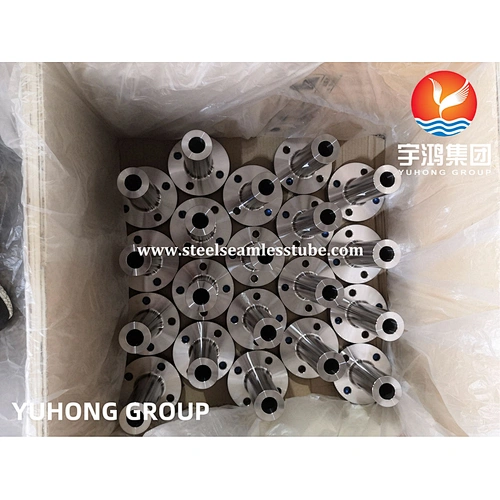
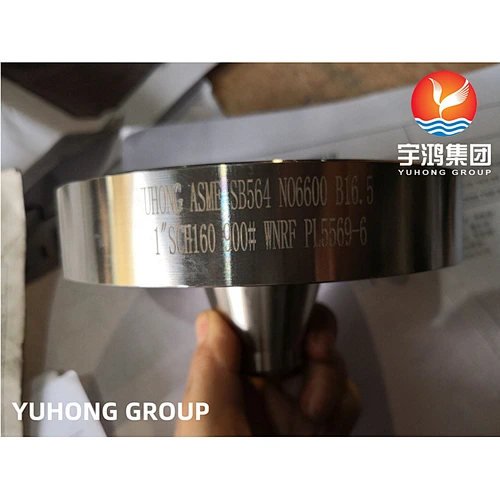
The ASTM B564 Inconel 625 Flangeolet is an integrally reinforced flanged branch outlet fitting forged from the nickel-chromium-molybdenum-niobium alloy Inconel 625 (UNS N06625). This product integrates a flange directly onto the branch outlet, eliminating the need for the traditional three-piece assembly of"olet + nipple + weld neck flange."Only one header weld is required for installation, greatly simplifying the construction of piping branch systems.
The core value of the Flangeolet lies in this: when the branch-to-header diameter ratio is less than 0.5 and the branch end requires a flanged connection, the Flangeolet is a more economical and compact solution than"equal tee + flange"or"olet + flange assembly."The Inconel 625 material further provides excellent corrosion resistance in seawater, chloride, acidic media, and high-temperature environments, making it suitable for offshore engineering, chemical processing, flue gas desulfurization, and nuclear power applications.
Product Structure Analysis
The Flangeolet is integrally forged, combining the reinforcement function of an olet with the connection function of a flange:
| Component | Function Description |
|---|---|
| Header End | Contoured surface matches the header OD; welded to the header via full-penetration weld |
| Branch End | Integrated raised face (RF) flange; flange dimensions conform to ASME B16.5 |
| Branch Angle | Standard 90° perpendicular branch |
Compared with the traditional"Weldolet + nipple + weld neck flange"solution, the Flangeolet reduces 3 components, 3 welds, and 3 NDE inspections to 1 component, 1 weld, and 1 NDE inspection, significantly lowering installation time and overall cost.
Core Material Characteristics
Chemical Composition Design
The nickel-chromium-molybdenum-niobium system of Inconel 625 is the foundation of its performance:
| Element | Content Requirement |
|---|---|
| Nickel (Ni) | ≥ 58.0% |
| Chromium (Cr) | 20.0 – 23.0% |
| Molybdenum (Mo) | 8.0 – 10.0% |
| Niobium + Tantalum (Nb+Ta) | 3.15 – 4.15% |
| Iron (Fe) | ≤ 5.0% |
| Carbon (C) | ≤ 0.10% |
| Manganese (Mn) | ≤ 0.50% |
| Silicon (Si) | ≤ 0.50% |
Niobium (Nb) strengthening mechanism: Niobium works synergistically with molybdenum to form stable carbides and γ″ phases in the alloy matrix, providing high strength without precipitation hardening heat treatment. The nickel content of over 58% makes the alloy virtually immune to chloride stress corrosion cracking.
Mechanical Properties
| Property | Typical Annealed Values |
|---|---|
| Tensile Strength | ≥ 827 MPa |
| Yield Strength (0.2% offset) | ≥ 414 MPa |
| Elongation | ≥ 30% |
| Density | 8.44 g/cm³ |
| Melting Range | 1290 – 1350°C |
Inconel 625 maintains high strength and toughness over a wide temperature range from cryogenic temperatures up to approximately 982°C, with excellent fatigue resistance.
Key Corrosion Resistance Characteristics
Chloride Environments: Outstanding resistance to pitting, crevice corrosion, and chloride stress corrosion cracking; suitable for seawater and brine service
Acidic Media: Resistant to nitric, phosphoric, sulfuric, and hydrochloric acids, among other inorganic acids
Alkaline Media: Resistant to caustic solutions and organic acids
Sour Gas: Certified to NACE MR0175 / ISO 15156 for H₂S-containing sour oil and gas service
Comparison with Similar Products
Flangeolet vs Weldolet + Flange Assembly
| Comparison Dimension | Flangeolet | Weldolet + Nipple + Weld Neck Flange |
|---|---|---|
| Number of Components | 1 | 3 |
| Number of Welds | 1 (header weld) | 3 (header + 2 butt welds) |
| NDE Scope | 1 weld | 3 welds |
| Installation Time | Faster | Longer |
| Overall Cost | Lower | Higher |
| Lead Time | 6–12 weeks (special order) | Shorter (standard parts) |
Selection Principle: For space-restricted, installation-efficiency-priority, or overall-cost-sensitive applications, the Flangeolet offers clear advantages; if the project schedule is tight and standard parts are readily available, the traditional three-piece solution delivers faster.
Inconel 625 vs 316L Stainless Steel
| Comparison Dimension | Inconel 625 | 316L |
|---|---|---|
| Chloride Stress Corrosion Cracking | Virtually immune | Susceptible |
| Seawater Corrosion Resistance | Excellent | Moderate (prone to pitting) |
| High-Temperature Strength (>600°C) | Significant advantage | Drops sharply |
| Cost | High | Low |
Selection Principle: For seawater, high-chloride, or high-temperature acidic service, Inconel 625 is irreplaceable; for general chemical media, 316L is sufficient.
Inconel 625 vs Inconel 825
| Comparison Dimension | Inconel 625 | Inconel 825 |
|---|---|---|
| Molybdenum Content | 8–10% | 2.5–3.5% |
| Pitting/Crevice Corrosion Resistance | Superior | Good |
| Chloride Stress Corrosion | Virtually immune | Good |
| Strength | Higher | Moderate |
Selection Principle: For severe chloride and acidic environments, 625 is preferred; for sulfuric and phosphoric acid service, 825 is the economical choice.
Applicable Standards and Specifications
| Parameter | Standard/Range |
|---|---|
| Material Standard | ASTM B564 / ASME SB564 |
| Olet Standard | MSS SP-97 (Integrally Reinforced Forged Branch Outlet Fittings) |
| Flange Standard | ASME B16.5 (flange face dimensions, bolt holes, pressure ratings) |
| Header Size | NPS 4 – NPS 36 |
| Branch Size | NPS 1 – NPS 12 |
| Pressure Class | Class 150 / 300 / 600 / 900 / 1500 |
| Flange Face Type | Raised face (RF) standard; flat face (FF) or ring joint (RTJ) customizable |
| Branch Angle | 90° (standard) |
Note: MSS SP-97-2025 is the current version, covering dimensions, tolerances, testing, and material requirements for 90° and 45° integrally reinforced forged branch outlet fittings.
Typical Application Scenarios
Offshore Engineering: Offshore platform seawater piping systems, seawater cooling branch connections
Oil and Gas: Instrument and valve branch connections on H₂S/CO₂ sour gas piping
Chemical Processing: Reactor piping, heat exchanger connections, acidic media branch lines
Flue Gas Desulfurization: Wet scrubber piping, flue flanged branch connections
Nuclear Power and Energy: Flanged branch connections in auxiliary piping systems
Quality Assurance and Services
Standard Compliance: Strictly manufactured to ASTM B564 / ASME SB564; flange dimensions conform to ASME B16.5
Inspection Certification: EN 10204 3.1 material certificates available; third-party inspection supported including SGS, BV, TUV
Material Traceability: Each batch comes with heat number traceability and mechanical property reports
Customization Services: Drawing-based customization of non-standard sizes, special flange face types, and pressure ratings
Technical Support: Assistance with confirming Inconel 625 applicability based on customer media conditions
FAQ
Q1: Are Inconel 625, UNS N06625, and DIN 2.4856 the same material?
Yes. Inconel 625 is Special Metals Corporation's commercial trade name, UNS N06625 is the American unified numbering system designation, and DIN 2.4856 (Werkstoff Nr.) is the European material number, with the EN designation being NiCr22Mo9Nb. All four refer to the same nickel-chromium-molybdenum-niobium alloy.
Q2: What is the difference between a Flangeolet and a Weldolet?
A Flangeolet is the flanged version of a Weldolet. The Weldolet branch end has a butt weld bevel for welded connections; the Flangeolet branch end has an integrated flange for flanged connections. The Flangeolet eliminates the need for an additional nipple and weld neck flange, making installation faster.
Q3: What diameter ratio is suitable for a Flangeolet?
Flangeolets are typically used where the branch-to-header diameter ratio is less than 0.5. When the ratio exceeds 0.5, equal tee or reducing tee plus flange configurations are recommended.
Q4: What is the difference between ASTM B564 and ASME SB564?
The technical content is identical. ASTM B564 is the material standard body, while ASME SB564 is the corresponding version in the ASME Boiler and Pressure Vessel Code. Pressure equipment projects typically require compliance with ASME SB564.
Q5: What should be noted when welding an Inconel 625 Flangeolet?
ERNiCrMo-3 filler metal is recommended, using the GTAW (TIG) process. Due to Inconel 625's low-carbon design (≤0.10%) and niobium stabilization, post-weld heat treatment is generally not required to maintain corrosion resistance. The header-end weld should be full-penetration to ensure connection strength.
Q6: Are custom flange face types and pressure ratings supported?
Yes. The standard flange face is raised face (RF), with flat face (FF) or ring joint (RTJ) customizable. Pressure ratings cover Class 150 to 1500, and bolt holes and bolt circle diameters can be matched to ASME B16.5 requirements.
Q7: What are the delivery lead time and minimum order quantity?
Delivery lead time and minimum order quantity are determined by specifications, quantity, and inspection requirements. Inconel 625 Flangeolets are special order items, typically requiring 6–12 weeks lead time. Please consult our sales team for details.