



Product Overview
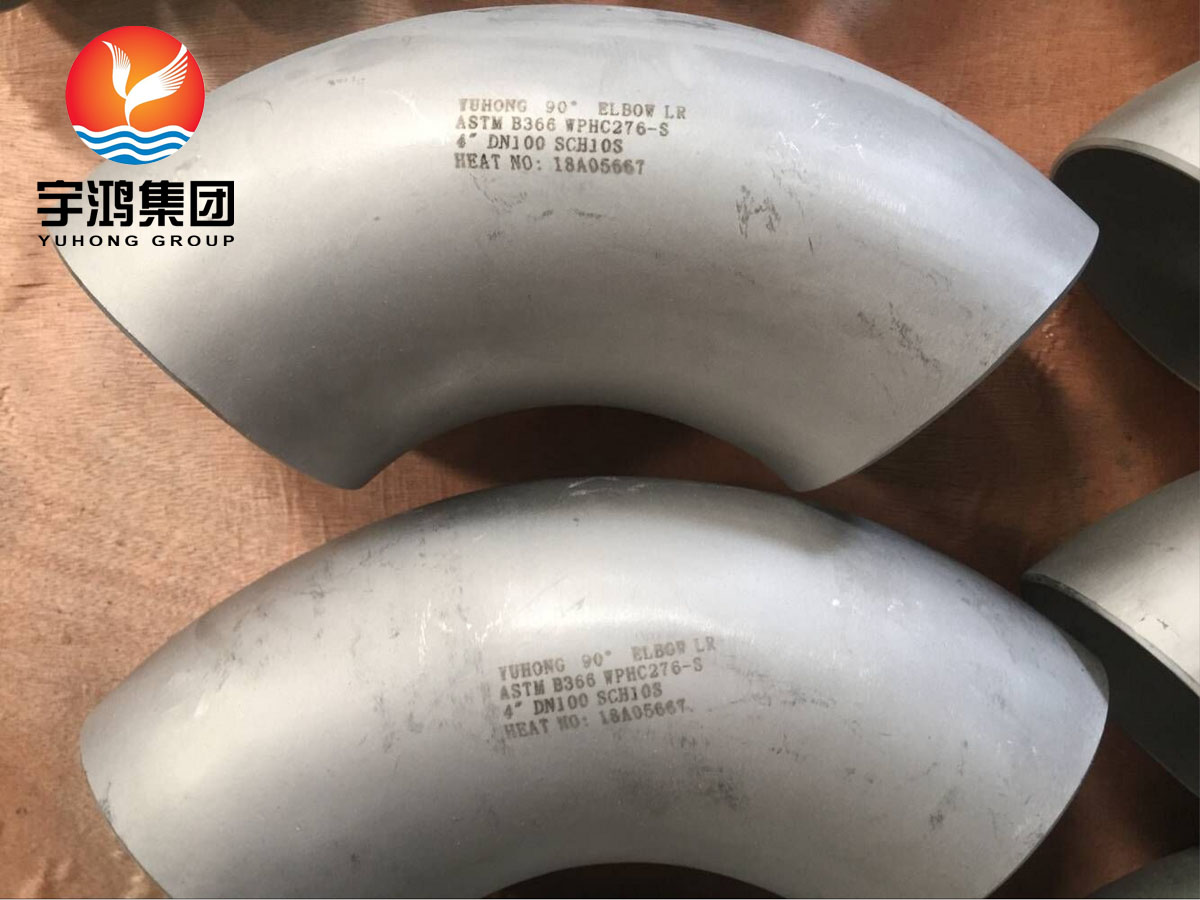
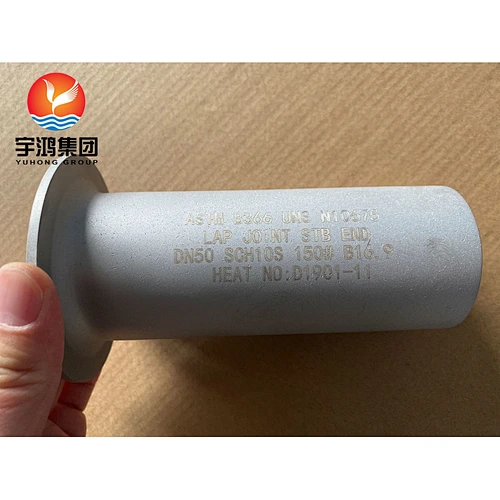
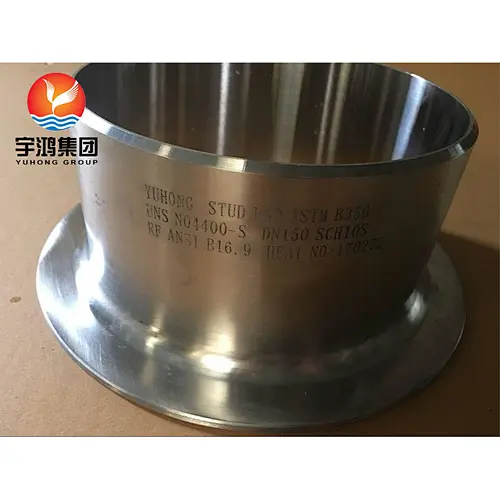
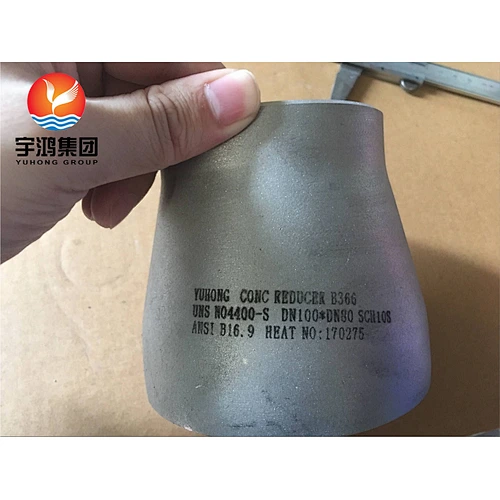
The 90 DEG. ELBOW LR ASTM B366 C276-S DIN 2.4819 BUTTWELD FITTING is a long radius buttweld elbow manufactured from Hastelloy C276 (UNS N10276). Produced strictly to ASTM B366 / ASME SB366 standards with dimensions conforming to ASME B16.9, it is designed specifically for piping systems handling highly corrosive media and high-temperature service.
Our C276 elbows are formed by seamless (SMLS) or welded processes and delivered in the solution heat-treated condition, combining excellent corrosion resistance with pressure-bearing capability. They are widely used in chemical processing, petrochemical, flue gas desulfurization, pulp and paper, and marine engineering applications.
Core Material Characteristics
Chemical Composition Design
The nickel-chromium-molybdenum-tungsten alloy system of C276 gives it the reputation of a"universal corrosion-resistant alloy":
| Element | Content Requirement |
|---|---|
| Nickel (Ni) | Balance (Bal.) |
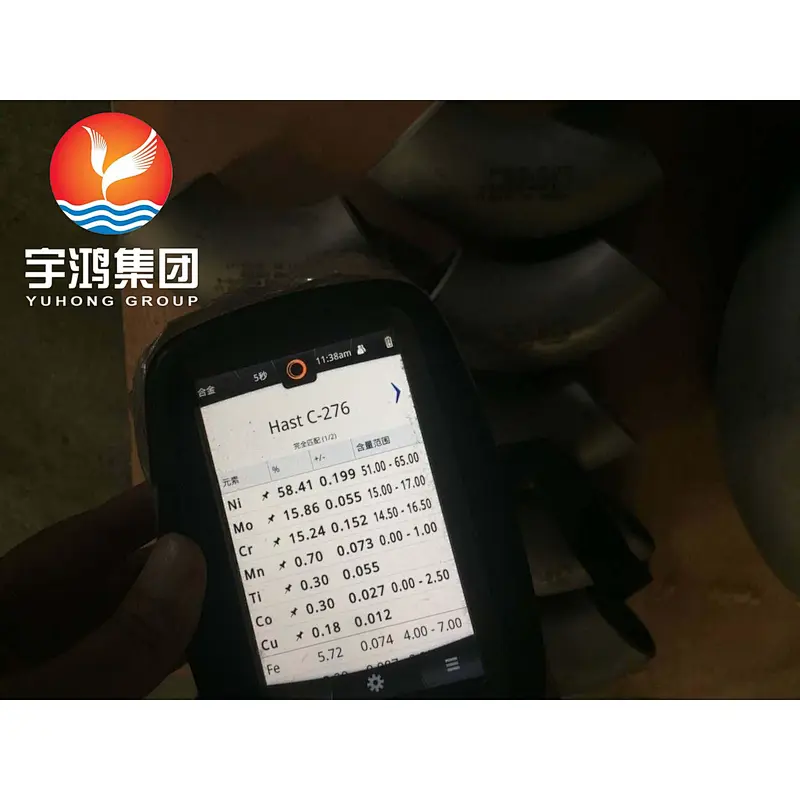
| Chromium (Cr) | 14.5% – 16.5% |
| Molybdenum (Mo) | 15.0% – 17.0% |
| Tungsten (W) | 3.0% – 4.5% |
| Iron (Fe) | 4.0% – 7.0% |
| Cobalt (Co) | ≤ 2.5% |
| Carbon (C) | ≤ 0.010% |
| Manganese (Mn) | ≤ 1.0% |
| Silicon (Si) | ≤ 0.08% |
| Phosphorus (P) | ≤ 0.04% |
| Sulfur (S) | ≤ 0.03% |
The low carbon content (≤ 0.010%) is a critical control indicator for C276, maximizing the inhibition of carbide precipitation in the weld heat-affected zone and ensuring good intergranular corrosion resistance after welding without requiring post-weld heat treatment.
Mechanical Properties
| Property | Requirement |
|---|---|
| Tensile Strength | ≥ 790 MPa |
| Yield Strength (0.2% offset) | ≥ 355 MPa |
| Elongation | ≥ 40% |
| Density | 8.89 g/cm³ |
| Melting Point | 1370°C (2500°F) |
C276 maintains high strength over a wide temperature range while offering excellent toughness, making it suitable for buttweld connections and complex piping layouts.
Manufacturing and Heat Treatment Requirements
C276 buttweld elbows require solution heat treatment followed by rapid cooling to dissolve possible intermetallic phases and carbides, obtaining a uniform austenitic structure. Products are inspected for chemical composition, mechanical properties, and dimensions per ASTM B366, with hydrostatic testing, non-destructive testing, and third-party witness inspection available.
Comparison with Other Common Corrosion-Resistant Alloys
Comparison with Alloy C22 (UNS N06022)
C22 is an improved alloy over C276, performing better in oxidizing media:
| Comparison Dimension | C276 | C22 |
|---|---|---|
| Pitting/Crevice Corrosion Resistance | Excellent | Superior |
| Oxidizing Acid Environments | Good | Superior |
| Flue Gas Desulfurization (FGD) | Applicable | Preferred |
| Price | Baseline | Comparable or slightly higher |
Selection Principle: For FGD systems and strongly oxidizing mixed acid environments, C22 is preferred; for reducing acids and general corrosive environments, C276 is more cost-effective.
Comparison with Inconel 625 (UNS N06625)
625 is known for high strength and high-temperature oxidation resistance:
| Comparison Dimension | C276 | Inconel 625 |
|---|---|---|
| Reducing Acid Resistance | Superior | Moderate |
| High-Temperature Strength | Good | Superior |
| Pitting/Crevice Corrosion | Excellent | Good |
| Typical Applications | General chemical corrosion | High strength/high temperature/marine |
Selection Principle: Choose 625 when high strength and high-temperature performance are both required; for reducing acid (hydrochloric, sulfuric) environments, C276 is preferred.
Comparison with 6-Mo Super Austenitic Stainless Steels
254 SMO, AL-6XN, and similar super austenitic stainless steels are cost-effective alternatives:
| Comparison Dimension | C276 | 6-Mo Super Austenitic |
|---|---|---|
| Matrix | Nickel-based | Iron-based |
| Hot Concentrated Sulfuric/Hydrochloric Acid | Irreplaceable | Cannot match |
| Seawater/Chlorides | Excellent | Good (lower cost) |
| Cost | High | Medium-High |
Selection Principle: For seawater and chloride service, super austenitic grades can be evaluated as economic alternatives; for strong acids or mixed corrosive media, C276 is mandatory.
Engineering Significance of Long Radius (LR) Elbows
Long radius elbows (R = 1.5D) offer the following advantages over short radius (R = 1.0D):
Lower Pressure Drop: Larger bending radius provides smoother fluid transition, reducing turbulence losses
Lower Stress Intensification Factor (SIF): Suitable for cyclic service and high-temperature piping systems
Less Internal Wall Erosion: Suitable for high-velocity/high-pressure systems
Selection Principle: ASME B16.9 long radius elbows are the default choice in piping design; short radius elbows to ASME B16.28 are considered only when space is restricted (e.g., compact pipe racks, equipment nozzle connections).
Typical Application Scenarios
Chemical and Petrochemical: Reactor piping, heat exchanger connections, acid media transfer
Flue Gas Desulfurization (FGD): Wet scrubbers, flues, dampers, reheaters
Pulp and Paper: Bleach plants, chlorine dioxide systems
Pollution Control: Scrubbers, chimney liners, duct systems
Marine and Offshore: Seawater piping, sour gas environments
C276 offers excellent corrosion resistance in both oxidizing and reducing environments, making it particularly suitable for applications where media chemistry is uncertain or service conditions fluctuate.
Common Specification Reference
| Parameter | Common Range |
|---|---|
| Size | 1/2"– 48"(seamless up to 10") |
| Wall Thickness | SCH 10S – XXS |
| Angle | 45° / 90° / 180° |
| Radius Type | LR (R=1.5D), SR, 3D, 5D |
| End Connection | Buttweld beveled (ASME B16.25) |
| Dimensional Standard | ASME B16.9 |
We can provide seamless (SMLS), welded, or machined elbows per customer requirements, with custom bending radii and special sizes available.
Quality Assurance and Services
Standard Compliance: Strictly manufactured to ASTM B366 / ASME SB366, with EN 10204 3.1/3.2 material certificates available
Inspection Certification: Third-party certification available including ABS, BV, DNV-GL, KR, CCS, TUV, PED
Heat Treatment Control: Solution treatment + rapid cooling, ensuring corrosion resistance
Customization Services: Drawing-based customization of size, angle, and bending radius
Technical Support: Material selection assistance based on customer media conditions (C276 vs C22 vs 625)
FAQ
Q1: What does the"S"in C276-S stand for?
The"S"stands for Seamless, meaning the fitting is manufactured by a seamless process rather than welded forming. Seamless elbows have a more uniform structure and higher pressure-bearing reliability, suitable for critical service conditions.
Q2: Are C276 and DIN 2.4819 the same material?
Yes. DIN 2.4819 (Werkstoff Nr. 2.4819) is the European material number for C276. Both have similar chemical composition: NiMo16Cr15W. Either designation can be used for procurement, but it is recommended to also specify UNS N10276 in the order.
Q3: What is the difference between ASTM B366 and ASME SB366?
The technical content is identical. ASTM B366 is the material standard body, while ASME SB366 is the corresponding version in the ASME Boiler and Pressure Vessel Code. Pressure equipment projects typically require compliance with ASME SB366.
Q4: What should be noted when welding C276 elbows?
C276 requires no post-weld heat treatment to maintain corrosion resistance, because the low carbon content inhibits grain boundary carbide precipitation. Matching composition filler metal (e.g., ER NiCrMo-4) is recommended. Oxyacetylene welding and submerged arc welding are not recommended for corrosive service.
Q5: Can C276 elbows be used in flue gas desulfurization systems?
Yes, but C22 performs better in some FGD applications. C276 is suitable for most FGD environments, but under strongly oxidizing scrubber liquors or high-chloride conditions, C22 offers superior pitting and crevice corrosion resistance. Selection should be evaluated based on specific media chemistry.
Q6: Are custom bending radii and special sizes supported?
Yes. We can provide custom elbows with 3D, 5D, or customer-specified bending radii, as well as non-standard sizes and wall thicknesses. Hydrostatic testing, ultrasonic testing, eddy current testing, and third-party witness inspection are also available.
Q7: What are the delivery lead time and minimum order quantity?
Delivery lead time and minimum order quantity are determined by specifications, quantity, and certification requirements. Common specifications are available from stock; custom specifications typically require 15–30 working days. Please consult our sales team for details.