



Overview
Monel is a solid-solution binary alloy. As nickel and copper are mutually soluble in all proportions, it is a single-phase alloy. Compared to steel, Monel is very difficult to machine as it work-hardens very quickly. It needs to be turned and worked at slow speeds and low feed rates. It is resistant to corrosion and acids, and some alloys can withstand a fire in pure oxygen. It is commonly used in applications with highly corrosive conditions. Small additions of aluminium and titanium form an alloy (K-500) with the same corrosion resistance but with much greater strength due to gamma prime formation on aging.
Monel is typically much more expensive than stainless steel. Monel alloy 400 has a specific gravity of 8.80, a melting range of 1300–1350 °C, an electrical conductivity of approximately 34% IACS, and (in the annealed state) a hardness of 65 Rockwell B. Monel alloy 400 is notable for its toughness, which is maintained over a considerable range of temperatures. Monel alloy 400 has excellent mechanical properties at subzero temperatures. Strength and hardness increase with only slight impairment of ductility or impact resistance.
The alloy does not undergo a ductile-to-brittle transition even when cooled to the temperature of liquid hydrogen. This is in marked contrast to many ferrous materials which are brittle at low temperatures despite their increased strength.
Specification
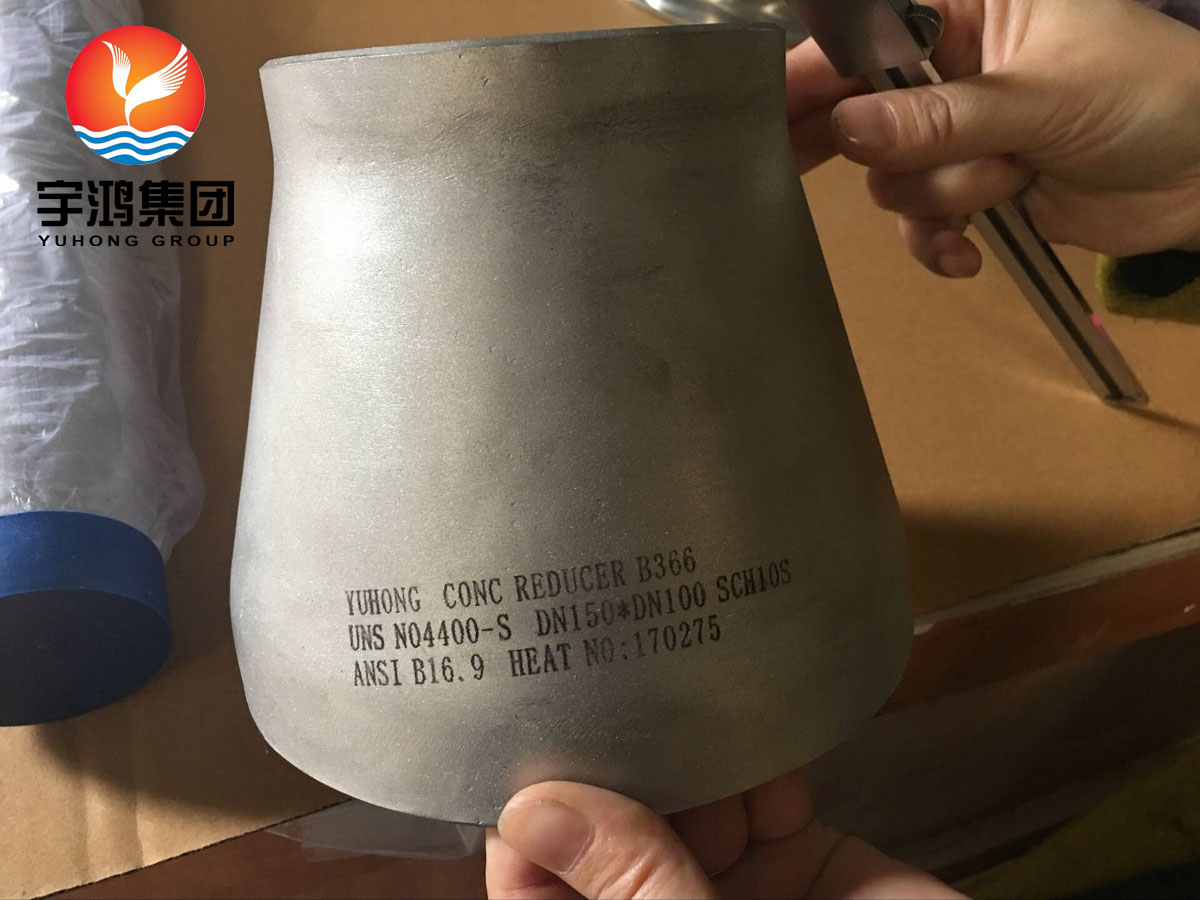
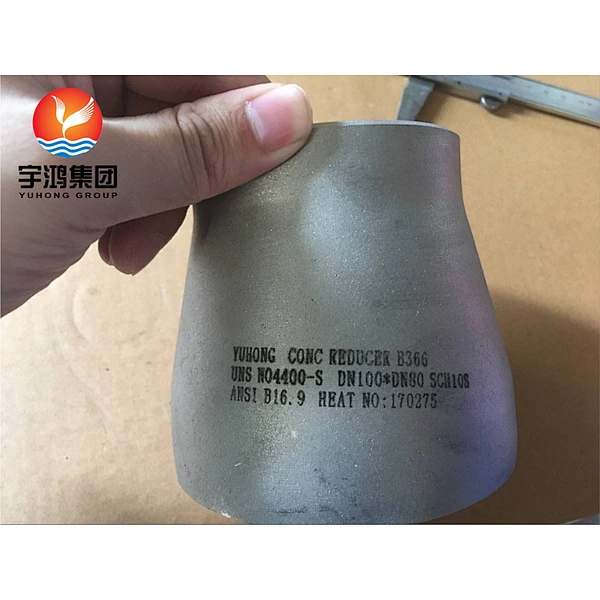
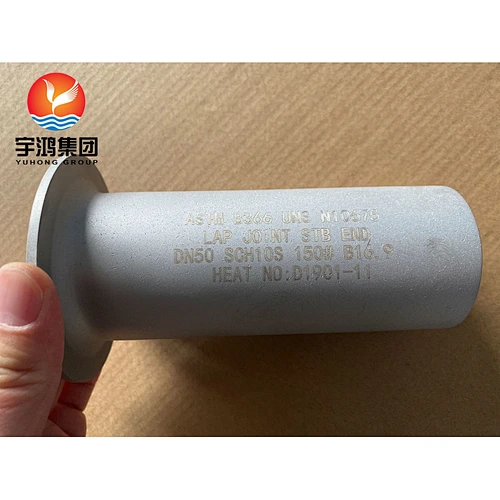
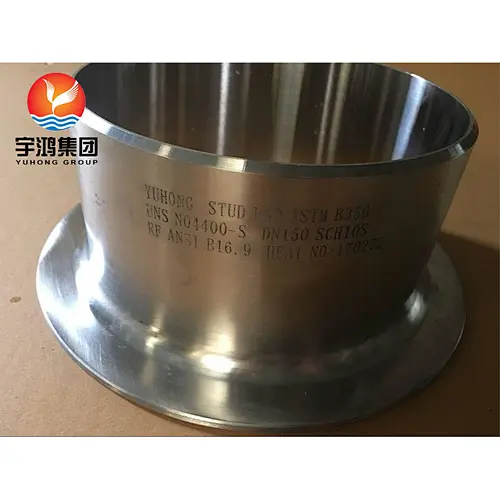
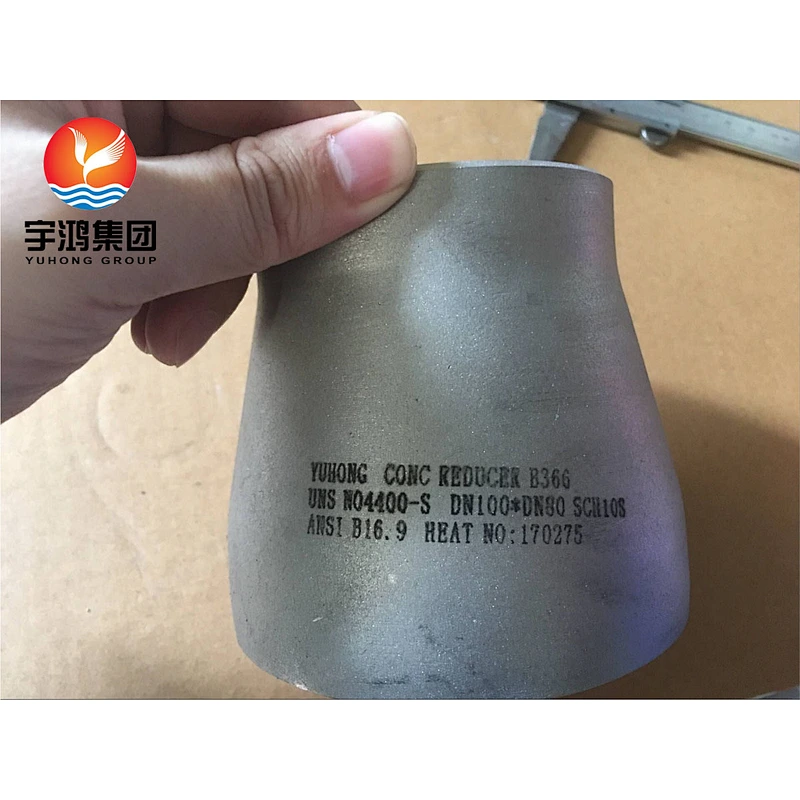
ASTM B366/B366M Standard Specification for Factory-Made Wrought Nickel and Nickel Alloy Fittings.
Pipe Smls | Pipe Welded | Tube Smls | Sheet / Plate | Bar | Forging | Fitting |
B165 | B725 | B163 | B127 | B164 | B564 | B366 |
Applications
1. Feed water and steam generator tubing.
2. Brine heaters, sea water scrubbers in tanker inert gas systems.
3. Sulfuric acid and hydrofluoric acid alkylation plants.
4. Pickling bat heating coils.
5. Heat exchangers in a variety of industries.
6. Transfer piping from oil refinery crude columns.
7. Plant for the refining of uranium and isotope separation in the production of nuclear fuel.
8. Pumps and valves used in the manufacture of perchlorethylene, chlorinated plastics.
9. Monoethanolamine (MEA) reboiling tube.
10. Cladding for the upper areas of oil refinery crude columns.
11. Propeller and pump shafts.
Chemical Requirements
| Ni | C | Mn | S | Si | Cu | Fe | |
| Max | - | 0.3 | 2.0 | 0.024 | 0.5 | 34 | 2.5 |
| Min | 63 | - | - | - | - | 28 | - |
Mechanical Properties
Product Form | Condition | Tensile (ksi) | .2% Yield (ksi) | Elongation (%) | Hardness (HRB) |
Rod & Bar | Annealed | 75-90 | 25-50 | 60-35 | 60-80 |
Rod & Bar | Cold-Drawn Stress Relieved | 84-120 | 55-100 | 40-22 | 85-20 HRC |
Plate | Annealed | 70-85 | 28-50 | 50-35 | 60-76 |
Sheet | Annealed | 70-85 | 30-45 | 45-35 | 65-80 |
Tube & Pipe Seamless | Annealed | 70-85 | 25-45 | 50-35 | 75 max* |
Characteristics
1. Corrosion resistance in an extensive range of marine and chemical environments. From pure water to nonoxidizing mineral acids, salts and alkalis.
2. This alloy is more resistant to nickel under reducing conditions and more resistant than copper under oxidizing conditions, it does show however better resistance to reducing media than oxidizing.
3. Good mechanical properties from subzero temperatures up to about 480C.
4. Good resistance to sulfuric and hydrofluoric acids. Aeration however will result in increased corrosion rates. May be used to handle hydrochloric acid, but the presence of oxidizing salts will greatly accelerate corrosive attack.
5. Resistance to neutral, alkaline and acid salts is shown, but poor resistance is found with oxidizing acid salts such as ferric chloride.
6. Excellent resistance to chloride ion stress corrosion cracking.