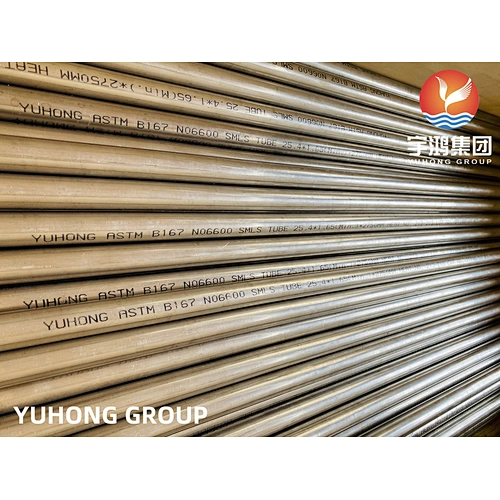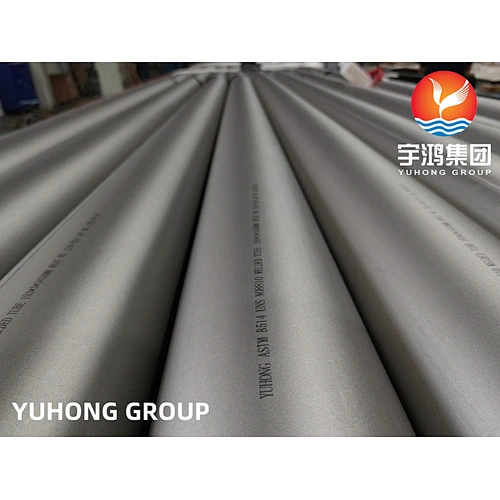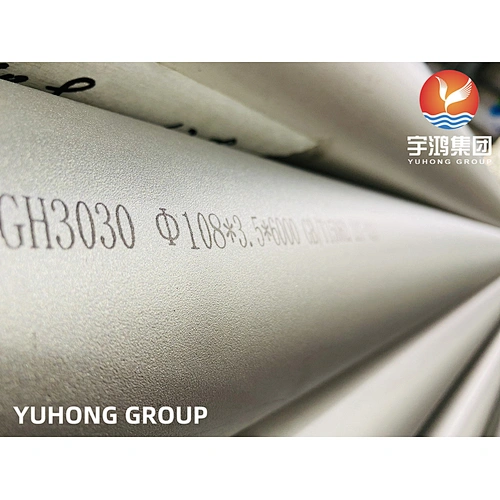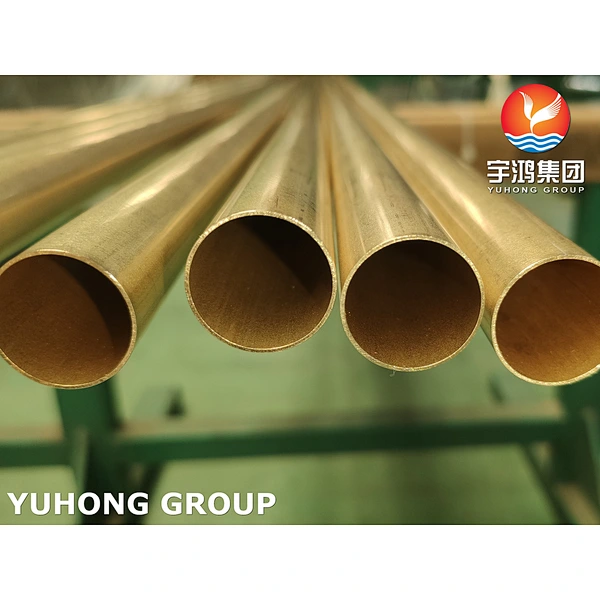
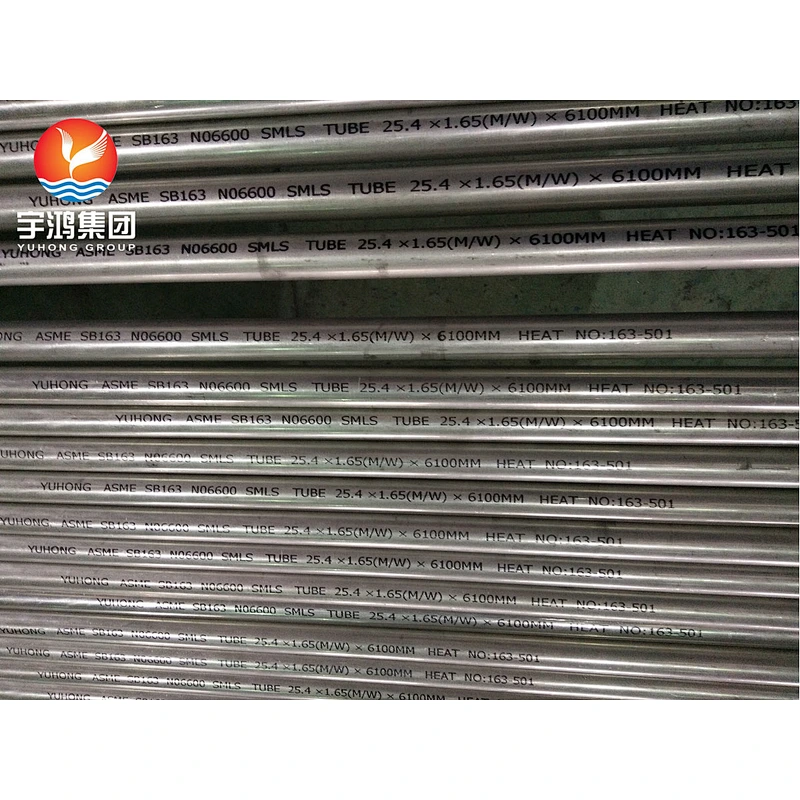



Overview
Inconel 600 is a nickel-chromium alloy used for applications that require corrosion and high temperature resistance. This nickel alloy was designed for service temperatures from cryogenic to elevated temperatures in the range of 2000° F. It is non-magnetic, has excellent mechanical properties, and presents the desirable combination of high strength and good weldability under a wide range of temperatures. The high nickel content in Inconel 600 enables it to retain considerable resistance under reducing conditions, makes it resistant to corrosion by a number of organic and inorganic compounds, gives it excellent resistance to chloride-ion stress-corrosion cracking and also provides excellent resistance to alkaline solutions. Typical applications of this nickel alloy include the chemical, pulp and paper, aerospace, nuclear engineering and heat treating industries.
Specification
ASTM B163-19 Standard Specification for Seamless Nickel and Nickel Alloy Condenser and Heat-Exchanger Tubes
Specifications | ASTM B167, B517 / ASME SB167, SB517 |
Standard | ASTM, ASME and API |
Pipe Size | Range 15"NB – 150"NB |
Outside Diameter | 6.35 mm OD upto 254 mm OD in 0.6 TO 20 mm thickness. |
Length | Single Random, Double Random & Required Length |
Thickness | 0.3mm – 50 mm |
Schedule | SCH20, SCH30, SCH40, STD, SCH80, XS, SCH60, SCH120, SCH140, SCH160, XXS |
Type | Seamless, Welded, ERW |
End | Plain End, Beveled End, Treaded |
Equivalent Grades for Inconel 600 Seamless Pipes :
Grade | UNS No | Old British | Euronorm | GOST | Japanese JIS | ||
BS | En | No | AFNOR | ||||
Inconel 600 Pipe | N06600 | NA 13 | NiCr15Fe | 2.4816 | NC15FE11M | МНЖМц 28-2, | NCF 600 |
Chemical Composition
Grade | C | Mn | Si | S | Cr | Cu | Ni | Fe |
Inconel 600 | 0.15 max | 1.00 max | 0.50 max | 0.015 max | 14.00 – 17.00 | 0.50 max | 72.00 min | 6.00 – 10.00 |
Mechanical Properties
Density | Melting Point | Tensile Strength | Yield Strength | Elongation |
8.47 g/cm3 | 1413 °C (2580 °F) | Psi – 95,000 , | Psi – 45,000 , | 40 % |
Applications
1. Chemical industry.
2. Aerospace.
3. Heat treating industry.
4. Pulp and paper industry.
5. Food processing.
6. Nuclear Engineering.
7. Gas turbine components.