


Product Overview
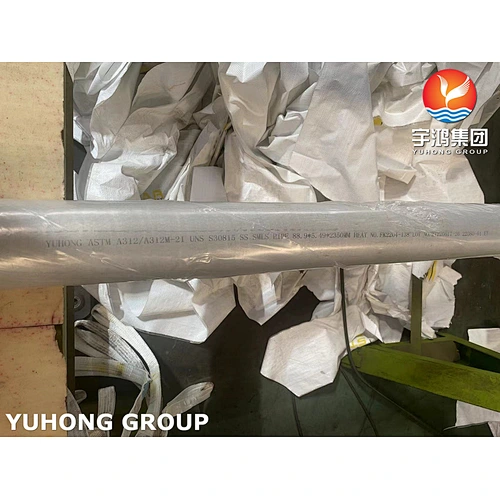
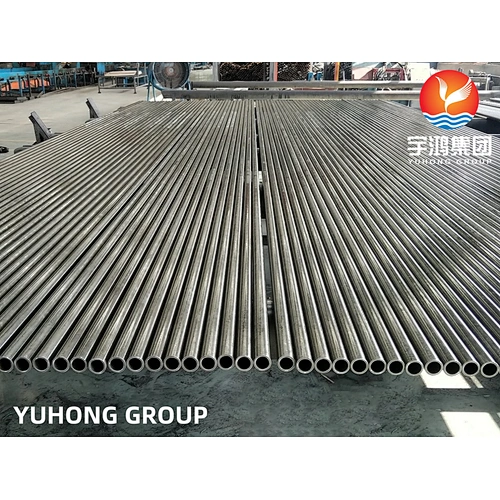
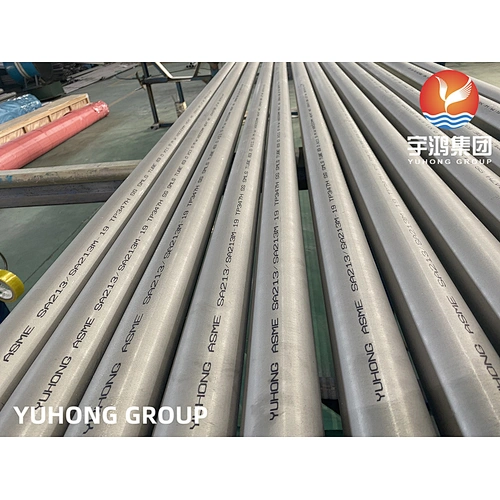
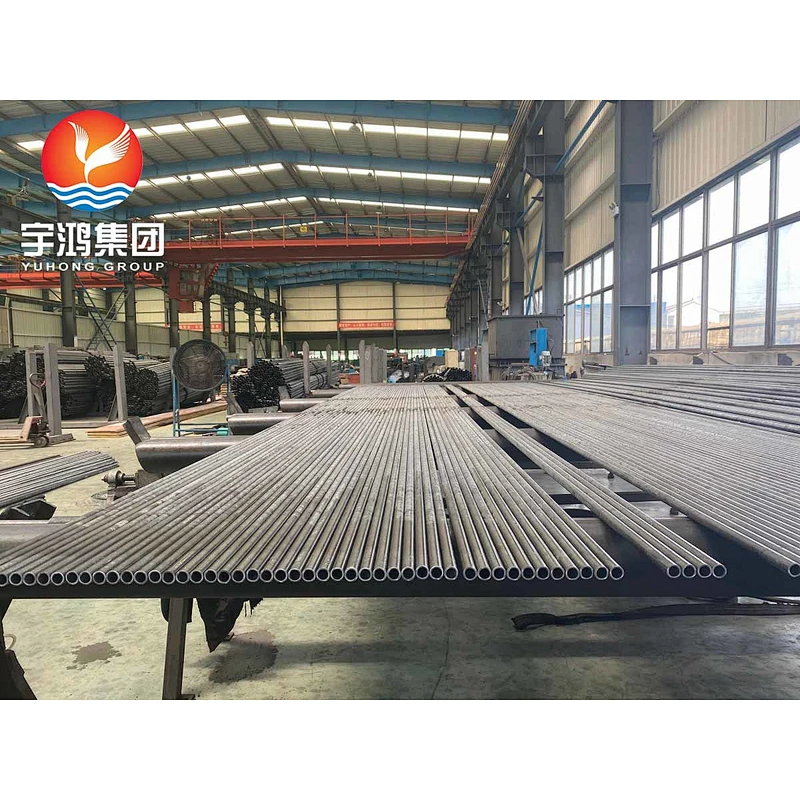
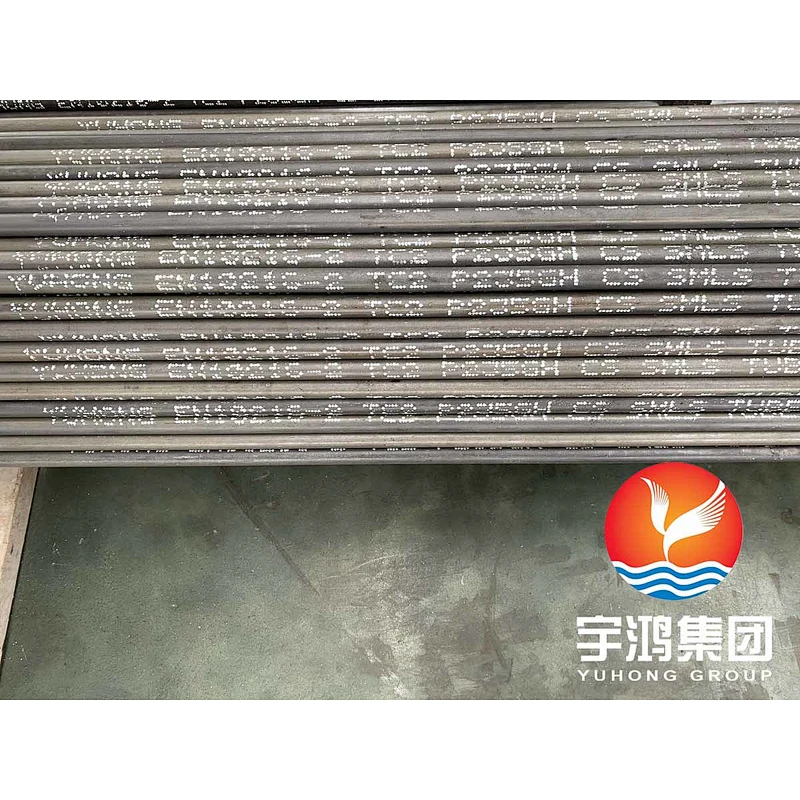
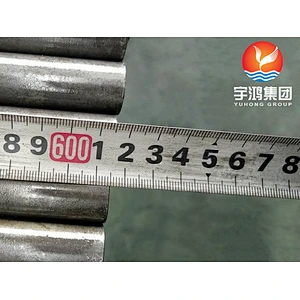
EN 10216-2 TC2 P235GH carbon steel seamless tubes are non-alloy steel pressure tubes designed according to the European Pressure Equipment Standard, specifically for boilers, heat exchangers, steam piping, and pressure vessels in high-temperature pressure-bearing service. P235GH is delivered in the normalized condition (880–940°C, air cooled), with a fine-grained ferritic-pearlitic structure that ensures good plasticity, toughness, cold-bending formability, and weldability. TC2 (Test Class 2) requires tubes to pass non-destructive testing (NDT) and is suitable for higher design temperatures than TC1. Our P235GH seamless tubes are strictly manufactured to EN 10216-2, with EN 10204 3.1/3.2 material certificates and PED certification support available.
Core Material Characteristics
Chemical Composition Design
The low-carbon, low-impurity composition system of P235GH is the foundation of its weldability and high-temperature stability:
| Element | Content Requirement |
|---|---|
| Carbon (C) | ≤ 0.16% |
| Silicon (Si) | ≤ 0.35% |
| Manganese (Mn) | 0.60% – 1.20% |
| Phosphorus (P) | ≤ 0.025% |
| Sulfur (S) | ≤ 0.020% |
| Chromium (Cr) | ≤ 0.30% |
| Molybdenum (Mo) | ≤ 0.08% |
| Aluminum (Al) | ≥ 0.020% (weldability guarantee) |
The minimum aluminum content requirement (≥ 0.020%) ensures a fine-grain structure, which is a key control indicator for P235GH's weldability and impact toughness.
Mechanical Properties
| Property | Requirement |
|---|---|
| Yield Strength (ReH) | ≥ 235 MPa |
| Tensile Strength (Rm) | 360 – 500 MPa |
| Elongation (A) | ≥ 25% |
| Impact Energy (0°C) | ≥ 27 J (mandatory) |
Charpy impact testing is a mandatory requirement of EN 10216-2, which differs significantly from ASTM A106 where impact testing is optional. This mandatory requirement ensures toughness reliability during low-temperature startup and emergency conditions.
Manufacturing and Heat Treatment Requirements
P235GH seamless tubes are delivered in the normalized condition, with a normalizing temperature of 880–940°C followed by air cooling. Normalizing produces a uniform fine-grained ferritic-pearlitic structure, ensuring microstructural stability and consistent mechanical properties at high temperatures. The EN 10216-2 standard does not separately specify metallographic requirements for TC1/TC2 levels, considering that microstructure suitability is guaranteed through chemical composition and mechanical property control.
Significance of TC2 Classification
TC2 (Test Class 2) is the enhanced inspection level in EN 10216-2, with the core requirement being non-destructive testing (NDT). TC2 tubes require ultrasonic testing (UT), with optional additional eddy current testing (ET), to detect volumetric and surface defects.
The engineering value of TC2 tubes lies in the fact that they can be used for strength calculations at higher design temperatures than TC1. For components requiring pressure-bearing capacity at elevated temperatures, such as boiler steam piping and heat exchanger tube bundles, TC2 provides additional safety margin and compliance basis.
Comparison with Other Common Pressure Tube Materials
Comparison with ASTM A106 Gr.B
ASTM A106 Gr.B is the most commonly used high-temperature pressure carbon steel tube in the American standard system, positioned similarly to P235GH but with key differences:
| Comparison Dimension | EN 10216-2 P235GH | ASTM A106 Gr.B |
|---|---|---|
| Standard System | European (PED 2014/68/EU) | American (ASME B31.3) |
| Yield Strength | ≥ 235 MPa | ≥ 240 MPa |
| Impact Testing | Mandatory (27J @ 0°C) | Optional (SR16) |
| CE Marking | Required (PED compliance) | Not applicable |
| Aluminum Control | ≥ 0.020% (weldability guarantee) | Not required |
| Max Service Temperature | Approx. 400°C | Approx. 540°C |
Core Selection Difference: For pressure equipment projects exported to Europe, EN 10216-2 is a legal requirement, and ASTM A106 is generally not accepted because it cannot bear the CE mark. In terms of high-temperature performance, A106 Gr.B has a higher temperature limit (540°C vs 400°C), making it suitable for high-temperature steam piping in American standard projects.
Comparison with P265GH
P265GH is the higher-strength grade in the same EN 10216-2 series:
| Comparison Dimension | P235GH | P265GH |
|---|---|---|
| Yield Strength | ≥ 235 MPa | ≥ 265 MPa |
| Carbon Content | ≤ 0.16% | ≤ 0.20% |
| Manganese Content | ≤ 1.20% | ≤ 1.40% |
| High-Temperature Suitability | ≤ 400°C | ≤ 400°C (higher strength) |
P265GH is suitable for heat exchangers and steam piping requiring higher pressure-bearing capacity. Notably, in actual production, some P235GH tubes with carbon content near the upper limit (e.g., 0.195%) and tensile strength exceeding 500 MPa should actually be classified as P265GH. Actual composition and property data in the material certificate should be reviewed during procurement.
Comparison with 16Mo3
When the design temperature exceeds 400°C, the allowable stress of P235GH decreases significantly, and upgrading to 16Mo3 low-alloy steel should be considered. 16Mo3 adds molybdenum to improve high-temperature creep strength, making it suitable for steam piping and superheater tube bundles at 450–550°C. The division of labor between P235GH and 16Mo3 is clear: select P235GH for low-to-medium temperature pressure service, and 16Mo3 for high-temperature creep conditions.
Typical Application Scenarios
Boilers and Heat Exchangers: Boiler water tubes, fire tubes, superheater tubes, air preheater tubes
Pressure Vessels: Pressure-bearing shells and piping within PED scope
Steam Systems: Industrial steam piping, district heating networks (design temperature ≤ 400°C)
Petrochemical: Low-to-medium temperature pressure piping in refining and petrochemical plants
In European pressure equipment projects, P235GH TC2 is the standard choice for boiler and heat exchanger tubes. Its normalized fine-grain structure ensures the reliability of welded joints, and mandatory impact testing provides toughness assurance for low-temperature startup and emergency conditions.
Common Specification Reference
| Parameter | Common Range |
|---|---|
| Outer Diameter | 6.0 – 219.0 mm |
| Wall Thickness | 1 – 30 mm |
| Length | Max. 12000 mm |
| Delivery Condition | Normalized (880–940°C, air cooled) |
| Test Class | TC1 / TC2 (NDT) |
We can provide U-bend tubes, coiled tubes, and straight tubes per customer requirements, with hydrostatic testing, ultrasonic testing, eddy current testing, and third-party witness inspection available.
Quality Assurance and Services
Standard Compliance: Strictly manufactured to EN 10216-2, with EN 10204 3.1/3.2 material certificates and PED certification support available.
TC2 Inspection: NDT completed to TC2 level, ensuring tube volumetric and surface quality.
Heat Treatment Control: Normalizing temperature 880–940°C, ensuring fine-grain structure and mechanical properties.
Customization Services: Drawing-based customization of bending radius, wall thickness, and length.
Technical Support: Assistance with confirming P235GH allowable stress applicability at design temperatures based on customer working conditions.
FAQ
Q1: Can P235GH and ASTM A106 Gr.B be used interchangeably?
They cannot be directly interchanged. The two belong to different standard systems, with key differences: EN 10216-2 requires mandatory impact testing and CE marking (PED compliance), while ASTM A106 has optional impact testing and no CE marking. For European pressure equipment projects, EN 10216-2 P235GH is a legal requirement, and A106 is generally not accepted. For American standard projects, A106 is the standard choice. Always confirm the applicable regulatory system before selection.
Q2: What is the difference between TC2 and TC1?
The core requirement of TC2 is non-destructive testing (NDT), typically ultrasonic testing (UT), with optional additional eddy current testing (ET). TC2 tubes can be used for strength calculations at higher design temperatures than TC1, while providing additional defect detection assurance. For critical pressure components such as boilers and high-temperature heat exchangers, TC2 is recommended.
Q3: What is the maximum service temperature of P235GH?
The typical design temperature limit for P235GH is 400°C. Above this temperature, the allowable stress decreases significantly, and upgrading to P265GH (higher strength) or 16Mo3 (better high-temperature creep performance) should be considered. Specific allowable stress values should refer to EN 13480 or relevant design codes.
Q4: What is the delivery condition of P235GH?
P235GH seamless tubes are delivered in the normalized condition, with a normalizing temperature of 880–940°C followed by air cooling. Normalizing produces a fine-grained ferritic-pearlitic structure, ensuring weldability and high-temperature microstructural stability. The material certificate should specify the heat treatment temperature and cooling conditions.
Q5: What is the relationship between EN 10216-2 and DIN 17175?
EN 10216-2 is the current European standard, and DIN 17175 is the superseded old German standard. P235GH corresponds to the old grade St.35.8, and P265GH corresponds to St.45.8. The new standard has updates in chemical composition and inspection requirements. Procurement should explicitly specify EN 10216-2.
Q6: Are U-bend tubes and special specification customization supported?
Yes. We can customize U-bend tubes, coiled tubes, and straight tubes according to customer drawings, with bending radius, wall thickness thinning rate, and length customizable as needed. Hydrostatic testing, ultrasonic testing, eddy current testing, and third-party witness inspection are also available.
Q7: What are the delivery lead time and minimum order quantity?
Delivery lead time and minimum order quantity are determined by specifications, quantity, and inspection requirements. Common specifications are available from stock; custom specifications typically require 15–30 working days. Please consult our sales team for details.